
LAND ROVER
Loading…
F
- Freelander 2007
- Freelander 20102
I
- I 1948-1953
- I 1948 1954
- I 1948 19582
- I 1951
- I 1954-1958
- I 1956-1961
- II 1958
- II 19612
- II 19623
- III2
- III 1959 1978
- III 1982
- III 1988
L
- L 1998
- L 19993
- L 20002
- L 20013
- L 2002
- L 2004
- Lr2 2013
- Lr2 2014
- Lr2 2015
- LR3
- Lr4 2013
- Lr4 2014
- Lr4 2015
- Lr4 2016
- lt230t
- LT77S
N
- Newdiscoverysport 2015
R
- Range Rover6
- Range Rover 1986
- Range Rover 1987 1991
- Range Rover 1997
- Range Rover 2002
- RANGE ROVER (2012-)
- Range Rover 2012-2014
- Rangerover 2013
- Rangerover 2014
- Range Rover 2015
- Rangerover 2016
- Range Rover 4
- Range Rover Classic
- Range Rover Evoque2
- RANGE ROVER EVOQUE (2012-)
- Rangeroverevoque 2013
- Rangeroverevoque 2014
- Rangeroverevoque 2015
- Rangeroverevoque 2016
- Rangeroverevoque 2017
- Rangeroverevoque 2018
- Rangeroverevoque 2020
- Rangeroverevoqueconvertible 2017
- Rangeroverevoqueconvertible 2018
- Range Rover l 19982
- Range Rover L 2000
- Range Rover L 2001
- Range Rover L 2002
- Range Rover L 2003
- Range Rover L 2004
- Range Rover P384
- Range Rover P38 19952
- RANGE ROVER SPORT4
- Range Rover Sport 2005
- Range Rover Sport 2006
- Range Rover Sport 2007
- Range Rover Sport 2008
- Range Rover Sport 2009
- RANGE ROVER SPORT (-2012)
- Range Rover Sport 20132
- Rangeroversport 2014
- Rangeroversport 20152
- Rangeroversport 2016
- Rangerover sport svr 2016
- RANGE SPORT
- Rover 820 1986-1995
S
- Serie I
- Serie III
- Series I 1948 1951
- Series I 1951
- Sport
T
- TESTBOOK
- Treker 4200NT
- Treker 4400 NT
V
- Velar 2018
- Velar 2020
Loading…
Loading…
Nothing found
Range Rover P38
User Manual
199 pgs1.72 Mb0
User Manual
9 pgs6.39 Mb1
User Manual [fr]
2 pgs1.92 Mb0
User Manual [fr]
204 pgs24.5 Mb0
Table of contents
Loading…
…
LAND ROVER User Manual [fr]
Specifications and Main Features
Frequently Asked Questions
User Manual
Loading…
+ hidden pages
You need points to download manuals.
1 point = 1 manual.
You can buy points or you can get point for every manual you upload.
Buy points
Upload your manuals
-
Range Rover. Instruction — page 1
-
Range Rover. Instruction — page 2
-
Range Rover. Instruction — page 3
-
Range Rover. Instruction — page 4
-
Range Rover. Instruction — page 5
-
Range Rover. Instruction — page 6
-
Range Rover. Instruction — page 7
-
Range Rover. Instruction — page 8
-
Range Rover. Instruction — page 9
-
Range Rover. Instruction — page 10
-
Range Rover. Instruction — page 11
-
Range Rover. Instruction — page 12
-
Range Rover. Instruction — page 13
-
Range Rover. Instruction — page 14
-
Range Rover. Instruction — page 15
-
Range Rover. Instruction — page 16
-
Range Rover. Instruction — page 17
-
Range Rover. Instruction — page 18
-
Range Rover. Instruction — page 19
-
Range Rover. Instruction — page 20
-
Range Rover. Instruction — page 21
-
Range Rover. Instruction — page 22
-
Range Rover. Instruction — page 23
-
Range Rover. Instruction — page 24
-
Range Rover. Instruction — page 25
-
Range Rover. Instruction — page 26
-
Range Rover. Instruction — page 27
-
Range Rover. Instruction — page 28
-
Range Rover. Instruction — page 29
-
Range Rover. Instruction — page 30
-
Range Rover. Instruction — page 31
-
Range Rover. Instruction — page 32
-
Range Rover. Instruction — page 33
-
Range Rover. Instruction — page 34
-
Range Rover. Instruction — page 35
-
Range Rover. Instruction — page 36
-
Range Rover. Instruction — page 37
-
Range Rover. Instruction — page 38
-
Range Rover. Instruction — page 39
-
Range Rover. Instruction — page 40
-
Range Rover. Instruction — page 41
-
Range Rover. Instruction — page 42
-
Range Rover. Instruction — page 43
-
Range Rover. Instruction — page 44
-
Range Rover. Instruction — page 45
-
Range Rover. Instruction — page 46
-
Range Rover. Instruction — page 47
-
Range Rover. Instruction — page 48
-
Range Rover. Instruction — page 49
-
Range Rover. Instruction — page 50
-
Range Rover. Instruction — page 51
-
Range Rover. Instruction — page 52
-
Range Rover. Instruction — page 53
-
Range Rover. Instruction — page 54
-
Range Rover. Instruction — page 55
-
Range Rover. Instruction — page 56
-
Range Rover. Instruction — page 57
-
Range Rover. Instruction — page 58
-
Range Rover. Instruction — page 59
-
Range Rover. Instruction — page 60
-
Range Rover. Instruction — page 61
-
Range Rover. Instruction — page 62
-
Range Rover. Instruction — page 63
-
Range Rover. Instruction — page 64
-
Range Rover. Instruction — page 65
-
Range Rover. Instruction — page 66
-
Range Rover. Instruction — page 67
-
Range Rover. Instruction — page 68
-
Range Rover. Instruction — page 69
-
Range Rover. Instruction — page 70
-
Range Rover. Instruction — page 71
-
Range Rover. Instruction — page 72
-
Range Rover. Instruction — page 73
-
Range Rover. Instruction — page 74
-
Range Rover. Instruction — page 75
-
Range Rover. Instruction — page 76
-
Range Rover. Instruction — page 77
-
Range Rover. Instruction — page 78
-
Range Rover. Instruction — page 79
-
Range Rover. Instruction — page 80
-
Range Rover. Instruction — page 81
-
Range Rover. Instruction — page 82
-
Range Rover. Instruction — page 83
-
Range Rover. Instruction — page 84
-
Range Rover. Instruction — page 85
-
Range Rover. Instruction — page 86
-
Range Rover. Instruction — page 87
-
Range Rover. Instruction — page 88
-
Range Rover. Instruction — page 89
-
Range Rover. Instruction — page 90
-
Range Rover. Instruction — page 91
-
Range Rover. Instruction — page 92
-
Range Rover. Instruction — page 93
-
Range Rover. Instruction — page 94
-
Range Rover. Instruction — page 95
-
Range Rover. Instruction — page 96
-
Range Rover. Instruction — page 97
-
Range Rover. Instruction — page 98
-
Range Rover. Instruction — page 99
-
Range Rover. Instruction — page 100
-
Range Rover. Instruction — page 101
-
Range Rover. Instruction — page 102
-
Range Rover. Instruction — page 103
-
Range Rover. Instruction — page 104
-
Range Rover. Instruction — page 105
-
Range Rover. Instruction — page 106
-
Range Rover. Instruction — page 107
-
Range Rover. Instruction — page 108
-
Range Rover. Instruction — page 109
-
Range Rover. Instruction — page 110
-
Range Rover. Instruction — page 111
-
Range Rover. Instruction — page 112
-
Range Rover. Instruction — page 113
-
Range Rover. Instruction — page 114
-
Range Rover. Instruction — page 115
-
Range Rover. Instruction — page 116
-
Range Rover. Instruction — page 117
-
Range Rover. Instruction — page 118
-
Range Rover. Instruction — page 119
-
Range Rover. Instruction — page 120
-
Range Rover. Instruction — page 121
-
Range Rover. Instruction — page 122
-
Range Rover. Instruction — page 123
-
Range Rover. Instruction — page 124
-
Range Rover. Instruction — page 125
-
Range Rover. Instruction — page 126
-
Range Rover. Instruction — page 127
-
Range Rover. Instruction — page 128
-
Range Rover. Instruction — page 129
-
Range Rover. Instruction — page 130
-
Range Rover. Instruction — page 131
-
Range Rover. Instruction — page 132
-
Range Rover. Instruction — page 133
-
Range Rover. Instruction — page 134
-
Range Rover. Instruction — page 135
-
Range Rover. Instruction — page 136
-
Range Rover. Instruction — page 137
-
Range Rover. Instruction — page 138
-
Range Rover. Instruction — page 139
-
Range Rover. Instruction — page 140
-
Range Rover. Instruction — page 141
-
Range Rover. Instruction — page 142
-
Range Rover. Instruction — page 143
-
Range Rover. Instruction — page 144
-
Range Rover. Instruction — page 145
-
Range Rover. Instruction — page 146
-
Range Rover. Instruction — page 147
-
Range Rover. Instruction — page 148
-
Range Rover. Instruction — page 149
-
Range Rover. Instruction — page 150
-
Range Rover. Instruction — page 151
-
Range Rover. Instruction — page 152
-
Range Rover. Instruction — page 153
-
Range Rover. Instruction — page 154
-
Range Rover. Instruction — page 155
-
Range Rover. Instruction — page 156
-
Range Rover. Instruction — page 157
-
Range Rover. Instruction — page 158
-
Range Rover. Instruction — page 159
-
Range Rover. Instruction — page 160
-
Range Rover. Instruction — page 161
-
Range Rover. Instruction — page 162
-
Range Rover. Instruction — page 163
-
Range Rover. Instruction — page 164
-
Range Rover. Instruction — page 165
-
Range Rover. Instruction — page 166
-
Range Rover. Instruction — page 167
-
Range Rover. Instruction — page 168
-
Range Rover. Instruction — page 169
-
Range Rover. Instruction — page 170
-
Range Rover. Instruction — page 171
-
Range Rover. Instruction — page 172
-
Range Rover. Instruction — page 173
-
Range Rover. Instruction — page 174
-
Range Rover. Instruction — page 175
-
Range Rover. Instruction — page 176
-
Range Rover. Instruction — page 177
-
Range Rover. Instruction — page 178
-
Range Rover. Instruction — page 179
-
Range Rover. Instruction — page 180
-
Range Rover. Instruction — page 181
-
Range Rover. Instruction — page 182
-
Range Rover. Instruction — page 183
-
Range Rover. Instruction — page 184
-
Range Rover. Instruction — page 185
-
Range Rover. Instruction — page 186
-
Range Rover. Instruction — page 187
-
Range Rover. Instruction — page 188
-
Range Rover. Instruction — page 189
-
Range Rover. Instruction — page 190
-
Range Rover. Instruction — page 191
-
Range Rover. Instruction — page 192
-
Range Rover. Instruction — page 193
-
Range Rover. Instruction — page 194
-
Range Rover. Instruction — page 195
-
Range Rover. Instruction — page 196
-
Range Rover. Instruction — page 197
-
Range Rover. Instruction — page 198
-
Range Rover. Instruction — page 199
-
Range Rover. Instruction — page 200
Owner’s Manual
CONTENTS
SECTION 1 Introduction …………………………………………………. 1
SECTION 2 Controls & instruments …………………………………. 11
SECTION 3 Driving & operating ……………………………………… 89
SECTION 4 Owner maintenance ……………………………………… 131
SECTION 5 General data ………………………………………………… 179
SECTION 6 Parts & accessories……………………………………….. 189
SECTION 7 On-road driving ……………………………………………. 197
SECTION 8 Off-road driving……………………………………………. 203
Index …………………………………………………………… 215
In-car entertainment
As part of Land Rover environmental policy, this publication is printed on paper made from
elemental chlorine free pulp.
1999 Rover Group Limited Publication Part No. LRL 0330NAS
1
OWNER’S HANDBOOK
This handbook together with the Passport to
Service, provides all the information that you
will need to derive maximum pleasure from
owning and driving your new Range Rover.
For convenience, the handbook is divided into
sections, each dealing with a particular aspect
of driving or caring for the vehicle. Sections
are listed on the contents page and you will
find it worthwhile to take a little time to read
each one, and to get to know your Range
Rover as soon as you possibly can.
Remember, the more you understand before
you drive, the greater the satisfaction when
you are seated behind the steering wheel.
SECTION 1
Introduction
Section Contents Page
Passport to service 3………………………………..
Reporting safety defects 3…………………………
Safety warnings 4…………………………………….
Engine compartment labels 5…………………….
Vehicle identification number 6…………………..
Rollover warning label 7……………………………
SRS/Airbag warning labels 7……………………..
Anti-theft precautions 9…………………………….
Breakdown safety code 9…………………………..
Land Rover operates a policy of
constant product improvement and,
therefore, reserves the right to change
specifications without notice at any
time. Whilst every effort is made to
ensure complete accuracy of the
information in this handbook, no
liabilities for inaccuracies or the
consequences thereof can be accepted
by the manufacturer, Land Rover North
America Inc.
All rights reserved. No part of this
publication may be reproduced, stored
in a retrieval system or transmitted, in
any form, electronic, mechanical,
photocopying, recording, or other
means without prior written permission
from Land Rover.
Introduction
3
PASSPORT TO SERVICE
Your new Range Rover is covered by the
following warranties:
• Land Rover New Vehicle Limited Warranty
• Land Rover Corrosion Perforation Limited
Warranty
• Land Rover Vehicle Emission Control
System Warranty (U.S.A.)
• Land Rover U.S. Emissions Performance
Warranty
Detailed information on these warranties can
be found in the Passport to Service included
in your literature pack. The Passport to
Service also contains important vehicle
identification information and useful
consumer advice.
Most important of all, however, is the section
on maintenance. This outlines the servicing
requirements for your Range Rover and also
incorporates the service record slips, which
the Dealer should sign and stamp to certify
that routine services have been carried out at
the recommended intervals.
REPORTING SAFETY DEFECTS
If you believe that your vehicle has a
defect which could cause a crash or
could cause injury or death, you should
immediately inform the National Highway
Traffic Safety Administration (NHTSA) in
addition to notifying Land Rover North
America Inc.
If NHTSA receives similar complaints, it
may open an investigation and if it finds
that a safety defect exists in a group of
vehicles, it may order a recall and remedy
campaign.
However, NHTSA cannot become
involved in individual problems between
you, your Dealer or Land Rover North
America.
To contact NHTSA, you may call the Auto
Safety HOTLINE toll free at
1-800-424-9393 (or 202-366-0123 in
Washington, D.C. area) or write to
NHTSA, U.S. Department of
Transportation, Washington, DC 20590.
You can also obtain other information
about motor vehicle safety from the
HOTLINE.
Introduction
4
SAFETY WARNINGS
WARNING
Safety warnings are included in this
handbook. These indicate either a procedure
which must be followed precisely, or
information that should be considered with
great care in order to avoid the possibility of
personal injury or serious damage to the
vehicle.
WARNING
Your Range Rover has a higher ground
clearance and hence a higher centre of
gravity than ordinary passenger cars to
enable the vehicle to perform in a wide
variety of off-road applications. An
advantage of the higher ground clearance is
a better view of the road allowing you to
anticipate problems. The Range Rover is not
designed for cornering at the same speed as
conventional passenger cars any more than
a low slung sports car is designed to
perform satisfactorily under off-road
conditions. If at all possible, avoid sharp
turns or abrupt manoeuvres. As with other
vehicles of this type, failure to operate the
Range Rover correctly may result in loss of
control or vehicle rollover. Be sure to read
the «on-road» and «off-road» driving
guidelines that follow.
Introduction
5
WARNING LABELS ATTACHED TO THE
VEHICLE
Warning labels attached to your
vehicle bearing this symbol
mean: DO NOT touch or adjust
components until you have read the relevant
instructions in the handbook.
Warning labels showing this
symbol indicate that the ignition
system utilises very high
voltages. DO NOT touch any ignition
components while the starter switch is
turned on!
INFORMATION LABELS ENGINE
COMPARTMENT
Various labels are fixed to your vehicle to
draw your attention to specific safety and
emission information. This illustration is for
general guidance only, as the position of the
components and the extent of labels and other
visual warnings could vary from model to
model.
A. BATTERY WARNING LABEL
B. AIRBAG SRS WARNING LABEL
C. KEEP CLEAR OF ROTATING PARTS
D. EMISSION CONTROL LABEL
E. VACUUM ROUTING DIAGRAM
F. AIR CONDITIONING LABEL
G. HOOD CLOSING INSTRUCTIONS
Introduction
6
VEHICLE IDENTIFICATION
If you need to communicate with a Land
Rover dealer, you may be asked to quote the
Vehicle Identification Number (VIN).
The VIN and other information concerning
your vehicle can be found on the certification
label affixed to the lock face of the front
left-hand door, where shown (this VIN should
match the VIN recorded in the Passport to
Service book).
In addition, the Federal VIN plate is mounted
to the vehicle body in such a position that it is
visible from the outside through the bottom
corner of the windscreen on the driver’s side.
WARNING
DO NOT exceed gross weight or axle loads
described on the vehicle certification
identification label.
Introduction
7
!
WARNING: HIGHER RISK OF ROLLOVER
Avoid Abrupt Maneuvers
and Excessive Speed.
Always Buckle Up.
See Owner’s Manual
For Further Information
H3146
AIR BAG
WARNING
FLIP VISOR OVER
!
WARNING
DEATH or SERIOUS INJURY can occur
Children 12 and under can be killed by the airbag
The BACK SEAT is the SAFEST place for children
NEVER put a rear-facing child seat in the front
Sit as far back as possible from the air bag
ALWAYS use SEAT BELTS and CHILD RESTRAINTS
ROLLOVER WARNING LABEL
Take note of the warning label on the
sunvisor, which alerts the driver to the need to
be aware of the higher rollover risk, endemic
with utility vehicles of theis type (see also the
relevant warning earlier in this section).
SRS/AIRBAG WARNING LABELS
SRS/Front airbag systems
Take note of the warning information fixed to
the underside of both sun visors, as follows:
WARNING!
DEATH or SERIOUS INJURY can occur
• Children 12 and under can be killed by the
airbag
• The BACK SEAT is the SAFEST place for
children
• NEVER put a rear-facing child seat in the
front
• Sit as far back as possible from the airbag
• ALWAYS use SEAT BELTS and CHILD
RESTRAINTS
Introduction
8
WARNING
ATTENTION
NEVER
let a child`s head rest near side
airbag. Inflating airbag can cause
serious or fatal injury.
ALWAYS
use safety belts and child
restraints.
See owners manual.
NE LAISSEZ JAMAISun enfant
reposer sa tete pres d’un airbag
lateral en se gonflant. L’airbag
pourrait occasionner des blessures
graves voire fatales.
Utilisez
TOURJOURS
les ceintures de
securite et systemes de retenue pour
enfants. Voir Notice d’Utilisation
La pose de housses non
approuvees pour utilisation sur
sieges avant equipes de
coussins gonflables latcraux
reduit l’efficacite des coussins
gonflables lateraux en cas de
collision
The use of seat covers that
are not approved for front
seats with side air bags will
reduce the effectiveness of
the side airbag in a crash
P0418
SRS/Side airbag systems
Take note of the warning information fixed to
B/C posts, as follows:
WARNING
NEVER let child’s head rest near side
airbag. Inflating airbag can cause serious or
fatal injury.
ALWAYS use safety belts and child
restraints. See Owner’s Manual.
The use of seat covers that are not approved
for front side airbags will REDUCE the
effectiveness of those airbags in a crash.
Introduction
9
ANTI-THEFT PRECAUTIONS
While it may be difficult to deter the
’professional’ car thief, the majority of thefts
are carried out by unskilled opportunists.
Therefore, take vehicle security very seriously
and ALWAYS adopt this simple ’four point’
drill whenever you leave your vehicle — even
for just a few minutes:
1. Fully close all the windows (and the
sunroof).
2. Remove your valuable belongings (or hide
them out of sight).
3. Remove the starter key.
4. Superlock the vehicle using the remote
handset.
Thieves are attracted by ’vulnerable’ vehicles.
Even if you have followed the ’four point’ drill,
there is still much you can do to make your
vehicle a less inviting target.
BE SAFE — NOT SORRY!
• Park where your vehicle can be easily seen
by householders and passers-by.
• At night, park in well lit areas and avoid
deserted or dimly-lit side streets.
• At home, if you have a garage, use it — and
NEVER leave the keys in the vehicle.
• Do not keep important documents (or
spare keys) in the vehicle — these are a real
bonus for the thief.
IMPORTANT INFORMATION
Remember the breakdown
safety code
If a breakdown occurs while travelling:-
• Wherever possible, consistent with
safety and traffic conditions, the
vehicle should be moved off the
main thoroughfare, preferably onto
the shoulder as far as possible. If a
breakdown occurs on a freeway, pull
well over to the inside of the hard
shoulder.
• Switch on hazard lights.
• If possible, position the warning
triangle (located on the underside of
the loadspace floor panel — see
’Warning triangle’) or a flashing
amber light at an appropriate
distance from the vehicle to warn
other traffic of the breakdown (note
the legal requirements of some
areas).
• Consider evacuating passengers to a
safe area away from the vehicle as a
precaution in case your Range Rover
is struck by another vehicle.
11
In this section of the handbook you will find
descriptions of the controls and instruments
on your vehicle.
For your own safety, it is most important to
read this section fully and to gain a thorough
understanding of all the controls before
driving.
SECTION 2
Controls & instruments
Section Contents Page
Controls 13……………………………………………..
Security card 14………………………………………
Locks & alarm 15…………………………………….
Tailgate 23………………………………………………
Message centre 24…………………………………..
Seats 33…………………………………………………
Seat belts 40……………………………………………
SRS/Airbag 48…………………………………………
Steering column 55………………………………….
Door mirrors 56……………………………………….
Instruments 58………………………………………..
Warning lights 60…………………………………….
Lights & indicators 64………………………………
Wipers & washers 66……………………………….
Switches 69…………………………………………….
Electric windows 71………………………………….
Electric sunroof 74…………………………………..
Heating & ventilating 77……………………………
Interior equipment 81……………………………….
In-car telephones 85…………………………………
Controls
13
1. Passenger airbag SRS
2. Cruise control master switch
3. Hazard warning switch
4. Air suspension switches
5. Rear fog guard light switch
6. Front fog light switch
7. Lighting switch
8. Remote radio/cassette/CD player switches
9. Instrument panel
10.Radio/cassette/CD player
11.Heater/air-conditioning controls
12.Ashtray/cigar lighter
13.Automatic gearbox mode switch
14.Exterior mirror operating switches
15.Window and sunroof operating switches
16.Parking brake
17.Automatic gear selector
18.Steering column adjustment lever
19.Cruise control switches
20.Driver’s airbag SRS
Security Card
14
The security card, supplied with the literature
pack, contains important emergency
information. It is ESSENTIAL that you keep
the card safe from theft and ensure that it is
passed to the new owner if you sell the
vehicle.
• Key number: This is the number of the
starter/door key — essential if you ever
need to obtain a replacement.
• VIN (vehicle identification number): This
identity number is unique to your vehicle
and is essential proof of its specification.
The number can also be found in various
locations around the vehicle (see ’Vehicle
Identification’ in Section 1).
• Radio security code number: Your vehicle
is delivered with the security code
disabled. If you wish to have it actuated
see your Land Rover dealer.
WARNING
Never leave the security card inside the
vehicle when it is unattended.
Locks & alarm
15
Your vehicle is fitted with a sophisticated
electronic anti-theft alarm system. In order to
ensure maximum security, you are advised to
gain a full understanding of the system by
thoroughly reading this section of the
handbook.
LOCKING THE VEHICLE AND ARMING THE
ALARM
You have been supplied with two
handset/keys (numbered 1 and 2). While both
are identical in operation, they transmit two
different sets of information (see ’Key
activated memory seats’). Replacement
handsets are only available from a Land Rover
dealer. Up to two further handsets (3 and 4)
can also be obtained.
There are four methods for securing your
vehicle:
1. ’Superlocking’ using the handset —
(recommended high security method).
2. ’Superlocking’ using the key.
3. Locking using the handset.
4. Locking using the key.
FOR MAXIMUM SECURITY, ALWAYS
’SUPERLOCK’ THE VEHICLE USING THE
HANDSET
(except when the vehicle is to be locked with
passengers or animals inside).
IMPORTANT INFORMATION
Emergency keys
In addition to the two handsets, you have
also been supplied with two separate
keys. These keys perform the same
functions as the key part of the handset
and are intended for emergency use only.
DO NOT keep the keys inside the vehicle.
The handset
The radio remote handset has three buttons
(described below). By pressing the
appropriate button, the handset can be used
either as a conventional key, or as a remote
handset to either lock or ’superlock’ the
vehicle.
1. Key release button.
• Press to release the key, which can then
be used as a conventional key to operate
the starter switch, glovebox and door
locks.
Locks & alarm
16
2. Lock button (padlock symbol)
• press once to lock.
• press twice to ’superlock’.
3. Unlock button
• press once to unlock.
• press and hold to operate the ’Key
activated memory seats’ facility (see ’Key
activated memory seats’).
Once the security system is armed, the
following features are activated:
• The central locking system locks all the
doors and the tailgate.
• The perimetric alarm (protecting the
doors, hood and tailgate) is armed.
• If ’handset superlocking’ is activated, the
volumetric alarm is also armed (a sensor
inside the passenger compartment
monitors the interior space and activates
the alarm if an intrusion into the
passenger compartment is detected).
The volumetric sensor will enter a self-check
mode each time you turn the starter switch
off. It will remain active for 60 seconds, or
until:
1. The driver’s door is opened and closed.
2. The vehicle is locked with the handset or
key.
NOTE: If the sensor fails its self-check five
times consecutively, only the ’perimetric’
elements of the security system will be active
(doors, hood and tailgate). Any attempt to
’superlock’ with the handset will result in
’ALARM FAULT’ being displayed on the
message centre and a mislock occurring (see
’Mislock’). Seek qualified assistance to rectify
the fault.
NOTE: The handset complies with part 15 of
the FCC Rules. Operation is subject to the
following two conditions:
1. This device may not cause harmful
interference.
2. This device must accept any interference
received, including interference that may
cause undesired operation. This applies to
both alarm receivers and handset
transmitter.
CAUTION: Any changes or modifications to
the transmitter not expressly approved by the
manufacturer could void the user’s authority
to operate the equipment.
Locks & alarm
17
Anti-theft alarm indicator light
After locking the vehicle, the RED indicator
light (arrowed in illustration) flashes rapidly
for ten seconds to confirm that the security
system has been successfully armed. After ten
seconds, the indicator light adjusts to a slower
frequency, and then continues to flash as an
anti-theft deterrent until such time as the
security system is disarmed.
If, while operating the handset (or key), the
alarm sounds, this indicates that one of the
doors, the hood or the tailgate is not properly
closed (the message centre display will
confirm which aperture is not secure).
Although the handset can be successfully
operated from a significant distance from the
vehicle, when locking it is wise to be close
enough to visually confirm that the door
locking buttons have dropped into place and
that the indicator light confirms a successful
lock.
NOTE: Occasional atmospheric conditions
can significantly reduce the effective range of
handset operation. If this occurs, operate the
handset closer to the vehicle. In the most
extreme cases, it may be necessary to touch
the handset against the radio aerial ’fired’ onto
one of the rear side windows.
If the message centre displays ’KEY BATTERY
LOW’, this indicates that the handset batteries
need replacing (see ’Handset batteries’).
SUPERLOCKING
If the vehicle is ’superlocked’ (with either the
handset, or the key), the doors CANNOT be
unlocked or opened from inside the vehicle.
For this reason DO NOT superlock the vehicle
with passengers inside.
’Superlocking’ using the handset:
Press and release the ’lock’ button (1) on the
handset twice (within 1
1
/
2
seconds). After 15
seconds you will hear ’superlocking’ engage.
If any door, the hood or tailgate is left open, a
mislock will occur (see ’Mislock’).
If a window or sunroof is open, superlocking
will engage immediately, however volumetric
protection will not be activated.
To unlock:
Press and release the ’unlock’ button (2) on
the handset once.
If the handset is inoperative, the vehicle can
be unlocked by using the key in the driver’s
door lock.
Locks & alarm
18
’Superlocking’ using the key:
Wherever possible the handset MUST be used
to ’superlock’ the vehicle. However, if the
handset is inoperative, the key can be used as
follows:
Turn the key in the driver’s door towards the
rear of the vehicle (and release) twice within
1
1
/
2
seconds.
NOTE: ’Superlocking’ the vehicle using the
key will provide perimetric protection only —
volumetric protection (protection of the
interior space inside the vehicle) WILL NOT
BE ACTIVE! If any door, the hood, or the
tailgate is left open, a mislock will occur (see
’Mislock’).
To unlock:
Wherever possible use the handset to unlock
the vehicle — press and release the ’unlock’
button.
If necessary, the key can also be used to
unlock a ’superlocked’ vehicle.
IMPORTANT INFORMATION
If unattended passengers are to be left in
the vehicle, it is recommended that they
should lock the vehicle from inside by
pressing down the driver’s door sill
button.
If animals are to be left in the vehicle,
volumetric protection MUST NOT be
activated — any movement inside the
vehicle could trigger the alarm.
NEVER leave children unattended in the
vehicle!
WARNING
NEVER ’superlock’ the vehicle if passengers
are to be left inside — ’superlocking’
prevents door locks from being operated
from INSIDE as well as outside the vehicle!
NOTE: If the handset ’lock’ button or the door
key are operated once, the central locking will
be activated, but the alarm will only be in
’perimetric’ mode and the doors and locks
CAN be opened from the inside. ALWAYS,
where possible secure the vehicle by
’superlocking’.
’Sill’ locking
To operate the central locking from inside the
vehicle, push down either front door sill
button.
The security system will NOT be armed.
NOTE: ’Sill’ locking is NOT possible from
outside the vehicle.
Locks & alarm
19
MISLOCK
A mislock will occur if:
• A door, hood or tailgate are left open.
• The key is left in the starter switch.
• An incomplete ’all close’ is attempted. The
message centre will indicate the cause of a
mislock e.g. ’SUNROOF BLOCKED’.
If a mislock occurs, a warning ’bleep’ will
sound in which case you should unlock the
vehicle, rectify the cause of the mislock and
then re-lock the vehicle.
’ALL CLOSE’ FEATURE
The key activated ’all close’ feature enables
you to use the key to close the windows and
sunroof at the same time as you secure the
vehicle.
To operate:
1. Ensure the doors, hood and tailgate are
properly closed.
2. Turn and hold the key in the ’lock’ position
(turn twice and hold on the second turn if
’Superlocking’).
The doors and tailgate will lock and the
windows, followed by the sunroof will close.
NOTE: If a window or the sunroof detects an
obstruction, a mislock occurs and the locking
sequence will stop. Remove the obstruction
before trying to use the ’all close’ feature
again.
KEY ACTIVATED MEMORY SEATS
This feature enables the handsets to be used
to recall the pre-set electric seat/mirror
positions when you UNLOCK the door. The
two handsets are separately identified by
different labels and by grey and black battery
covers — key 1 corresponds to driver’s seat
memory 1, and key 2 to seat memory 2 (see
’Seats’).
NOTE: If additional handset/keys have been
obtained (key 3 & key 4), they are not linked
to the memory seat system.
Press and hold the ’unlock’ button on the
handset for 1
1
/
2
seconds (the indicator light
on the handset flashes rapidly), and then
release. The driver’s seat and both mirrors will
move to the positions programmed into the
relevant seat memory.
NOTE: This feature will only operate if
volumetric protection was activated when the
vehicle was locked (ie. by ’superlocking’ using
the handset).
It will not function if the alarm system has
already been triggered since it was last set,
and will be cancelled if a door is opened, or if
the vehicle is relocked.
Locks & alarm
20
AUTO RELOCK
Auto relock ensures that, if the vehicle is
unlocked accidentally, the vehicle will relock
itself automatically after a 60 second delay.
Once the ’unlock’ button on the handset has
been pressed, the alarm system will monitor
the vehicle for 60 seconds. If any of the
following occur during this period, the vehicle
will remain unlocked:
• A door or the tailgate is opened.
• Interior movement is detected.
• The key is inserted into the starter switch,
or the switch is turned to position ’I’.
However, if none of the above has occurred
within 60 seconds, then the vehicle will
automatically return to its previous ’locked’
state.
OPENING THE DOORS
When opening a door from outside the
vehicle, it is recommended that the moving
part of the handle is held by the fingers and
that the door catch is operated by pushing
with the thumb against the fixed part of the
handle.
CHILD-PROOF LOCKS (rear doors only)
Move the lever downwards (arrowed in
illustration) to engage.
With the child-proof locks engaged, the rear
doors cannot be opened from inside the
vehicle, thereby avoiding the risk of a door
being opened accidentally while the vehicle is
moving.
WARNING
TO AVOID INJURY OR DEATH, NEVER LEAVE
CHILDREN UNSUPERVISED IN THE VEHICLE.
Locks & alarm
21
INERTIA CUT-OFF SWITCH
This switch is a safety device that
automatically unlocks the doors in the event
of an accident or sudden impact (provided the
starter switch is turned on). In addition, the
inertia switch inhibits power to the electric
fuel pump, turns off the heating and air
conditioning fans, and turns on the hazard
warning lights, which continue flashing until
either the starter switch is turned off or the
inertia switch is reset.
The switch is located behind the vertical panel
in the right hand footwell. Remove the cover
by using a coin to rotate the turnbuckle
anti-clockwise and then prise the cover off.
When the switch is tripped, the message
centre will alternately display; ’REFER
HANDBOOK’ and ’INERTIA SWITCH’.
To reset the switch, press the rubber top
(arrowed in illustration).
NOTE: The vehicle can be secured even if the
switch has been tripped by removing the
starter key, opening and closing one of the
front doors and then locking the vehicle.
WARNING
Always check for fuel leaks before resetting
the switch!
Locks & alarm
22
Handset batteries
When the batteries need replacing, the
message centre will display ’KEY BATTERY
LOW’. To replace:
• Remove the battery cover by turning the
cover anti-clockwise with a coin.
• Taking care not to touch the circuit board,
prise the batteries from the cover and fit
new ones (with the positive side facing the
cover), and replace the cover.
The batteries should be replaced within 1
minute of removing the old ones, otherwise it
may be necessary to re-synchronise the
handset (see ’Handset synchronisation’). New
batteries are available from your dealer.
NOTE: Finger marks on the batteries will
adversely affect battery life. If possible, avoid
touching the surface of the batteries, and wipe
clean before fitting.
Handset synchronisation
The handset transmits a coded message,
which changes each time a button is pressed.
If a handset is operated too many times out of
range of the vehicle or if the handset batteries
are removed for longer than a minute, it may
need to be re-synchronised.
To synchronise:
• If the vehicle is locked, press the ’unlock’
button on the handset and then unlock the
vehicle using the key.
• If the vehicle is unlocked, press the ’lock’
button on the handset and then lock the
vehicle using the key.
NOTE: Handset synchronisation cannot be
achieved if the vehicle alarm is armed or if the
handset batteries need replacing.
Tailgate
23
OPENING THE TAILGATE
With the vehicle unlocked, press the release
button once to release the upper tailgate.
NOTE: There is a handle built into the lower
edge of the upper tailgate to assist in opening
and closing.
With the upper tailgate open, press the release
button again to release the lower tailgate,
which can then be lowered to the horizontal
position.
NOTE: The tailgate cannot be opened if the
vehicle battery is flat or disconnected;
emergency access to the loadspace can only
be achieved, by folding the rear seats from
inside the vehicle, (see ’Seats).
WARNING
Do not drive with the tailgate open;
poisonous carbon monoxide fumes will
enter the vehicle which could cause serious
injury or death.
CLOSING THE TAILGATE
Raise the lower tailgate first and close firmly.
Then lower and close the upper tailgate.
Always check that the tailgate is secure before
driving and before leaving the vehicle
unattended.
Message centre
24
Driver warning and information messages are
displayed on the message centre in the lower
part of the instrument pack. Messages have
different priority levels and are grouped into
the following categories.
CRITICAL WARNINGS
Critical warning messages are accompanied
by an audible warning (three beeps).
Messages are displayed continuously while
the starter switch is turned on, and remain
displayed while the fault persists.
DO NOT ignore these messages — TAKE
CORRECTIVE ACTION IMMEDIATELY!
Critical warnings are displayed continuously,
normally on the lower line of the message
centre, but if more than one message is to be
displayed, then the upper display line will also
be used.
WARNINGS
Warning messages are non-critical, but must
be treated with some urgency. They will also
be accompanied by an audible warning (three
beeps) each time the message is displayed.
DO NOT ignore these messages — TAKE
CORRECTIVE ACTION IMMEDIATELY.
Warning messages are displayed for
approximately 4 seconds. If other warning
messages are pending, the display time will be
reduced to approximately 2 seconds.
INFORMATION MESSAGES
General
All information messages are displayed for
approximately 4 seconds. If other messages
are pending, the display time will be reduced
to approximately 2 seconds. Note that ’Critical
Warning’ and ’Warning’ messages always
override ’Information’ messages.
These information messages are grouped into
three categories:
Category 1
Messages in this category will be
accompanied by a single beep when the
message is displayed for the first time, and
also when the starter switch is turned on or
off. At any other time, only the message will
be presented — TAKE CORRECTIVE ACTION AS
SOON AS POSSIBLE.
Category 2
Messages in this category will be
accompanied by a single beep each time the
message is displayed — TAKE CORRECTIVE
ACTION AS SOON AS POSSIBLE.
Category 3
Messages in this category are NOT
accompanied by an audible warning. Only the
message will be displayed — TAKE
CORRECTIVE ACTION AS SOON AS
POSSIBLE.
Message centre
25
The following are CRITICAL WARNING messages and are listed in order of priority.
Message Meaning What to do?
MARKET NOT SET the language for the message centre
is not set
seek qualified assistance
SEAT BELT PLEASE you have not fastened your seat belt fasten your seat belt
INERTIA SWITCH* the fuel cut-off switch has been
tripped
reset the switch — see ’Locks
& alarm’
GEARBOX OVRHEAT * automatic gearbox oil temperature
too high
reduce speed or select
lower gear. If message
persists, stop vehicle and
allow gearbox to cool; seek
qualified assistance if
message resumes.
TRANSFER OVRHEAT* transfer gearbox oil temperature too
high
reduce speed or select
lower gear. If message
persists, stop vehicle and
allow gearbox to cool; seek
qualified assistance if
message resumes
DOOR OPEN RH-R the right hand rear door is open close the door
DOOR OPEN LH-R the left hand rear door is open close the door
DOOR OPEN LH-F the left hand front door is open close the door
DOOR OPEN RH-F the right hand front door is open close the door
BONNET OPEN the hood is open close the hood
IGNITION KEY IN you have left the key in the starter
switch
remove the key
LIGHTS ON you have left your lights on switch off the lights
* These messages alternate with the message ’REFER HANDBOOK’. When this is displayed, refer
to the appropriate section in this handbook for further information.
Message centre
26
Message Meaning What to do?
HEADLIGHT DELAY you have selected headlight delay —
headlights will switch off
automatically
SLOW: 35 MPH MAX air suspension fault slow down to less than 35
mph and seek qualified
assistance
ENG OIL OVERHEAT engine oil temperature is too high stop and allow the engine to
cool; if the problem
persists, do not drive — seek
qualified assistance
AIRBAG FAULT there is a problem with the airbag seek qualified assistance
RH FRONT WINDOW alternates with one of the following: refer to the description
LH FRONT WINDOW WINDOW NOT SET, WINDOW given for the alternating
RH REAR WINDOW BLOCKED, ANTI-TRAP OFF, message
LH REAR WINDOW or WINDOW OPEN
SPEED LIMIT— you have exceeded your preset
speed limit
reduce your speed or cancel
the function
SPEED LIMIT OFF the preset speed limit has been
cancelled
FUEL GAUGE FAULT as message suggests seek qualified assistance
TEMP GAUGE FAULT as message suggests seek qualified assistance
LH SEAT HEATER the fuse has blown fit a new fuse — this
message alternates with the
fuse number message
RH SEAT HEATER as above as above
SUNROOF the ’ANTI-TRAP’ function is
overridden (alternates with message
ANTI-TRAP OFF)
refer to ’ANTI-TRAP OFF’
message
TRANSFER NEUTRAL the transfer box has moved to the
neutral position
remove fuse 11 if transfer
neutral is no longer required
Message centre
27
Message Meaning What to do?
BONNET opening the hood was the cause of
the alarm system triggering
check that the vehicle is
secure — message alternates
with the ALARM
TRIGGERED message
LH FRONT DOOR opening this door was the cause of check that the vehicle is
RH FRONT DOOR the alarm system triggering secure — message
LH REAR DOOR alternates with ALARM
RH REAR DOOR TRIGGERED message
IGNITION TAMPER turning the starter switch on was the
cause of the alarm system triggering
as above
TAILGATE opening the tailgate was the cause
of the alarm system triggering
as above
The following are WARNING messages;
Message Meaning What to do?
TAILGATE OPEN the tailgate is open close the tailgate
WINDOW BLOCKED the anti-trap function has detected
an obstruction while the window is
being closed
this message will alternate
with another one to indicate
which window is affected —
remove the obstruction
SUNROOF BLOCKED the anti-trap function has detected
an obstruction while the sunroof is
being closed
remove the obstruction
before trying to reclose the
sunroof
ALARM FAULT the alarm system has a fault seek qualified assistance
ANTI-TRAP OFF the anti-trap function for one or
more windows or the sunroof is
disabled — message alternates with
another to indicate which anti-trap
function is disabled
ensure that there are no
obstructions in the aperture
EAS FAULT there is a fault with the air
suspension system
seek qualified assistance
ABS FAULT there is a fault with the anti-lock
braking system
seek qualified assistance
Message centre
28
Message Meaning Action
SLOW: 20 MPH MAX your road speed is too high for the
current ride height
slow down to less than 20
mph
SLOW: 35 MPH MAX your road speed is too high for the
current ride height
slow down to less than 35
mph
FUSE FAILURE MESSAGES
The following fuse failure messages are INFORMATION CATEGORY 1 messages. (see ’Fuses’ for
fuse replacement information).
Message Meaning Action
FUSE 2 to 22 FAILED Fuse blown Fit a new fuse
Notes:
1. The fault messages for fuses 10 and 20
may also be displayed in conjunction with
the messages ’RH SEAT HEATER’ and ’LH
SEAT HEATER’. This will occur if the seat
heater affected by the relevant blown fuse
is operated.
2. The fault message for fuse 12 may also be
displayed in conjunction with the message
’HEATED REAR WINDOW’. This will occur
if the heated rear screen is operated after
fuse 12 has blown.
3. In all cases, the fuse failed message will
alternate with the appropriate description
message e.g. ’FUSE 10 FAILED’, followed
by ’RH SEAT HEATER’.
4. Fuse 1 covers the instrument pack. If this
fuse fails, replace the fuse (no message
can be given because the message centre
is controlled by the instrument pack).
5. The message centre responds to multiple
fuse failures by displaying separate
messages, one after the other.
Message centre
29
BULB FAILURE MESSAGES
The following are INFORMATION CATEGORY 1 messages. (see ’Bulb replacement’).
Message Meaning What to do?
RH DIP BEAM Bulb failed Replace bulb
LH DIP BEAM Bulb failed Replace bulb
RH MAIN BEAM One or both bulbs failed Replace bulb
LH MAIN BEAM One or both bulbs failed Replace bulb
RH SIDE LIGHT Bulb failed Replace bulb
LH SIDE LIGHT Bulb failed Replace bulb
FRONT INDICATOR One or both bulbs failed Replace bulb
RH FRONT FOG Bulb failed Replace bulb
LH FRONT FOG Bulb failed Replace bulb
RH TAIL LIGHT Bulb failed Replace bulb
LH TAIL LIGHT Bulb failed Replace bulb
RH BRAKE LIGHT Bulb failed Replace bulb
LH BRAKE LIGHT Bulb failed Replace bulb
REAR INDICATOR One or both bulbs failed Replace bulb
RH REAR FOG Bulb failed Replace bulb
LH REAR FOG Bulb failed Replace bulb
RH REVERSE Bulb failed Replace bulb
LH REVERSE Bulb failed Replace bulb
NUMBER PLATE Bulb failed Replace bulb
The message centre will respond to multiple bulb failures by displaying separate messages, one
after the other.
All bulb failure messages will be displayed when the starter switch is turned on or off and when
the system affected by the relevant bulb failure is operated. The message ’BULB FAILURE’ will
alternate with the appropriate bulb description message, e.g. ’BULB FAILURE’ followed by ’RH
REAR FOG’.
Message centre
30
MISCELLANEOUS FAULT MESSAGES
The following are INFORMATION CATEGORY 1 messages.
Message Meaning What to do?
LOW SCREEN WASH as message suggests fill the screenwash reservoir
GEARBOX FAULT as message suggests seek qualified assistance
TRACTION FAILURE as message suggests seek qualified assistance
LOW BRAKE FLUID as message suggests top-up the fluid reservoir
and/or seek qualified
assistance
ODOMETER ERROR as message suggests seek qualified assistance
KEY BATTERY LOW as message suggests fit new batteries in the
handset
The following are INFORMATION CATEGORY 2 messages.
Message Meaning What to do?
MEMORY 1 STORED you have stored the seat and mirror
positions into memory store 1
no action required
MEMORY 2 STORED you have stored the seat and mirror
positions into memory store 2
no action required
REAR WINDOWS ON you have enabled the rear door
window operating switches
no action required
ALARM TRIGGERED the alarm has been triggered since
the ignition was last turned off
no action required — was
your vehicle secure when
you returned to it?
MIRROR DIP STORE you have stored the reverse dip
positions of the door mirrors in
memory
no action required
WINDOW NOT SET the one-touch and anti-trap
functions are not set
set the one-touch and
anti-trap functions see
’Electric windows’
Message centre
31
Message Meaning What to do?
SUNROOF NOT SET the one-touch and anti-trap
functions are not set
set the one-touch and
anti-trap functions see
’Electric sunroof’
WINDOW SET you have successfully set the
one-touch and anti-trap functions
no action required
SUNROOF SET you have successfully set the
one-touch and anti-trap functions
no action required
TRACTlON OVRHEAT the warning light will flash. Traction
control has been disabled to prevent
overheating of the system’s braking
components, and will be re-enabled
when the braking components have
cooled
prevent wheel spin
condition by easing off the
throttle
INT LIGHTS OFF auto function has been turned off see ’Interior equipment’
INT LIGHTS ON auto function has been turned on see ’Interior equipment’
EAS MANUAL you have locked the air suspension
in ACCESS ride height
CAUTION the vehicle is
being driven on its bump
stops
ALTERNATOR FAULT as message suggests seek qualified assistance
MIRROR DIP ON the door mirror dip function for
driving in reverse gear has been
turned on
no action required
MIRROR DIP OFF the door mirror dip function for
driving in reverse gear has been
turned off
no action required
Message centre
32
The following are INFORMATION CATEGORY 3 messages;
Message Meaning What to do?
SUNROOF OPEN you have removed the starter key
and opened the driver’s door with
the sunroof still open
if you are leaving the
vehicle, close the sunroof
RIGHT PARK LIGHT you have set the right hand front
and rear side lights as parking lights
turn the lighting switch off if
parking lights are not
required
LEFT PARK LIGHT you have set the left hand front and
rear side lights as parking lights
turn the lighting switch off if
parking lights are not
required
PARK LIGHTS you have set the right and left hand
front and rear side lights as parking
lights
turn the lighting switch off if
parking lights are not
required
MOVEMENT DETECT the alarm system is sensing
movement in the vehicle when you
are trying to ’Superlock’
isolate the cause of the
movement and try again —
do not attempt to
’Superlock’ with people or
animals inside the vehicle
SELECT NEUTRAL you have made an attempt to change
gear ranges without the gearbox
being in NEUTRAL
select neutral
SLOW DOWN your current road speed is too high
to perform a transfer box range
change
stop the vehicle before
changing range
Seats
33
FRONT SEATS
Seat adjustment is only possible when the
starter switch is turned to positions ’I’ or ’II’,
or with a front door open when the switch is
at position ’0’.
WARNING
To avoid the risk of loss of control and
personal injury, DO NOT adjust the driver’s
seat while the vehicle is in motion and
ENSURE that the adjustable backrests are
not reclined by more than 15 degrees when
the vehicle is in motion. An inflating airbag
can cause facial abrasions and other
injuries. The injurious affects of airbag
inflation can be minimised by ensuring
driver and passenger are seated correctly,
with the seat moved back as far as is
practical, and the seat belts worn correctly.
The following functions are available:
Seat forward & rearward
Push and hold the switch forwards or
backwards to move the seat to the desired
position.
WARNING
Your vehicle is fitted with side impact
airbags, The use of seat covers not
approved for use with Range Rover side
airbags will REDUCE THE EFFECTIVENESS of
those airbags in a crash.
Seat cushion angle
Twist the switch forward or back to tilt the
front or rear of the seat cushion to the desired
position.
Seats
34
Seat cushion height
Push the switch up or down to raise or lower
the cushion.
Lumbar support adjustment
Press the upper button to increase, and the
lower button to reduce, lumbar support.
Head restraint adjustment
Raise or lower the switch, until the head
restraint is level with the back of the head.
WARNING
Head restraints are designed to support the
back of the head (NOT THE NECK) and to
restrain rearward movement of the head in
the event of a collision. The restraint must
be positioned level with the head to be
effective.
Do not drive, or carry passengers with the
head restraints removed.
Seats
35
Seat back adjustment
Twist the switch forward or backward, until
the desired seat back angle is achieved.
WARNING
DO NOT allow occupants to travel with the
seat backs reclined steeply rearwards.
Optimum benefit is obtained from the seat
belt, with the seat back angle set to 15
degrees from the upright (vertical) position.
Folding armrests
An adjustable folding armrest is fitted to the
inboard side of the front seats.
Pull the armrest down into the horizontal
position, then turn the knob at the end of the
armrest to set the desired angle.
Seats
36
DRIVER’S SEAT/MIRRORS MEMORY
FACILITY
WARNING
Before activating the seat/mirror memory,
ensure that the area immediately
surrounding the seats is clear of
obstructions.
Your vehicle can memorise two different
driver seating and mirror positions. To store
the positions in the system memory, the
starter switch must be turned to either
position ’I’ or ’II’ and the transmission must
NOT be in reverse gear.
Set the driver’s seat and both door mirrors to
the required positions and store the settings
by pressing and holding the SEAT MEMORY
switch, together with either switch 1 or 2, for
2 seconds. ’MEMORY 1 STORED’ or
’MEMORY 2 STORED’ will be displayed on the
message centre to confirm the storing action.
To recall your stored position, after the seat or
mirrors have been moved by another driver,
press and hold the appropriate switch (1 or
2); the seat and mirrors will return to the
position stored by that memory switch. Once
they have reached their memory positions, a
tone will sound to confirm that the operation
is complete.
NOTE: If the memory positions are stored
whilst the lights are on, the illumination level
of the instrument panel will also be stored in
the memory.
Seats
37
Driver’s seat one-touch operation
The one-touch function is operated by briefly
pressing the relevant memory switch (1 or 2).
The seat will then automatically move to the
memory position.
’One touch’ operation can be cancelled at any
time by pressing either of the memory
switches or any of the seat axis switches.
Pressing either of the seat memory switches
stops all movement immediately: pressing one
of the axis switches cancels the memory seat
movement, but starts the seat moving in the
direction of the switch which is pressed.
Release the switch to stop all movement.
• Automatic transmission: the one-touch
function is NOT available when the engine
is running and the gearshift lever is out of
’P’ (park).
Key activated memory seats
The key activated memory seat facility enables
the handsets to be used to recall seat and
mirror positions when you UNLOCK the
doors.
If the vehicle had been superlocked using a
handset, then pressing the UNLOCK BUTTON
on handset 1 for more than 1
1
/
2
seconds,
causes the driver’s seat and both mirrors to
move to the position stored by memory
switch 1. Pressing the UNLOCK BUTTON on
handset 2 for more than 1
1
/
2
seconds, causes
the driver’s seat and both mirrors to move to
the position stored by memory switch 2.
Passenger seat memories
The operation of the passenger seat memories
is the same as that for the driver’s, apart from
the following:
• One-touch operation is available whenever
normal memory operation is available.
• Passenger seat memories do not include
the mirror positions or instrument panel
illumination levels.
• The message centre will not confirm the
storing of a memory position.
Seats
38
REAR SEAT
WARNING
DO NOT adjust any part of a seat while the
vehicle is in motion.
Ensure your fingers are clear of the seat
latches when folding the rear seats.
Folding the rear seats
One, or both parts of the split rear seat, can be
either partially folded to provide a useful
horizontal surface, or fully folded to further
increase the rear loadspace.
Before folding either part of the rear seat,
ensure that the outer rear seat belts are
correctly stowed in their belt clips (see
illustration). To avoid damaging the centre
seat belt, roll the buckle neatly and stow it in
the space provided at its anchor point in the
centre of the rear seat.
To fold either part of the rear seat, press the
appropriate release button ’A’, then fold the
backrest down to position 1. To further
increase the loadspace, fold the backrest and
seat base together to position 2.
When returning the rear seat to its normal
position, ensure that the backrest is securely
latched in place before driving.
NOTE: If the seat base is not fully latched in
position, it will not be possible to raise the
backrest.
WARNING
When the seat is returned to the upright
position the latching mechanism should be
visually checked and physically tested, to
ensure that the latch is secure before
driving.
Seats
39
Rear head restraint adjustment
Head restraints are designed to restrain
rearward movement of the head in the event
of a collision.
Lift to raise the head restraint. Depress the
button to lower or remove the head restraint.
Tilt the angle of the restraint to ensure it is as
close to the back of the head as possible.
WARNING
Always adjust the height of the head
restraint level with the back of the head, not
the neck.
DO NOT carry passengers with the head
restraints removed.
Rear seat armrest
Pull on the tab at the top of the armrest and
fold down to the horizontal position.
Seat belts
40
SEAT BELT SAFETY
WARNING
Seat belts are life saving equipment. In a
collision, occupants not wearing a seat belt
will be thrown around inside, or possibly
thrown out of the vehicle. This is likely to
result in more serious injuries than would
have been the case had a seat belt been
worn. It may even result in loss of life!
Don’t take chances with safety!
• DO make sure ALL occupants are
securely strapped in at all times — even
for the shortest journeys.
• The airbag supplementary restraint
system (SRS) is designed to add to the
overall effectiveness of the seat belts, it
DOES NOT replace them. SEAT BELTS
MUST ALWAYS BE WORN.
• Ensure that all seat belts are worn
correctly — an improperly worn seat belt
increases the risk of death or serious
injury in the event of a collision.
• DO use the seat belts to secure items of
luggage that are to be carried on the
seats — in the event of an accident, loose
items become flying missiles capable of
causing serious injury, or even death.
Seat belts
41
WEARING SEAT BELTS CORRECTLY
WARNING
Maladjustment of the seat belt could reduce
its effectiveness in a crash.
Fastening the inertia reel belts
Draw the belt over the shoulder and across
the chest, and then insert the metal tongue
plate into the lock nearest the wearer — a
’CLICK’ indicates that the belt is securely
locked.
In some circumstances, perhaps due to the
vehicle being parked on a slope, the inertia
mechanism may engage, preventing the initial
extension of a belt. This is not a fault — ease
the belt free and use it.
Adjust the seat belt to eliminate any slack in
the webbing. DO NOT slacken the webbing by
holding the belt away from the body — to be
fully effective, the seat belt must remain in full
contact with the body at all times. Also,
ensure that the lap belt fits as low on the hips
as possible and that the shoulder belt passes
across the shoulder without slipping off or
pressing on the neck (see also ’Seating
positions’ in the ’Airbag SRS’ section of this
handbook).
Upper anchorage adjustment
The height of the seat belt upper anchorage
can be adjusted for comfort AND safety. Press
and hold the button (arrowed in upper
illustration) to raise or lower the anchorage.
For safety, the seat belt should always be
worn with the webbing crossing the shoulder
midway between the neck and the edge of the
shoulder.
Ensure that the anchorage is correctly located
in one of the height positions before driving.
For children and young adults where the seat
belt cannot be properly positioned, the use of
a booster seat appropriate to the age and size
of the child is recommended.
Seat belts
42
Lap belts
The rear central seating position is fitted with
a lap belt. To adjust, pull the slider (arrowed in
illustration) along the belt and feed the
webbing through the buckle until the belt is
comfortably tight. Insert the metal tongue
plate into the lock nearest the centre of the
seat, and fit as low as possible on the hips
(never on the abdomen).
WARNING
Seat belts are designed to bear upon the
bony structure of the body (pelvis, chest and
shoulders), and can only be worn safely with
the seats in a normal, upright, position.
• ALWAYS fit the lap strap as low on the
hips as possible (never across the
abdomen) and ensure that the diagonal
belt passes across the shoulder without
slipping off or pressing on the neck.
• DO NOT travel with the seat backs
reclined steeply rearward. Optimum
benefit is obtained when the seat is
reclined no more than 15 degrees from
the upright (vertical) position. A steeply
reclined seat could allow a passenger to
slip under either the shoulder or the lap
belt.
Seat belts
43
WARNING
• DO NOT fit more than one person into a
belt; this could result in the occupants
striking each other and causing injury in
the event of a crash.
• DO NOT use, or attempt to fit, a seat belt
that is twisted or obstructed in any way
that could impede its smooth operation.
If a belt is twisted, it must be
straightened before use. Using a twisted
or obstructed seat belt could increase
the risk of injury in a crash.
• ALWAYS use the seat belt lock (buckle)
nearest the wearer. If the belt is locked
in the wrong place, the seat belt will not
fit correctly and may ride up over the
abdomen, causing serious internal injury
in a crash.
• DO NOT wear the shoulder belt under
your arm. In an accident this could
increase your chances of being injured.
Wearing seat belts during
pregnancy
The seat belts have been designed for all
adults, including pregnant women. In a crash
situation any occupant is less likely to be
injured while correctly restrained by a seat
belt. However, pregnant women should wear
the lap belt as low on the hips as possible to
avoid pressure on the abdomen.
Women should consult their doctor to
establish the best use of seat belts during
pregnancy.
Seat belts
44
SEAT BELT PRE-TENSIONERS
The seat belt pre-tensioners activate in
conjunction with the airbag SRS and provide
additional protection in the event of a severe
frontal impact on the vehicle (see ’Airbag
SRS’). The pre-tensioners automatically
retract the seat belts fitted to the front seats.
This reduces any slack in both the lap and
diagonal portions of the belts, thereby
reducing forward movement of the belt wearer
in the event of a severe frontal collision.
The airbag SRS warning light on the
instrument panel will alert you to any
malfunction of the seat belt pre-tensioners.
If the pre-tensioners have been activated, the
seat belts will still function as restraints, and
must be worn in the event that the vehicle
remains in a driveable condition.
NOTE: The seat belt pre-tensioners will NOT
be activated by rear, side or minor frontal
impacts.
IMPORTANT INFORMATION
The seat belt pre-tensioners will only be
activated once and then MUST BE
REPLACED. Failure to replace the
pre-tensioners will reduce the
effectiveness of the vehicle’s restraint
systems.
After any frontal impact, the seat belts
and pre-tensioners must be checked and,
if necessary, replaced.
In the interests of safety, it is
recommended that removal or
replacement of the front seats, seat belts
and pre-tensioners should only be carried
out by qualified personnel.
Disposing of vehicles
If you sell your vehicle, be sure to inform
the new owner that the vehicle is fitted
with pre-tensioners.
If your vehicle is to be scrapped,
unactivated pre-tensioners are potentially
very dangerous and must be safely
deployed in a controlled environment by
qualified personnel, before a vehicle is
scrapped.
Seat belts
45
CHILD RESTRAINTS FOR SMALL CHILDREN
AND BABIES
Children are more likely to receive injuries
from inflating airbags than taller occupants
(see ’Airbag SRS’). For this reason, it is
strongly recommended that infants and
children too small for adult seat belts should
be restrained in the rear of the vehicle in a
child safety seat or restraint system
appropriate to their age and/or size.
All infant and child restraint systems are
designed to be secured in vehicle seats by
means of a lap belt or the lap portion of a
lap/shoulder belt. Always ensure that the
manufacturer’s fitting instructions are
followed exactly.
Accident statistics show that children are safer
when properly restrained in the rear seating
positions than in the front.
WARNING
• UNDER NO CIRCUMSTANCES SHOULD A
REARWARD FACING CHILD SEAT BE
INSTALLED IN ANY FRONT PASSENGER
SEAT POSITION. If the passenger airbag
inflates, it could impact with the child
restraint, causing serious injury or
death.
• Children could be endangered in a crash
if their child restraints are not properly
secured in the vehicle.
• DO NOT allow a baby or infant to be
carried on the lap. The force of a crash
can increase effective body weight by as
much as 30 times, making it impossible
to hold on to the child.
• Young adults and children typically
require the use of a booster seat
appropriate to their age and size,
thereby enabling the seat belts to be
properly fitted, reducing the risk of injury
in a crash.
• DO NOT use a child seat that hooks over
the seat back. This type of seat cannot
be satisfactorily secured, and is unlikely
to be safe for your child.
• Never leave a child unattended in your
vehicle.
Seat belts
46
Tether straps
For child seats designed to use a top tether
strap, your Range Rover is equipped with
three tether strap anchorages, located over
the tailgate. These anchorages are designed to
only be used for tether compatible child
restraint systems, fitted in the three rear
seating positions.
Tether strap installation:
1. Verify that the child seat is equipped with
or appropriate for use with top tether
straps. If in doubt, consult the child seat
manufacturer for confirmation.
2. Remove the appropriate tether strap
anchorage cover.
3. Attach the tether strap to the child seat,
following the child seat manufacturer’s
instructions.
4. Install the child seat using the vehicle seat
belt as per the child seat manufacturer’s
instructions.
5. Route the tether strap over the seat back,
under the headrest.
6. Attach the hook to the appropriate tether
strap anchorage point (the one directly
behind the child seat).
7. Tension the tether strap to the child seat
manufacturer’s instructions.
NOTE: The front and outside rear passenger
seat belts are fitted with a locking mechanism,
to further secure a child seat — see ’Seat belt
locking mechanism’.
WARNING
ALWAYS follow the child seat
manufacturer’s instructions when installing
a tether strap.
Seat belts
47
Seat belt locking mechanism
The seat belts fitted to the front passenger
seat and two outer rear seats, have a special
locking mechanism, which aids the securing
of child restraint systems. The mechanism
used to secure a child restraint is operated as
follows:
1. Attach the seat belt to the child restraint in
accordance with the manufacturer’s
instructions.
2. Insert the metal tongue of the seat belt
into the lock ensuring that it engages with
a ’click’.
3. Pull on the shoulder section of the belt
until it is fully extended.
4. Allow the belt to retract. A ’clicking’ sound
will confirm that the mechanism has
engaged.
5. Remove slack from the mechanism, by
pulling upwards on the shoulder belt,
immediately above the child restraint.
6. Evaluate the tightness of the installation by
rocking the child seat back and forth to
ensure that it is tight and stable.
7. If the child seat needs to be tightened
further, remove the metal tongue of the
seat belt from the buckle and feed some of
the shoulder belt back into the reel (thus
making the belt shorter). Then reattach the
metal tongue into the buckle (if done
properly it will require some effort).
8. Re-evaluate the tightness of the system. If
the child seat is too loose, repeat the
above procedure making the belt
incrementally shorter (and therefore
tighter). It may be necessary to put your
weight onto the seat (to compress the seat
cover) to be able to fasten the belt.
To turn off the child restraint seat belt locking
feature, allow the seat belt to fully retract.
The centre rear seating position is fitted with a
lap belt which can be manually tightened to
secure the infant or child restraint system.
Older children should use the lap/shoulder
belt fitted to the outer seating positions.
Seat belts
48
CARE & MAINTENANCE OF SEAT BELTS
WARNING
• DO NOT allow foreign matter
(particularly sugary food and drink
particles) to enter the seat belt locks —
such substances can render the locks
inoperative.
• Regularly inspect the belt webbing for
signs of fraying, cuts and wear, also
paying particular attention to the
condition of the fixing points and
adjusters.
• DO NOT bleach or dye the webbing.
Clean the webbing using warm water
and non-detergent soap only — allow to
dry naturally and DO NOT retract or use
the belts until they are completely dry.
• Always replace a seat belt that has
withstood the strain of an impact or
shows signs of fraying.
Testing inertia reel belts
From time to time, carry out the following
tests:
1. With the seat belt fastened, give the
webbing near the buckle a quick upward
pull. The buckle must remain securely
locked.
2. With the webbing half unreeled, hold the
tongue plate and give it a quick forward
pull. The mechanism must lock
automatically and prevent any further
unreeling of the belt.
3. With the seat belt unfastened, unreel the
webbing to the limit of its travel. Check
that unreeling is free from snatches and
snags.
If a seat belt should fail any of these tests,
contact your dealer immediately.
SRS/Airbag
49
PO421
This Range Rover is equipped with an airbag
SRS (supplementary restraint system) that
incorporates front and side airbags and a
lap/shoulder belt with pre-tensioners (see
’Seat belts’) at both the driver and front seat
passenger positions.
IMPORTANT INFORMATION
The SRS/Airbags are a supplementary
restraint system that provides
ADDITIONAL protection in certain types
of front and side impact collisions only —
they DO NOT replace the need to wear a
seat belt. To minimize the risk of severe
injury or death in the event of a crash, all
occupants in all seating positions
including the driver should always use
their seat belt (regardless of whether an
airbag is included at that seating position)
Provided the front seat occupants are
correctly seated with seat belts properly worn,
the airbags are a supplementary restraint
system that provides additional protection to
the chest and facial areas in the event of the
vehicle receiving a severe frontal impact, and
to the side of the body facing the impact, if a
severe side collision occurs.
The front airbags are located in the centre pad
of the steering wheel and in the fascia panel
above the glovebox. Side airbags are
positioned in the backrest padding on the
outward side of both front seats (see
illustration).
SRS/Airbag
50
WARNING
Following inflation, some SRS/airbag
components are hot — DO NOT touch until
they have cooled.
Even with SRS/airbag equipment fitted, seat
belts must ALWAYS be worn because:
• An airbag will only provide additional
protection in certain types of front and
side collisions. NO protection is afforded
against the effects of rear impacts, roll
over accidents, or minor frontal impacts.
• Inflation and deflation take place
instantaneously and will not provide
protection against the effects of
secondary impacts that can occur during
multiple vehicle collisions.
WARNING
The airbag module inflates with
considerable speed and force. For your
safety:
An inflating airbag can cause facial
abrasions and other injuries. The injurious
affects of airbag inflation can be minimised,
by ensuring driver and passenger are seated
correctly, with the seat moved back as far as
is practical, and the seat belts worn
correctly.
NEVER attach accessory items to an airbag
module cover, or place items of hand
luggage or any objects on the top of a
module cover; these could interfere with the
inflation of the airbag, or if the airbag
inflates, be propelled inside the vehicle
causing injury to the occupants.
DO NOT allow occupants to obstruct the
operation of the airbag modules by placing
their feet, knees or any part of their person
in contact with, or close to, an airbag
module while the vehicle is moving.
Activation of an airbag creates dust, causing
possible breathing difficulties for asthma
sufferers or other people with respiratory
problems. If an airbag is activated, any
occupant who suffers from breathing
difficulties should; either leave the vehicle
as quickly as possible, or obtain fresh air by
fully opening the windows or doors.
Both front seating positions are equipped
with knee bolsters to provide knee
protection in the event of an impact. DO NOT
modify the bolsters, or mount after market
equipment on or behind them.
SRS/Airbag
51
To ensure correct deployment of the airbags,
it is essential that obstructions are not allowed
to intervene between an airbag and the
occupant. The following are examples of the
type of obstructions that could either, impede
correct operation of the airbags, or jeopardise
personal safety in the event of an airbag
deployment:
• Accessories attached to an airbag cover.
• Items of hand luggage or other objects
placed on an airbag cover.
• Feet, knees or any other part of the
anatomy in contact with, or in close
proximity to, a front airbag cover.
• Head, arms or any part of the anatomy in
contact with, or in close proximity to, a
side airbag.
• Items of clothing or cushions draped over
the part of a front seat containing the
airbag.
• The use of seat covers that are not
approved for seats equipped with side
airbags will REDUCE the effectiveness of
the side airbags in the event of a crash (in
particular, be aware that seat covers
approved for use with Range Rover
vehicles prior to the introduction of side
airbags will NOT be suitable for vehicles
equipped with side airbags! If in doubt,
seek advice from a Land Rover dealer).
How the airbag SRS works
In the event of a collision, the airbag control
unit monitors the rate of deceleration induced
by the collision to determine whether the
airbags should be deployed.
In the case of a severe frontal collision, both
front airbags will be deployed. In the case of a
severe side collision, only the airbag on the
impact side of the vehicle will inflate.
However, there may also be impact conditions
whereby one side and both front airbags
deploy at the same time, or where front and
side airbags respond separately as a result of
a secondary impact occurring after the initial
collision has taken place.
P0405
SRS/Airbag
52
P0406
Airbag inflation is virtually instantaneous and
occurs with considerable force accompanied
by a loud noise. The inflated airbag, together
with the seat belt restraint system, limit the
occupant’s movement, thereby reducing the
risk of injury to the head and upper torso.
When an airbag inflates, a fine powder is
released. This is not an indication of a
malfunction, however the powder may cause
irritation to the skin and should be thoroughly
flushed from the eyes and any cuts or
abrasions of the skin. After inflation, an airbag
deflates immediately. This provides a gradual
cushioning effect for the occupant and also
ensures that the driver’s forward vision is not
impaired.
WARNING
Following inflation, some airbag SRS
components are hot — DO NOT touch until
they have cooled.
IMPORTANT INFORMATION
The airbag SRS is not designed to
operate as a result of rear collisions,
minor frontal or minor side impacts, or if
the vehicle overturns; nor will it operate
as a result of heavy braking or driving
over bumps and potholes.
Operation of the airbag SRS is dependent
entirely on the acceleration or
deceleration forces that are applied to the
vehicle’s passenger compartment as a
result of a collision. The circumstances
affecting different collisions (vehicle
speed, angle of impact, type and size of
object hit for example), vary considerably
and will affect the rate of acceleration or
deceleration accordingly.
It follows, therefore, that in some
instances, significant superficial damage
can occur to the vehicle without the
airbags deploying and, conversely, that in
other circumstances, the airbags will
deploy even though the vehicle has
experienced relatively small amounts of
damage. However, if as a result of an
impact, you suspect that the airbags
should have deployed and have failed to
dos so, please call
1 (800) 637-6837
for advice or to arrange for a Land Rover
representative to inspect the vehicle to
verify that the airbag/SRS system
operated correctly.
Airbags will only deploy when they are
required to supplement the restraining
force of the seat belts.
SRS/Airbag
53
Side airbags
Side airbags are designed to protect the
thorax region of the torso and will only deploy
in the event of a severe side impact. They will
NOT inflate as a result of frontal or rear
impacts.
In the event of a severe side collision, the
airbag on the impact side of the vehicle breaks
through the seat covering, rapidly inflating to
form a cushion between the occupant and the
side of the vehicle.
Note that a part of the outer side of the seat
trim (identified by the woven ’airbag’ label) is
manufactured with a specially constructed
seam which enables the airbag to break
through. The manufacture and materials of the
seat are critical to the performance of the
airbag. For this reason, non-approved seat
covers must NEVER be fitted, and it is
recommended that any repair or replacement
to the front seats be carried out by a Land
Rover dealer (see ’Service information’).
Airbag SRS warning light
Whenever the starter switch is turned to
position ’II’, the diagnostic control unit
monitors the readiness of the system’s
electrical circuits. The elements of the system
being monitored include:
• SRS warning light
• Rotary coupler
• Airbag modules
• Seatbelt pre-tensioners
• Airbag diagnostic control unit
• Front crash sensors
• Airbag wiring harnesses
A warning light, mounted on the instrument
pack, will alert you to any malfunction which
might prevent the airbag SRS from operating
correctly in the event of an impact. The
system should always be checked by a dealer
if any of the following symptoms occur:
• The warning light fails to illuminate when
the starter switch is turned to position ’II’.
• The warning light fails to extinguish within
approximately five seconds after the
starter switch is turned to position ’II’.
• The warning light illuminates while the
vehicle is being driven.
NOTE: After the starter switch is turned to
position ’II’, the system’s diagnostic control
unit checks its own memory and the warning
light bulb for faults. If a fault is found, the
warning light will illuminate.
Seating positions
In order to provide optimum protection in the
event of a severe vehicle impact, it is
necessary for the airbags to deploy with
considerable speed.
An inflating airbag can cause facial abrasions
and other injuries if the occupant is too close
to the airbag at the time of its deployment.
WARNING
To minimise the risk of accidental injury
from inflating airbags, seat belts should be
correctly worn at all times. In addition, both
driver and front seat passenger should
adjust the seat to provide the maximum
practical distance from the front airbags,
and also ensure that a gap is maintained
between the upper torso and the side of the
vehicle to enable unobstructed inflation of
the side airbags.
SRS/Airbag
54
CHILD SEATS
Children aged 12 years and under are more
likely to receive injuries from inflating airbags
than adult occupants. For this reason, it is
recommended that children should always be
seated in the rear of the vehicle in a child
safety seat or restraint system appropriate to
their age and size (see ’Seat belts’).
However, if it is necessary for a child to travel
in the front, set the seat fully rearwards and
use a front facing child seat ONLY.
WARNING
DO NOT USE A REAR FACING CHILD SEAT IN
ANY FRONT SEAT LOCATION. If the
passenger airbag inflates, it could impact
with the child restraint causing serious
injury or death to the child.
Children could be endangered in a crash if
their child restraints are not properly
secured in the vehicle. Be sure to install
child restraints according to the
manufacturer’s instructions.
Under no circumstances should a rear facing
child seat be installed facing forward in any
seating position.
Service information
After a period of time (10 years for front
airbags, and 15 years for side airbags) from
the original date of registration (or the
installation date of a replacement airbag
module), some components will need to be
replaced. Note the ’airbag module replacement
date’ shown on page 2 of the Service Portfolio
book. To ensure absolute safety, it is
recommended that this work is carried out by
a Land Rover dealer who should stamp and
sign the appropriate page of the Service
Portfolio book once the work is complete.
In addition, ALWAYS contact your dealer if:
• an airbag inflates
• the front or side of the vehicle is damaged,
even if the corresponding airbag has not
inflated.
• any part of an airbag module cover shows
signs of deterioration or damage.
WARNING
DO NOT attempt to service repair, replace,
modify or tamper with any part of the airbag
SRS, or wiring in the vicinity of an airbag
SRS component; this could cause the
system to activate, resulting in personal
injury.
SRS/Airbag
55
IMPORTANT INFORMATION
The components that make up the airbag
SRS are sensitive to electrical or physical
interference, either of which could easily
damage the system and cause inadvertent
operation or a malfunction of any airbag
module.
For your safety it is recommended that
you seek the assistance of a Land Rover
dealer to carry out any of the following:
• Removal or repair of any wiring or
component in the vicinity of any of
the SRS components (yellow wiring
harness), including: the steering
wheel, steering column, front seats,
instrument and fascia panels.
• Installation of electronic equipment
such as a mobile telephone,
two-way radio or in-car
entertainment system.
• Attachment of accessories to the
front or side of the vehicle such as a
winch or brushbar.
• Modification to the front or side of
the vehicle.
• Removal or replacement or
retrimming of a front seat or seat
cover.
Disposing of vehicles
If you sell your vehicle, be sure to inform the
new owner that the vehicle has an airbag SRS,
and make the new owner aware of the airbag
module replacement date shown on page 2 of
the Service Portfolio book.
If the vehicle is to be scrapped: uninflated
airbags are potentially very dangerous and
must be safely deployed in a controlled
environment by qualified personnel BEFORE a
vehicle is scrapped.
Steering column
56
WARNING
DO NOT attempt to adjust the steering
column while the vehicle is in motion. This
is extremely dangerous.
STEERING COLUMN ADJUSTMENT
Adjust the angle and height of the steering
column to suit your driving position:
1. Fully withdraw the lever and then pull it
towards the steering wheel rim.
2. Keeping the lever in this position, tilt the
steering column up or down to the
required angle and pull or push to extend
or retract the steering wheel.
3. Release the lever to lock the column in
position once a comfortable driving
position has been achieved.
Door mirrors
57
ELECTRICALLY-OPERATED DOOR MIRRORS
1. Slide the switch left or right to select the
appropriate mirror.
2. With the starter switch turned to position
’I’ or ’II’, press the appropriate side of the
rocker switch to tilt the mirror glass
up/down/left or right.
NOTE: The mirror positions can be set in
conjunction with the driver’s seat positions
(see ’Seats’).
NOTE: Door mirrors have integral heating
elements which disperse ice or mist from the
glass. This function operates continuously
while the engine is running.
Automatic dimming
The door mirrors are equipped with an
automatic dimming function that reduces
glare from the headlights of following vehicles
at night. The dimming function is activated by
a light sensor fitted to the interior rear view
mirror.
Automatic dipping for reverse gear selection
The mirror memory has a pre-stored function
which causes the mirrors to dip automatically
whenever reverse gear is selected. If
necessary the ’dipped’ mirror positions can be
altered as follows:
1. Turn the starter switch to position ’I’ or ’II’
(do not start the engine).
2. Select reverse gear.
3. Adjust either or both mirrors to the
desired positions.
4. Press the seat MEMORY STORE switch
together with either switch 1 or 2
(whichever corresponds with the driver’s
seat memory) for 2 seconds (the message
centre displays ’MIRROR DIP STORE’).
NOTE: The right-hand exterior driving mirror
is convex and objects in this mirror are closer
than they appear.
Door mirrors
58
To disable the dip function:
Turn the starter switch to position ’I’ or ’II’ (do
not start the engine) and select reverse gear.
Press and hold the seat MEMORY STORE
switch for 2 seconds, the message centre
displays ’MIRROR DIP OFF’ and a tone
sounds.
To restore the dip function:
Turn the starter switch to position ’I’ or ’II’ (do
not start the engine), and select reverse gear.
Press and hold the MEMORY STORE switch
for 2 seconds and the message centre briefly
displays the message ’MIRROR DIP ON’
(returning the mirrors to either the factory or
your own pre-set positions).
NOTE: The mirror dip function can be
individually disabled or restored for each seat
memory position (1 and 2). Select the
appropriate memory position before disabling
or restoring the function.
Manual adjustment
Each door mirror assembly can be moved
through four positions.
The fully forward and rearward positions,
enable the mirror body to fold almost flat
against the side of the vehicle and are useful
for negotiating narrow openings. The two
intermediate positions, enable the mirror body
to be adjusted to suit the differing
requirements of either the passenger or
driver’s side of the vehicle — the forward
intermediate position should be used for the
driver’s side, and the rearward intermediate
position used for the passenger side.
Instruments
59
1. Tachometer
Indicates engine speed in revolutions per
minute.
Your vehicle is fitted with a system which
automatically restricts the number of
revolutions per minute once the engine’s
maximum ’governed’ speed has been reached.
Engine speed restriction limit: 5,500 rpm
2. Speedometer
Indicates road speed in miles and/or
kilometres per hour.
3. Total distance recorder
Indicates the total distance travelled by the
vehicle. (Turn the starter switch to position II
to illuminate display).
4. Trip recorder (trip 1)
Records individual journey distances (see also
’Trip computer’). (Turn the starter switch to
position II to illuminate display).
5. Trip recorder reset button (trip 1)
Press to return the trip recorder to zero.
WARNING
DO NOT attempt to open the instrument pack
or change the instrument bulbs — warranty
cover may be invalid if the pack has been
tampered with.
Instruments
60
6. Temperature gauge
Once the engine coolant has reached its
normal operating temperature, the pointer
should be almost vertical (the precise position
will vary depending on the ambient
temperature). If the pointer moves towards
the RED segment, a RED warning light in the
temperature gauge illuminates. Should the
pointer move INTO the red segment, stop the
vehicle as soon as safety permits and seek
qualified assistance before continuing.
7. Fuel gauge
The pointer drops to zero when the starter
switch is turned off, but quickly rises to show
the level of fuel in the tank when the switch is
turned to position ’II’. After refuelling, the
gauge rapidly changes to reflect the increase
of fuel in the tank.
An arrow on the fuel gauge indicates on which
side of the vehicle the fuel filler flap is located.
NOTE: The gauge may not indicate fuel level
increases of 4 US gallons (15 litres) or less.
When the fuel remaining in the tank is a
minimum of 2.4 gallons (9 litres), the AMBER
warning light will illuminate. If the light
illuminates, refuel at the first opportunity.
Fuel tank capacity is approximately 25 usable
US gallons (93 litres).
WARNING
NEVER allow your vehicle to run out of fuel
(the resultant misfire may destroy the
catalytic converter).
Warning lights
61
Some warning lights may also be
accompanied by a message which will appear
in the message centre display on the
instrument pack. (see ’Message centre’ for
details).
The warning lights are colour coded as
follows:
GREEN & BLUE lights indicate that a unit is
operating.
AMBER & YELLOW lights are cautions.
RED lights are warnings.
WARNING
RED warning lights are particularly
important, illumination indicates that a
serious fault exists. If a red warning light
illuminates, always stop the vehicle and
review the specific instructions relating to
that warning light contained in this section
of the manual.
Parking brake/brake system —
RED.
Illuminates for 3 seconds as a
bulb check when the starter switch is turned
to position ’II’ and also illuminates when the
parking brake is applied and the starter switch
is in position ’II’.
The light should extinguish when the parking
brake is fully released or after the bulb check if
the parking brake is off. If the light illuminates
whilst driving, a fault is indicated. Stop the
vehicle as soon as safety permits and seek
qualified assistance before continuing.
NOTE: If the vehicle has been standing for
some time, it may take up to 40 seconds
before the light extinguishes (in this case, ABS
and TC warning lights will also be
illuminated).
Warning lights
62
Seatbelt — RED.
The light illuminates for 6
seconds when the starter switch
is turned to position ’II’. ALWAYS fasten your
seat belt BEFORE driving.
Battery charging — RED.
Illuminates as a bulb check when
the starter switch is turned to
position ’II’ and extinguishes when the engine
is running. If it remains on, or illuminates
when driving, a fault is indicated. Seek
qualified assistance urgently.
Trailer direction indicators —
GREEN.
This light is only operative when
a trailer is connected to the vehicle via a
multi-pin socket. The light flashes in
conjunction with the vehicle direction
indicators, thus confirming that the trailer
indicator lights are operating correctly. In the
event of the failure of a trailer direction
indicator light, the warning light will not
illuminate.
Low engine oil pressure — RED.
Illuminates as a bulb check when
the starter switch is turned to
position ’II’, and extinguishes when the engine
is running. If it remains on when the engine is
started, or comes on during a journey, stop
the vehicle as soon as safety permits and seek
qualified assistance before continuing. Always
check the oil level when this light illuminates.
NOTE: At very low ambient temperatures, the
light may take several seconds to extinguish.
Transfer gearbox — AMBER.
The light starts flashing when the
selector lever is moved across
the ’H-gate’, and continues flashing until the
transfer gearbox has completed a change
from one range of gears to another.
DO NOT release the brakes or move the
selector lever out of ’N’ into one of the drive
positions until the light stops flashing.
ABS — YELLOW.
This light illuminates for
approximately 1 second when the
starter switch is turned to position ’II’, and
then briefly extinguishes before coming on
again. The warning light will then remain
illuminated until the vehicle is driven above
approximately 5 mph (7 km/h). If the light
does not extinguish and then illuminate again,
then a fault has occurred with the ABS system
and you should consult your Land Rover
dealer at the earliest opportunity.
If the light remains illuminated once a speed
of 5 mph (7km/h) has been reached, or
subsequently illuminates whilst driving, a fault
has been detected by the self-monitoring
system. The message centre will display ’ABS
FAULT’; this means that full ABS control may
not be available, and you should consult your
dealer at the earliest opportunity.
Airbag SRS — RED.
The light illuminates when the
starter switch is turned to
position ’II’, and extinguishes after
approximately 8 seconds. If the light
illuminates at any other time, a fault is
indicated (see ’Airbag SRS’). Seek qualified
assistance urgently.
Warning lights
63
Traction control (TC) — AMBER.
Illuminates for three seconds
after the starter switch is turned
on and the ABS and traction control systems
have completed their self-checks.
Whilst driving, the TC light will illuminate (for
a minimum of two seconds), whenever
traction control is active; the light
extinguishing as soon as traction control
ceases. The light flashing (for at least ten
seconds), indicates that the system has been
over-used; it will be available again once the
system components have cooled.
If the light illuminates continuously, a fault
with the system is indicated; seek qualified
assistance.
Direction indicators — GREEN.
The left or right warning light
flashes in time with the
corresponding left or right direction
indicators, whenever they are operated. A
warning light flashing at twice the normal
speed, indicates that a direction indicator bulb
has failed (the message centre will indicate
which bulb is faulty). If a trailer is connected
and a rear indicator bulb fails, then the
message will not be displayed. When the
hazard switch is pressed, both warning lights
will illuminate in conjunction with the indicator
lights.
Headlight high beam — BLUE.
This light illuminates whenever
the high beam headlights are on.
Lights on — GREEN.
This light illuminates when the
sidelights and/or headlights are
switched on. It will not illuminate when
parking lights or headlight delay are in
operation.
Air suspension — AMBER.
Illuminates as a bulb check when
the starter switch is turned on
and remains illuminated until two seconds
after the engine has started.
In addition, the light will illuminate whilst
driving whenever ’High’ or ’Extended’ ride
heights are selected, and also if a fault with
the air suspension system is detected.
Warning lights
64
Service Engine Soon — AMBER.
The engine management system
on your Land Rover is controlled
by a sophisticated engine control module
which maintains optimum control of engine
running and emission levels and monitors the
operation of the sub-systems and
components.
The ’Service Engine Soon’ indicator
illuminates as a system check when the starter
switch is turned to position ’II’ and should
extinguish when the engine is started.
If an engine operation or emissions problem
is registered by the engine control module
when the vehicle is being operated, the
’Service Engine Soon’ indicator will illuminate.
If ’Service Engine Soon’ illuminates, and the
vehicle drives normally:
Contact your Land Rover dealer to schedule a
service appointment at your earliest
convenience — YOU MAY STILL DRIVE THE
VEHICLE.
NOTE: An incorrectly fitted fuel filler cap may
cause the ’Service Engine Soon’ warning light
to illuminate.
If ’Service Engine Soon’ flashes and/or the
vehicle does not drive normally:
Avoid high speeds and seek immediate
assistance from your Land Rover dealer.
AUDIBLE WARNINGS
Starter key warning.
An audible warning sounds if the key is
left in the starter switch when the driver’s
door is opened, if the engine is not
running. It will cease, as soon as the key
is removed or the driver’s door is closed.
This is accompanied by the message
centre displaying ’IGNITION KEY IN’.
Lights on warning.
An audible warning (3 beeps) sounds if
the driver’s door is opened whilst the
headlights or park lights are turned on
and after the key is removed from the
starter switch. It will cease as soon as the
lights are switched off, or when the
driver’s door is closed. The warning is
accompanied by the message centre
displaying ’LIGHTS ON’ or ’PARK
LIGHTS’.
Driver’s seat belt reminder.
A continuous audible warning sounds
and the message centre displays ’SEAT
BELT PLEASE’ for a 6 second period, or
until the seat belt is latched.
High/low range change warning
An audible warning will sound whilst a
change from one gear range to another is
attempted. The warning will cease, once
the change is complete or cancelled.
Lights & indicators
65
DIRECTION INDICATORS
Move the lever DOWN to indicate a LEFT turn,
and UP to indicate a RIGHT turn. The
appropriate GREEN warning light on the
instrument panel will flash in time with the
direction indicators.
Hold the lever part-way up or down against
spring pressure to indicate a lane change.
LIGHTING SWITCH
Side, tail and instrument panel
lights
Insert the starter key and turn the
lighting switch to position ’1’.
Headlights
Turn the lighting switch to
position ’2’.
Headlight courtesy delay
To illuminate the drive way after leaving the
vehicle, the headlight courtesy delay can be
operated, as follows:
1. Turn the lighting selector switch to
position ’2’ and the starter switch to
position ’II’.
2. Turn the starter switch back to position
’0’, remove the key, and turn the lighting
switch from position ’2’ to ’0’.
3. The headlights will remain on for
approximately 25 seconds and the
message centre will display ’HEADLIGHT
DELAY’.
Lights & indicators
66
Headlight main and dipped beams
Pull the lever fully towards the steering wheel
to change from dipped beam to main beam
(BLUE warning light on the instrument panel
glows when the headlights are on main
beam).
To flash the headlights, pull the lever part-way
toward the steering wheel (to the first
position) and release.
Parking lights
With the lighting switch in position ’1’ and the
starter key removed, move the direction
indicator lever fully DOWN to illuminate the
left hand side and tail lights, or UP to
illuminate the right hand side and tail lights
(lights on both sides will remain on if the lever
is in its CENTRAL position). To switch off,
turn the lighting switch to position ’0’.
Daylight running lights
(Canada only)
With the lighting switch off, the daylight
running light system illuminates the headlight
low beams, as soon as engine speed exceeds
500 rpm. The instrument panel illumination
remains off.
The daytime running lights will extinguish
when the parking brake is applied and also
when ’P’ (park) is selected.
Instrument dimmer control
Rotate the rocker switch to the left or right to
reduce or increase the intensity of instrument
panel illumination. The dimmer also controls
the illumination level of switches and (where
fitted) the intensity of the air conditioning LCD
display.
The instrument dimmer also controls the
intensity of the message centre display.
However, note that if the illumination level is
set to its maximum (rotate rocker switch to
the right and hold), then a momentary press
of the rocker switch to the left will dim the
message centre display, but leave the
instrument illumination at maximum.
NOTE: If the side lights are switched on when
a driver’s seat position is stored in the seat
memory, then the illumination level of the
instrument panel will be stored at the same
time.
Wipers & washers
67
WINDSCREEN WIPERS
The windscreen wipers will only operate when
the starter switch is turned to position ’I’ or
’II’.
IMPORTANT INFORMATION
Do not operate the wipers on a dry
screen.
To prevent possible overload damage to
the linkage or the wiper motors, in either
freezing or extremely hot conditions, care
must be taken to ensure that the wiper
blades are not adhering to the glass
before operating the wipers.
In winter, remove any snow or ice from
around the arms and blades including the
wiped area of the windscreen and the
heater air intakes.
FRONT SCREEN
To operate the front screen wipers only, the
lever must be pushed away from the steering
wheel.
Single wipe
Raise the lever to position ’1’ and release.
Intermittent wipe
Lower the lever to position ’2’ to engage
intermittent wipe. Rotate the thumb wheel left
or right, to reduce or increase the delay
between wipes.
Normal/fast speed wipe
Lower the lever to position ’3’ for normal, and
to position ’4’ for fast, continuous wipe speed.
Wipers & washers
68
REAR SCREEN
Pull the lever towards the steering wheel for
rear screen intermittent wipe.
All front wiper functions are also available in
this position, using the four positions
described on the previous page.
If the front wipers are operating in intermittent
mode, then the rear wiper will wipe on every
second operation of the front wipers. If the
front wipers are operating in continuous
mode, then the thumbwheel controls the delay
of the rear wiper.
WINDSCREEN WASHER
Front screen wash/wipe
Press and hold the lower button to operate the
front screen wash/wipe. The washers will
continue operating for as long as the button is
pressed. After releasing the button, the wipers
will complete 3 full wipes before either
parking or continuing with any other selected
wiper function.
A momentary press on the lower button, will
initiate a programmed wash/wipe. The
washers will operate briefly and then stop
automatically, the wipers then completing 3
full wipes before either parking or continuing
with another function. Moving the lever to any
other front wipe position during the
programmed wash/wipe, will cancel the
remainder of the programme.
NOTE: If the wiper system senses a low fluid
level in the washer reservoir, then the
programmed wash/wipe will only operate for
as long as the button is pressed, i.e. there will
be no timed wash and no additional 3 wipes.
Wipers & washers
69
Washer jets
To adjust the front screen washer jets, insert a
needle into the jet orifice and use it to position
the jet so that the spray is directed towards
the horizontal centre line of the windscreen.
If the jets become obstructed, a needle or
strand of wire can be used to clear the
blockage.
Rear screen wash/wipe
Press and hold the upper button to operate
the rear screen wash/wipe. The washer will
continue operating for as long as the button is
pressed. After releasing the button, the wiper
will complete 3 full wipes before either
parking or continuing with any other selected
function.
A momentary press on the upper button will
initiate a programmed wash/wipe. The washer
will operate briefly and then stop
automatically, the wiper then completing 3 full
wipes before either parking or continuing with
another function. Moving the lever to any
other rear wipe position during the
programmed wash/wipe will cancel the
remainder of the programme.
The rear wiper will operate automatically
whenever reverse gear is selected, provided
the front screen wipers are operating in either
intermittent, or continuous mode.
HEADLIGHT WASH/WIPE
Headlight wash/wipe is controlled by a timer
unit, and operates automatically on every
second wash of the front screenwash system
when the headlights are switched on.
NOTE: If the wiper system registers a low
screen wash fluid level the headlight
wash/wipe will not operate at all.
LOW SCREEN WASH FLUID
When the screen wash level is low, the
message centre displays ’LOW SCREEN
WASH’. The message appears whenever the
front or rear wash/wipe systems are used and
is also activated whenever the starter switch is
turned to, or from, position ’II’. To reset the
system the reservoir must be filled when the
starter switch is turned off. (See ’Windscreen
washer top-up’)
Switches
70
DASHBOARD CENTRE CONSOLE SWITCHES
The following switches are located on the
centre console between the driver and front
seat passenger:
Front fog lights
Press to switch on and off; the
switch illuminates while the lights
are switched on.
The lights operate only with the starter switch
in position ’II’ and the headlights switched on
(low beam only). Note that the fog lights
extinguish automatically if the headlights are
changed to main beam, and will have to be
re-selected if the headlights or the starter
switch have been turned off.
DO remember to switch off as soon as
visibility is clear.
Rear fog guard lights
Press to switch on and off; the
switch illuminates while the lights
are switched on. The rear fog guard lights will
operate only when the starter switch is in
position ’II’, and when the headlights are
switched on.
Note that the fog guard lights will have to be
reselected if the headlights have been turned
off.
REMEMBER: In clear conditions rear fog
guard lights can dazzle other road users. Use
only when visibility is severely restricted;
Hazard warning lights
Press to operate; all the direction
indicators, including those fitted
to a trailer, will flash in conjunction with each
other.
Use ONLY in an emergency to warn other
road users when your stationary vehicle is
causing an obstruction, or is in a hazardous
situation. Remember to switch off before
moving away.
NOTE: The functions of the electronic air
suspension system switches are described
under ’Air suspension’. The cruise control
master switch is described under ’Cruise
control.’
Switches
71
STEERING WHEEL SWITCHES
The following switches are located on the
steering wheel:
Cruise control
The functions of the cruise control switches
’SET+’ and ’RES’ are described under ’Cruise
control’.
Mode switch
Press the MODE switch to select
either: radio, tape, or CD player
(see ’In-car entertainment’).
Seek/search forward
Press to select the NEXT station
on the selected waveband. When
tape or CD player are being used, seek/search
is used to select the next track.
Seek/search backward
Press to select the PREVIOUS
station on the selected
waveband. When tape or CD player are being
used, seek/search is used to select the
previous track.
Volume up
Press the positive switch to
increase the volume.
Volume down
Press the negative switch to
decrease the volume.
Horn
To operate the horn press one of the horn
symbols on the edge of the steering wheel
pad.
Electric windows
72
The switches on the centre console operate
the following windows:
1. Right hand front window.
2. Left hand front window.
3. Right hand rear window.
4. Left hand rear window.
5. Switch to isolate rear door window
switches (when carrying children).
NOTE: Rear windows can also be operated by
individual window switches mounted on each
rear door, provided the isolation switch is not
activated.
Operating the windows
The electric windows can be operated when
the starter switch is in position ’I’ or ’II’ and
for up to 45 seconds after the starter switch is
turned off (provided neither front door is
opened in the meantime).
NOTE: Only manual mode (not ’one-touch’)is
available for the 45 second period(s).
Press and hold the lower part of a switch to
lower and the upper part to raise the window.
The window will stop moving as soon as the
switch is released.
WARNING
Accidental closing of a window on fingers,
hands or any vulnerable part of the body,
can result in serious personal injury.
Always observe the following precautions:
• ISOLATE the rear window switches when
carrying children.
• ENSURE children are kept clear when
raising or lowering a window.
• NEVER leave children alone in the
vehicle as this could result in serious
injury or death.
• ENSURE that all adult passengers are
fully familiar with the controls and the
potential dangers of
electrically-operated windows.
• ENSURE the ’anti-trap’ function is
activated (see next page).
Electric windows
73
’One-touch’ up & down
By briefly pressing and then releasing a switch
(within
1
/
2
second), a window can be opened
or closed at a single touch. Window
movement can be stopped at any time by
pressing the opposing side of the switch.
’Anti-trap’ function
The ’anti-trap’ function is a safety feature
which prevents a window from closing when
an obstruction is sensed (’WINDOW
BLOCKED’ appears in the message centre). It
is recommended that this is set at all times,
but particularly when carrying children.
NOTE: If the ’one-touch’ and ’anti-trap’
functions have not been set, an audible
warning sounds and ’WINDOW NOT SET’ is
displayed in the message centre whenever a
window is closed and also whenever the
starter switch is turned on or off.
Setting the ’one-touch’ & ’anti-trap’
functions
If the battery has been disconnected, it will be
necessary to reset the ’one-touch’ and
’anti-trap’ functions on each window, using
the following procedure:
1. FULLY open and close each window in
one continuous operation (note that as the
window is closing, an audible warning
sounds and ’WINDOW NOT SET’ is
displayed in the message centre).
2. Once the window has been fully opened
and closed, an audible warning sounds
and ’WINDOW SET’ (together with a
window identifier message) is displayed in
the message centre.
The ’one-touch’ and ’anti-trap’ functions will
now be operational.
NOTE: The ’one-touch’ up function is
available on front windows only.
Electric windows
74
Overriding the ’anti-trap’ function
Under certain conditions, you may wish to
override the ’anti-trap’ function. If, for
example, you attempt to operate the windows
with the operating mechanism partially frozen,
the ’anti-trap’ function may falsely sense a
trap situation and fail to close the window
(always clear any ice from the window to
prevent overloading the operating
mechanism).
The ’anti-trap’ function can be overridden as
follows:
1. Using the centre console switches only,
press and hold the upper part of the
appropriate window operating switch
within 10 seconds of the window backing
off (after it has falsely sensed a trap
situation).
2. Continue to hold the switch until the
window is either closed or has reached the
desired position (note that as the window
is closing, an audible warning sounds and
’ANTI-TRAP OFF’ is displayed in the
message centre).
NOTE: The ’anti-trap’ function will be
operational again, as soon as the window
operating switch is released.
Rear window isolation switch
Press the bottom of the switch to isolate the
rear window controls (a tone will sound and
the message centre displays ’REAR
WINDOWS OFF’); press the top of the switch
to restore independent control.
Always isolate the rear window switches when
carrying children.
Electric sunroof
75
The sunroof can be operated when the starter
switch is in position ’I’ or ’II’ and for up to 45
seconds after the starter switch is turned off
(provided neither front door is opened in the
meantime).
NOTE: Only manual mode (not ’one-touch’)is
available for the 45 second period(s).
NOTE: The sunroof blind can be opened and
closed manually, but will retract automatically
when the sunroof is opened.
The sunroof opens and closes in two separate
phases as follows:
To TILT the roof:
With the sunroof closed, press and hold the
lower part of the switch, releasing when the
sunroof is at the desired angle. Press and hold
the upper part of the switch to close the
sunroof.
To OPEN the roof:
Press and hold the upper part of the switch,
releasing when the sunroof is in the desired
position. Press and hold the lower part of the
switch to close the sunroof.
WARNING
Accidental closing of a sunroof on fingers,
hands or any vulnerable part of the body,
can result in serious personal injury.
Always observe the following precautions:
• ENSURE that passengers are kept clear
when closing the sunroof.
• NEVER leave children alone in the
vehicle as this could result in serious
injury or death.
• ENSURE that all adult passengers are
fully familiar with the controls and the
potential dangers of operating an
electrically-operated sunroof.
• DO NOT allow passengers to extend any
part of their bodies through the sunroof
while the vehicle is moving.
• ENSURE the ’anti-trap’ function is
activated whenever possible.
• DO NOT operate the sunroof in freezing
conditions or when the roof panel is
covered with ice or snow.
Electric sunroof
76
’One-touch’ operation
Briefly press and then release the upper part
of the switch (within
1
/
2
second): The sunroof
will open to a pre-set position which
minimises air turbulence (and noise) within
the vehicle. To fully open the sunroof, press
and release the switch for a second time.
Press and release the lower part of the switch
(within
1
/
2
second) to close the sunroof at a
single touch.
Sunroof movement can be stopped at any
time by pressing the opposing part of the
switch.
’Anti-trap’ function
The ’anti-trap’ function is a safety feature
which prevents the sunroof from closing
when an obstruction is sensed (message
centre shows ’SUNROOF BLOCKED’). It is
recommended that this is set at all times, but
particularly when carrying children.
NOTE: If the ’one-touch’ and ’anti-trap’
functions have not been set, an audible
warning sounds and ’SUNROOF NOT SET’ is
displayed in the message centre whenever the
sunroof is operational and also whenever the
starter switch is turned on or off.
Setting the ’one-touch’ & ’anti-trap’
functions
If the battery has been disconnected, it will be
necessary to reset the ’one-touch’ and
’anti-trap’ functions using the following
procedure.
1. FULLY open and close and then FULLY tilt
and close the sunroof in one continuous
operation; an audible warning sounds, and
’SUNROOF NOT SET’ is displayed in the
message centre whilst the sunroof is in
motion.
2. Once this operation has been successfully
completed, an audible warning sounds
and ’SUNROOF SET’ is displayed in the
message centre.
The ’one-touch’ and ’anti-trap’ functions will
now be operational.
Overriding the ’anti-trap’ function
Under certain conditions you may wish to
override the ’anti-trap’ function. If, for
example, you attempt to operate the sunroof
with the operating mechanism partially frozen,
the ’anti-trap’ function may falsely sense a
trap situation and fail to close the sunroof (it
is recommended that you clear any ice from
the sunroof to prevent overloading the
operating mechanism).
The ’anti-trap’ function can be overridden as
follows:
1. Press and hold the appropriate (upper or
lower) part of the switch within 10
seconds of the sunroof backing off (after it
has sensed a trap situation).
2. Continue to hold the switch until the
sunroof is closed; an audible warning
sounds and ’ANTI-TRAP OFF’ and
’SUNROOF’ are displayed in the message
centre.
The ’anti-trap’ function will be operational
again, as soon as the switch is released.
Leaving the vehicle
The message centre will show ’SUNROOF
OPEN’ if the starter key is removed and the
driver’s door opened with the sunroof still
open.
If you are leaving the vehicle ALWAYS close
the sunroof.
Electric sunroof
77
Emergency operation
If sunroof operation should fail, first check the
fuse and renew if necessary.
If necessary, the emergency operating key
(stowed in the glovebox) can be engaged in
the sunroof motor spindle and used to
manually turn the spindle clockwise to close
the sunroof (see illustration).
The spindle is accessible by prising the front
courtesy light unit from the headlining.
On completion of manual operation, the
spindle must be turned back one quarter of a
turn to re-engage the drive mechanism.
Heating & ventilating
78
The heating and ventilation system provides
fresh, heated or de-humidified air through air
vents at the windscreen, face and foot levels
and to the rear passenger compartment where
shown in the illustration.
Face level vents
Push the thumbwheel down/up to open/close
the vent. Direct the airflow by moving the
slider in the centre of the vent. Fully opening
the driver’s outboard vent also opens the lap
cooler outlet.
To ensure best ventilation and minimum
noise, the vents should be fully open
whenever the air distribution control is set to
face level.
Heating & ventilating
79
AUTOMATIC TEMPERATURE CONTROL (ATC)
Automatic temperature control consists of a
computer controlled heating and air
conditioning system. It is programmed to
reach and then maintain optimum levels of
comfort within the vehicle, irrespective of
climatic conditions.
FULLY AUTOMATIC OPERATION
With the engine running, press the ’Auto’
button (3) (’Auto’ appears in the display) and
then press the rocker switches (1) either side
of the display (2) to adjust the temperature for
the corresponding side of the vehicle, until an
agreeable comfort level (about 21˚C or 70˚F is
recommended) is reached. ’HI’ or ’LO’ will
appear in the display when the
maximum/minimum temperatures are
selected, in which case the system will not
function automatically.
To change the temperature scale to either
Centigrade or Fahrenheit press the two
outermost air distribution buttons (4)
simultaneously for approximately 4 seconds.
NOTE: The automatic temperature control
system will not achieve temperatures on the
passenger side of the vehicle that are more
than 11˚F (6˚C) greater or less than the
temperature set for the driver’s side.
For optimum comfort, ensure all the vents,
including those in the rear, are open and that
the slider in the centre of each vent is in its
central position.
NOTE: For ATC to function correctly, all
windows should be closed and the air intake
at the base of the windscreen must be free
from ice, snow, leaves or other debris.
WARNING
To reduce the risk of accidents caused by
poor visibility, always remove frost and
snow from all glass surfaces and clear snow
from hood and roof panels before driving.
Heating & ventilating
80
Programmed defrost/demist
With the engine running, press
the ’PROG’ button to
clear frost or mist at the beginning of a
journey (indicator light illuminates and the
’PROG’ symbol appears in the display).
The ’programmed defrost’ facility
automatically activates the following:
• The most efficient heater settings to clear
the windscreen and front side windows
• The heated rear screen — for a maximum of
16 minutes
• The heated windscreen — for a maximum
of 4 minutes
Press the button again to deactivate
’programmed defrost’ and restore the original
settings.
Recirculation
Press to recirculate air inside the
vehicle interior (indicator light
illuminates) — useful to prevent traffic fumes
from entering the passenger compartment.
Press again to cancel recirculation.
WARNING
Prolonged recirculation may cause the
windows to mist. If this happens, switch off
air recirculation immediately.
Air conditioning ’off’
Press to switch the air
conditioning off (indicator light
illuminates). With air conditioning off, the ATC
will function in a semi-automatic mode with
minimal disturbance to your comfort. When
the ATC can no longer achieve comfort
without assistance from the air conditioning,
the air conditioning indicator light will flash
for 10 seconds. Press again to restore the
previous air conditioning settings.
NOTE: In very humid conditions, slight
screen misting may be experienced when the
air conditioning system is turned on. This is a
natural occurrence on most automotive air
conditioning systems. It is not a fault; misting
will clear after a few seconds once the air
conditioning system is operating.
Heating & ventilating
81
SEMI AUTOMATIC OPERATION
The system will operate in a semi automatic
mode (’Auto’ extinguishes from the display)
and the air distribution and blower controls
can be operated manually.
Full automatic mode can be restored by
pressing the ’Auto’ button again.
Air distribution
Press the appropriate button to direct air as
required (the corresponding indicator light
above the switch illuminates).
Air to face vents.
(To ensure best performance, the
face level vents must be open).
Air to face vents and foot outlets.
(To ensure best performance, the
face level vents must be open).
Air to foot outlets.
Air to foot outlets and windscreen
(recommended if mild misting of
the windscreen occurs when in ’Auto’ mode).
All air to windscreen and side
window outlets. Recommended
if heavy misting of the windscreen occurs.
Fan speed control
Turn clockwise to increase and
anti-clockwise to decrease airflow
from the vents. Bars appear in the display, the
number of which increases or decreases with
increasing/decreasing fan speed.
OTHER FEATURES
Front and rear screen heaters
As well as being activated by
’Programmed defrost’, both front
and rear screen heaters can be
operated individually by pressing the
appropriate button (press again when no
longer required). The rear screen heater
switches off automatically after 16 minutes,
and the windscreen heater automatically
ceases after 4 minutes.
CAUTION: DO NOT stick labels over the
heating elements, and DO NOT scrape or use
abrasive materials, to clean the inside of the
rear window.
Heated front seats
Press to heat seats (indicator
light illuminates) — press again to
switch off.
Low temperature warning
If the outside temperature is
approximately 3˚C or less, and
there is a possibility of ice, then a snowflake
symbol appears in the display.
External temperature
The external temperature is continuously
displayed in the lower part of the display.
Self diagnostics
The air conditioning system has
the ability to constantly diagnose
itself for faults. If a fault is detected, the
’handbook symbol’ appears in the display.
Contact your dealer for assistance.
Interior equipment
82
COURTESY AND MAP READING LIGHTS
Manual operation
Press the appropriate switch to turn the lights
on — press a second time to turn off.
NOTE: The front courtesy light switch
(arrowed) will also operate the rear courtesy
lights.
Front
NOTE: If the rear courtesy lights or map
reading lights are left on after being manually
operated, they will NOT extinguish
automatically.
Rear
Automatic operation
The front and rear courtesy lights illuminate
automatically whenever a door or tailgate is
opened, and remain illuminated for
approximately 15 seconds after the doors and
tailgate are closed or until the starter switch is
turned on.
If a door or the tailgate remains open for ten
minutes or more, a ’time out’ function will
extinguish the courtesy lights in order to
prevent the battery from discharging.
To cancel automatic operation:
Press and hold the front courtesy light switch
(1) until a tone sounds and the message
centre displays ’INT LIGHTS OFF’.
Repeat the procedure to re-activate automatic
operation (a tone sounds and the message
centre displays ’INT LIGHTS ON’).
Interior equipment
83
FRONT ASHTRAY
Press the leading edge of the ashtray lid to
open. The compartment contains the cigar
stubber, the ashtray and the cigar lighter.
To empty the ashtray, lift the inner tray from
the surround.
DO NOT use the ashtray for disposing of
waste paper or other combustible materials.
CIGAR LIGHTER
The cigar lighter is located in the front ashtray
compartment.
With the starter switch turned to position ’I’,
press the lighter in to heat up. When it has
reached the correct temperature it will partially
eject and can then be withdrawn for use.
ONLY hold the cigar lighter by the handle.
DO NOT plug accessories into the cigar lighter
socket unless they are approved by Land
Rover.
REAR ASHTRAY
Press the cigarette symbol to open.
To empty the ashtray, open the lid and remove
the inner tray.
DO NOT use the ashtray for disposing of
waste paper or other combustible materials.
GLOVEBOX
Press the button to release the catches and
lower the lid.
The glovebox light illuminates automatically
when the lid is opened and the side lights are
on, and extinguishes when the lid is closed.
NOTE: The glovebox lock is operated with the
starter key. Turn the key a quarter turn to the
left to lock.
Interior equipment
84
CUBBY BOX
Press the button (arrowed) and lift to open the
lid which can be rotated (see inset) to form a
cup holder. Press down on the front of the lid
to close and ensure that the latch has fully
engaged before using the lid as a cup holder.
CD AUTOCHANGER
The CD autochanger is located in the rear
loadspace as shown.
Operation of the CD autochanger is covered
fully in the ’In-car entertainment’ section.
H3057
AUXILIARY POWER SOCKET
WARNING
NEVER plug unapproved accessories into the
auxiliary power socket. Damage to the
vehicle’s electrical systems could occur.
An electrical accessories socket is mounted in
the rear loadspace (where shown). This can
be used to power Land Rover approved
electrical accessories that use a maximum of
180 Watts.
NOTE: Always run the engine if prolonged
use of electrical accessories is required —
otherwise, the battery will become discharged.
Interior equipment
85
H3062
INTERIOR REAR-VIEW MIRROR
The interior mirror is equipped with an
automatic dimming function that reduces
glare from following vehicles at night. The
dimming function is activated by the light
sensor (arrowed), which also dims the door
mirrors.
SUN VISOR VANITY MIRROR ILLUMINATION
With the starter switch turned to position ’II’,
pivot the sun visor downward and raise the
cover on the vanity mirror to illuminate the
mirror. Close the cover to extinguish the
lights.
CLOCK
To adjust the time, press and release the
button to increment by one minute; press
continuously to ’fast forward’ the hands.
NOTE: The clock will need to be reset if the
battery has been disconnected.
Interior equipment
86
LOADSPACE COVER
Fold the rear loadspace cover by pushing
upward and forward (arrowed) into the
vehicle. Lay the rear section of the cover on
the forward section.
The loadspace cover can be removed by
pulling on the rear to disengage it from the
side spigots and stored in the forward area of
the loadspace; a channel is formed in both of
the loadspace side panels immediately behind
the rear seats to accommodate the folded
loadspace cover.
WARNING
DO NOT carry luggage or loose items on the
loadspace cover — these may obscure vision
and could become dangerous projectiles in
the event of a sudden stop or collision.
All equipment, luggage or tools carried in
the load area should be secured to minimise
the risk of injury to the driver and
passengers in the event of an accident or
emergency manoeuvre.
In-Car Telephones
87
WARNING
Refrain from operating a telephone fitted
with its own aerial inside the vehicle (see
main text).
Your vehicle utilises a number of electronic
systems designed to provide you with
maximum comfort, safety and economy.
These systems may be affected by the use of
mobile communication equipment inside the
vehicle. However, the use of an external aerial
will greatly reduce the likelihood of this
occurrence.
For your safety, always note the following
precautions before fitting or using an in-car
telephone, or any mobile communication
equipment.
• Only use an installation kit incorporating
an aerial external to the vehicle.
• Ensure that the installation is carried out
by a competent installer.
• Refrain from operating a mobile phone
fitted with its own aerial inside the vehicle
— the electromagnetic field radiated by the
phone may interfere with the vehicle’s
electrical systems.
For your safety
Using any hand-held appliance while driving
can be dangerous. Always stop the vehicle
before making a call and ensure the telephone
is switched off while you are driving.
89
SECTION 3
Driving & operating
Section Contents Page
Starter switch & steering lock 91………………..
Starting the engine 92………………………………
Catalytic converter 96……………………………….
Fuel 98……………………………………………………
Automatic transmission 101………………………
Braking system 106………………………………….
Traction control 110…………………………………
Cruise control 111……………………………………
Air suspension 113…………………………………..
Trip computer & overspeed warning 120…….
Towing & load carrying 123………………………
Emergency starting 127…………………………….
Emergency towing 129……………………………..
Long distance towing 129…………………………
Starter switch & steering lock
91
STEERING COLUMN LOCK
To unlock the steering column
Insert the ignition key FULLY and turn the
starter switch to position ’I’
To lock the steering column
Turn the starter switch to position ’0’, select
’P’ (park) and withdraw the key from the
starter switch.
WARNING
Do not under any circumstances turn the key
to the ’O’ position while the vehicle is
moving. To prevent the steering column lock
engaging it is most important that, before
the vehicle is moved in any way, the key be
inserted in the lock and turned to position
’I’. If, due to an accident or electrical fault,
it is not considered safe to turn the key,
disconnect the negative lead of the battery
and turn the key.
STARTER SWITCH
The starter switch is located to the right of the
steering column, and uses the following
sequence of key positions to operate the
steering lock, electrical circuits and starter
motor.
Position ’0’
Steering locked (if key is removed). Fuel filler
flap can be opened.
Most lighting circuits are operational,
including: park lights, headlights and hazard
warning lights.
Position ’I’
Steering unlocked.
Radio/cassette/CD player, electric windows,
wipers and washers can be operated.
Position ’II’
All instruments, warning lights and electrical
circuits are operational.
Position ’III’
Starter motor operates.
Release the starter key immediately the engine
starts (the key will automatically return to
position ’II’).
Note that operation of position ’I’ electrical
functions will be interrupted during engine
cranking.
NOTE: Gearbox position ’P’ or ’N’ must be
selected before the engine will start.
NOTE: Gearbox position ’P’ must always be
selected before the starter key can be
removed.
Starting the engine
92
STARTING
WARNING
The catalytic converter is easily damaged by
improper use, particularly if leaded fuel is
used, or if an engine misfire occurs.
Before starting the engine and driving,
ENSURE that you are familiar with the
precautions shown under ’Catalytic converter’
later in this section.
In particular, you should be aware that if the
engine fails to start, continued use of the
starter may result in unburnt fuel damaging
the catalytic converter.
Starting procedure
1. Check that the parking brake is applied
and that the gear selector is in ’P’ or ’N’.
2. Switch off all unnecessary electrical
equipment.
3. Turn the starter switch to position ’II’ and
then on to position ’III’ to operate the
starter motor; DO NOT press the
accelerator pedal while starting. RELEASE
THE KEY as soon as the engine is running.
In temperate climates DO NOT operate the
starter for longer than 5 seconds; if the engine
fails to start, switch off and wait for 10
seconds before re-using the starter. Note that
continued use of the starter will discharge the
battery. In temperate climates the battery
charging and oil pressure warning lights
should extinguish as soon as the engine is
running.
In very cold climates, if the engine fails to
start after three attempts, fully depress the
accelerator and operate the starter continually
for up to 30 seconds, or until the engine runs.
WARNING
Exhaust fumes contain poisonous
substances which can cause
unconsciousness and may even be fatal.
• DO NOT inhale exhaust gases.
• DO NOT start or leave the engine running
in an enclosed unventilated area, or
drive with the tailgate door open.
• DO NOT modify the exhaust system from
the original design.
• Repair exhaust system or body leaks
immediately.
• If you think exhaust fumes are entering
the vehicle have the cause determined
and corrected immediately.
Cold climates
In very cold climates the oil pressure warning
lights may take several seconds to extinguish.
Similarly, engine cranking times will also
increase; at -22˚F (-30˚C) the starter motor
may need to be operated continuously for as
long as 30 seconds before the engine will
start. For this reason, ensure that all
non-essential electrical equipment is switched
off.
Additionally, in very cold temperatures, use of
a 110V AC block heater will improve the
engine’s starting characteristics. Only
approved block heaters, restricted to a
maximum of 400W, should be used. Block
heaters that exceed this output may damage
the emission control components. Your Land
Rover dealer can advise you about the supply
and use of a block heater.
Starting the engine
93
DRIVING
WARNING
Your Range Rover has a higher ground
clearance and, therefore, a higher centre of
gravity than ordinary passenger cars, to
enable the vehicle to perform in a wide
variety of off-road applications. An
advantage of the higher ground clearance,
is a better view of the road allowing you to
anticipate problems. The Range Rover is not
designed for cornering at the same speed as
conventional passenger cars, any more than
a low slung sports car is designed to
perform satisfactorily under off-road
conditions. If at all possible, avoid sharp
turns or abrupt manoeuvres. As with other
vehicles of this type, failure to operate the
Range Rover correctly may result in loss of
control or vehicle rollover. Be sure to read
the «on-road» and «off-road» driving
guidelines that follow.
Before driving
Learn the layout and function of all the
instruments, warning lights and controls.
Adjust the seat to a comfortable driving
position, from which you can ensure full
control of the vehicle.
Always start the vehicle and operate the
controls from the driving position.
Instruments & warning lights
Before driving, it is important to fully
understand the function of the instruments
and warning lights described in section 2.
NOTE: Red warning lights are of particular
importance, illumination indicates that a fault
exists. If a red light illuminates always stop
the vehicle and seek qualified assistance
before continuing.
Shift interlock
Your vehicle is fitted with gear changing
interlocks, which require the starter switch to
be turned on and the brake pedal depressed,
before the gear selector can be moved from
the ’P’ (Park) position.
WARNING
When the engine has started, BEFORE
moving the gear selector lever out of ’P’ or
’N’, it is important that both parking brake
and footbrake are firmly applied and that the
accelerator pedal is not depressed —
otherwise, the vehicle may move
immediately if the gear lever is moved to
any of the drive positions (1, 2, 3, D or R).
This is particularly important when the
engine is cold because the engine will be
idling at a faster speed than normal. Use the
footbrake to control the vehicle, until the
engine is warm and running at normal
speed.
Starting the engine
94
Warming-up
In the interests of fuel economy, it is advisable
to drive the vehicle straight away,
remembering that harsh acceleration or
labouring the engine before the normal
operating temperature has been reached can
damage the engine.
When the engine is cold, engine idle speeds
will be faster than normal. Under these
circumstances, use the footbrake to control
the vehicle until the engine is warm and
running at normal speed, and be aware of the
need to take additional care when
manoeuvring the vehicle.
Vehicle height
The overall height of your vehicle exceeds that
of an ordinary car (even when ACCESS ride
height is selected). Always be aware of the
height of your vehicle and check the available
clearance before driving through low
entrances. This is particularly important if the
vehicle is fitted with a roof rack or if the
sunroof is open.
Power assisted steering
The hydraulic power-assisted steering is
equipped with a positive ’centre feel’
characteristic, which gives enhanced vehicle
stability at high speeds and in cross winds.
Power assistance is progressively applied the
more the steering wheel is turned. For
example: where manual steering effort would
normally be greatest (at slow speeds on
maximum lock), power assistance is at its
greatest. Similarly, where only minimal
steering effort would normally be required (at
high speed with the wheels straight ahead),
then power assistance is also minimal, thus
enabling the driver to benefit from apparently
consistent steering effort at all times.
NOTE: Power assistance is dependent on the
engine running. If the engine is not running,
greater effort will be required to steer the
vehicle.
Auxiliary equipment
WARNING
Do NOT use auxiliary equipment, such as a
roller generator, which is driven by one
wheel of the vehicle, as this could cause
failure of the gearbox differential. In some
cases the vehicle may attempt to drive itself
forward.
Some local jurisdictions require emission
testing using a two wheel roller
dynamometer. The Range Rover is equipped
with permanent 4-wheel drive and cannot be
safely operated on these machines. For
more information regarding safe emission
testing of your vehicle consult your local
Land Rover dealer or Centre.
Starting the engine
95
Parking
After bringing the vehicle to a stop, ALWAYS
apply the parking brake and select ’P’ before
releasing the footbrake and switching off the
engine.
Switching off
After selecting gear position ’P’, return the
starter switch to position ’I’ and then to
position ’0’ to remove the key.
NOTE: The starter key cannot be removed
unless the gear selector is in ’P’ (park).
BREAKING-IN
Proper breaking-in will have a direct bearing
on the reliability and smooth running of your
vehicle throughout its life.
In particular, the engine, gearbox, brakes and
tyres need time to bed-in and adjust to the
demands of everyday motoring. It is,
therefore, essential to drive with consideration
for the breaking-in process for at least the first
500 miles (800 km) and observe the following
advice:
• LIMIT maximum road speed to 70 mph
(110 km/h). Initially, drive the vehicle on a
light throttle and only increase engine
speeds gradually once the running-in
distance has been completed.
• DO NOT operate at full throttle or allow the
engine to labour in any gear.
• AVOID fast acceleration and heavy braking
except in emergencies.
FUEL ECONOMY
Fuel consumption is influenced by two major
factors:
• How your vehicle is maintained.
• How you drive your vehicle.
To obtain optimum fuel economy, it is
essential that your vehicle is maintained in
accordance with the manufacturer’s service
schedule.
Driving with the gearshift in ’D’ in the HIGH
range, but not in ’sport’ mode, will provide the
best fuel economy.
Items such as, the condition of the air cleaner
element, tyre pressures and wheel alignment
can have a significant effect on fuel
consumption. But above all, the way in which
you drive is most important. The following
hints may help you to obtain even better value
from your motoring:
• Avoid unnecessary, short, start-stop
journeys.
• Avoid fast starts by accelerating gently and
smoothly from rest.
• Do not drive in the lower gears for longer
than necessary.
• Decelerate gently and avoid sudden and
heavy braking.
• Anticipate obstructions and adjust your
speed accordingly well in advance.
• When stationary in traffic, select neutral to
improve fuel economy and air conditioning
performance.
Catalytic converter
96
CATALYTIC CONVERTER
The exhaust system incorporates a catalytic
converter, which converts poisonous exhaust
emissions from the engine into
environmentally less harmful gases, thereby
reducing atmospheric pollution.
IMPORTANT INFORMATION
The catalytic converter can be easily
damaged through improper use,
particularly if leaded fuel is used or if an
engine misfire occurs. For this reason, it
is VERY IMPORTANT that you heed the
precautions which follow:
Misfire
• A misfire can cause an engine to run
rough or skip for more than just a few
seconds. If a misfire is suspected, there is
a risk of catalyst damage; consult a Land
Rover dealer for assistance.
Fuel
• Use ONLY fuel recommended for your
vehicle.
Starting the engine
• DO NOT continue operating the starter
switch if the engine fails to start after a
few attempts (unburnt fuel may be drawn
into the exhaust system, thereby
damaging the catalyst); seek qualified
assistance.
Catalytic converter
97
Driving
• Provided the engine has reached its
normal operating temperature, if a misfire
is suspected, or if the vehicle lacks power
while driving, it may be driven SLOWLY
(at risk of damaging the catalyst) to a
Land Rover dealer for assistance.
• NEVER allow a vehicle to run out of fuel
(the resultant misfire could destroy the
catalyst).
• Engines burning excessive oil (e.g. 1 quart
(1 litre) every 750 miles (1200 km)) will
progressively reduce catalyst efficiency. In
extreme cases, blue smoke may be
emitted from the exhaust.
• On rough terrain, DO NOT allow the
underside of the vehicle to be subjected to
heavy impacts which could damage the
catalytic converter.
• DO NOT overload or excessively rev the
engine.
WARNING
Exhaust system temperatures can be
extremely high; DO NOT park on ground
where combustible materials such as dry
grass or leaves could come into contact with
the exhaust system (in very dry weather a
fire could result).
Switching off
• DO NOT switch off the engine while a
forward or reverse drive gear is selected.
Vehicle maintenance
• Any engine misfire which causes the
’Service Engine Soon’ warning light to
flash (see ’Warning lights’), loss of engine
performance or engine run-on, could
seriously damage the catalytic converter.
For this reason, it is vital that unqualified
persons do not tamper with the engine,
and that regular systematic maintenance is
carried out by a Land Rover dealer.
• DO NOT run the engine with a spark plug
or HT lead removed, or use any device that
requires an insert into a spark plug.
Fuel
98
USE ONLY UNLEADED FUEL
Octane requirements
Premium unleaded gasoline with a CLC or AKI
octane rating of 90 or 92 (95 or 96 RON)
should be used whenever possible. However,
lower octane fuels can be used but
performance and economy may be reduced.
NOTE: Federal law requires that gasoline
octane ratings be posted on the pumps. The
Cost of Living Council (CLC) octane rating or
Anti Knock Index (AKI) octane rating shown is
an average of Research Octane Number (RON)
and Motor Octane Number (MON).
Using unleaded fuel with an octane rating
lower than that recommended, can cause
persistent heavy ’engine knock’ (a metallic
rapping sound). If severe, this can lead to
engine damage.
If heavy engine knock is detected when using
recommended octane rated fuel, or if steady
engine knocking is present while maintaining
a steady speed on level roads, contact your
dealer for advice as soon as possible. Failure
to take measures to eliminate either condition
constitutes misuse of the vehicle!
NOTE: An occasional, light, engine knock
experienced ONLY for short periods while
accelerating or climbing hills is acceptable.
IMPORTANT INFORMATION
DO NOT use leaded fuel! Your engine is
designed to use unleaded fuel ONLY.
Unleaded fuel is essential for proper
operation of the emission control system.
Even a very small quantity of leaded fuel will
damage your vehicle’s emission control
system and could invalidate the emissions
warranty. In addition, leaded fuel will damage
the oxygen sensors in the fuel injection
system and also seriously damage the catalyst
in the catalytic converter.
Reformulated gasolines and gasolines that
contain detergents, anti-corrosion and
stability additives are recommended — they will
help your vehicle maintain the correct level of
emissions and engine performance.
Fuel system cleaning agents should be
avoided, as many of these products can be
harmful to gaskets and other materials used in
fuel system components.
Driveability
If you encounter driveability, starting and
stalling problems, especially in high ambient
temperatures or at high altitude when the
engine is cold, it may be caused by poor
quality fuel. Try an alternative brand, and if the
problem persists, seek advice from your
dealer.
Fuel
99
Gasoline/oxygenated fuel blends
To avoid invalidating the vehicle warranty, use
ONLY fuels blended within the following
limits:
1. Up to 15% of Methyl Tertiary Butyl Ether
(MTBE) and unleaded fuel mix.
2. Up to 15% of Ethyl Tertiary Butyl Ether
(ETBE) and unleaded fuel mix.
3. Up to 10% of Ethanol (Ethyl or grain
alcohol) and unleaded fuel mix.
Methanol/unleaded fuel blends
In some areas it is possible to buy unleaded
fuel that is blended with up to 5% Methanol
(Methyl or wood alcohol) and cosolvents and
corrosion preventatives. Using these blends
can cause driveability problems and damage
to the fuel system components. Their use may
also invalidate the vehicle warranty.
WHEREVER POSSIBLE, AVOID USING FUEL
CONTAINING METHANOL!
Octane enhancers
The use of octane enhancers is not
recommended, and may invalidate the vehicle
warranty.
WARNING
Automotive fuels can cause serious injury,
and even death if misused.
Methanol/unleaded fuel blends, even in
small amounts, can cause blindness and
possible death if swallowed. Additionally,
take precautions to avoid methanol from
coming into contact with the skin.
FUEL FILLER FLAP
The fuel filler is located in the rear right-hand
fender. Press the fuel filler switch (shown in
illustration) to open the filler flap.
The fuel filler switch may only be operated
with the starter key turned to position ’0’.It
will not operate when the engine is running.
NOTE: An arrow on the fuel gauge indicates
which side of the vehicle the fuel filler flap is
located.
GAS STATION SAFETY
Petroleum gases are highly flammable
and, in confined spaces, are also
extremely explosive. Always take sensible
precautions when refuelling:
• Switch off the engine.
• Do not smoke or use a naked flame
or light.
• Take care not to spill fuel.
• Do not overfill the tank.
Fuel
100
WARNING
To avoid any sudden discharge of fuel
caused by excessive air pressure, the cap is
designed to allow the fuel tank to vent
during the first half turn. DO NOT fully
remove the cap until pressure has been
released. Place the cap in the retaining
bracket on the rear of the flap whilst
refuelling. Unless absolutely necessary, the
fuel filler cap should not be removed unless
the vehicle is standing on level ground. DO
NOT OVERFILL!
WLD100770
H3151
Fuel filling
Filling station pumps are equipped with
automatic cut-off sensing to avoid fuel
spillage; DO NOT attempt to fill the tank
beyond this point or spillage could result due
to expansion of the fuel.
The reduced diameter filler neck accepts
ONLY a narrow filler nozzle of the type found
on pumps that deliver unleaded fuel.
WARNING
DO NOT fully fill the tank if the vehicle is to
be parked in direct sunlight or high ambient
temperature — expansion of the fuel could
cause spillage.
WARNING
When refitting, tighten the fuel filler cap
clockwise until you hear the fuel cap ratchet
click three times. If the cap is not fitted
correctly, the ’Check Engine’ warning light
may illuminate.
Empty fuel tank
DO NOT RUN THE FUEL TANK DRY!
Running the fuel tank dry could create an
engine misfire capable of damaging the
catalytic converter. It will also cause the
’Service Engine Soon’ warning light to
illuminate.
INERTIA SWITCH
For information about the operation of the
inertia switch see ’Locks & alarm’.
Automatic transmission
101
AUTOMATIC TRANSMISSION
The automatic transmission features an
’H-gate’ gear selector mechanism. This
combines the operating mechanism of both
the main gearbox and the transfer gears, and
enables the gear selector positions, for both
the high and low gear ranges, to be located
side by side.
Gear selector lever
Move the selector lever forward or back along
the driver’s side of the ’H’, to select the high
range of gears. Similarly, by moving the lever
to the passenger side, the low range can be
selected instead. The ’H-gate’ illumination is
colour coded to identify the two ranges: high
range illumination is green and low range is
amber.
A spring loaded catch built into the handle of
the gear selector lever, restricts movement of
the lever, thereby preventing inadvertent gear
selection. The catch has two pressures:
• the first pressure enables gear changes to
be made within a single range of gears
(High range OR Low range).
• the second pressure enables the selector
to be moved from one range of gears to
another (ie. from High TO Low).
NOTE: Gear selection between ’D’ and ’3’
(High range) or ’4’ and ’3’ (Low range) may be
made without pressing the catch.
HIGH RANGE GEARS
Use the high range for road driving and also
for off-road driving across dry, level terrain.
The message centre will momentarily display
’HIGH’, as soon as High range is selected, and
then display the gear selected (eg. ’3’).
WARNING
DO NOT attempt to change to LOW range
gears for normal road driving.
Automatic transmission
102
LOW RANGE GEARS
ONLY use low range gears in situations where
low speed manoeuvring is necessary, such as
reversing a trailer or negotiating a boulder
strewn river bed; also use low range for more
extreme off-road conditions where progress in
high range cannot be maintained.
When low range is selected, the message
centre displays ’LOW’ momentarily, and then
’L’ is displayed along with the relevant gear
selected (eg.’L2’).
High/low range change warning
An audible warning will sound whilst a change
from one gear range to another is attempted.
The warning will cease once the change is
complete or cancelled.
Using the ’H-gate’
To make a change from high to low or vice
versa, the vehicle must be stationary!
• Apply the brakes and select ’N’.
• Ensure the vehicle is stationary, then fully
depress the catch built into the handle of
the selector lever and move the lever
across the cross-piece of the ’H-gate’.On
reaching the required gear range position,
the ’H’-gate illumination and the transfer
gearbox warning light (in the instrument
pack) start to flash and the audible
warning sounds.
• Wait until illumination of the new gear
range selector positions is constant and
the transfer gearbox warning light
extinguishes (the audible warning will
silence and High or Low is displayed in the
message centre), before selecting the
desired gear in the new range and
releasing the brakes.
• If the vehicle is moving when a transfer
gear change is attempted, the message
centre will display ’SLOW DOWN’ and the
audible warning will sound.
• If the gear range is changed and forward
or reverse drive engaged without first
waiting in ’N’ for the illumination to stop
flashing and the audible warning to stop,
the message centre will display ’SELECT
NEUTRAL’ and a warning will sound —
reselect ’N’ and wait for range change
completion before selecting the required
driving gear.
WARNING
To avoid personal injury and possible
damage to the transmission, it is essential
to ensure that any change of gear range is
fully completed before releasing the brake
and driving, i.e:
• Illumination of the gear range selector
positions is continuous.
• The transfer gearbox warning light has
extinguished.
• The audible warning is silent.
• The message centre displays the
appropriate message — ’HIGH’ or ’LOW’.
Automatic transmission
103
Selector lever positions
(high range)
’P’ Park
In this position the transmission is locked to
prevent the vehicle from rolling away. Select
ONLY with the vehicle stationary.
’R’ Reverse
Select ONLY when the vehicle is stationary.
’N’ Neutral
Use this position when the vehicle is
stationary and the engine is to idle for a short
period (eg. at traffic lights).
’D’ Drive
In high range, select ’D’ for all normal driving
on good road surfaces; fully automatic gear
changing occurs on all forward gears
according to vehicle speed and accelerator
position.
’3’ (1st, 2nd and 3rd gears)
Automatic gear changing is limited to first,
second and third gears only. In high range,
use in congested traffic conditions and for
town driving.
’2’ (1st and 2nd gears)
Automatic gear changing is limited to first and
second ratios only. In high range, use when
driving up steep gradients and for negotiating
very narrow twisting roads. This position also
provides moderate engine braking for
descending slopes.
’1’ (1st gear only)
Use on very severe gradients, particularly
when towing, and when maximum engine
braking is required.
NOTE: If position ’2’ or ’1’ is selected from ’D’
or ’3’ while the vehicle is travelling at high
speed in high range, then, depending on
vehicle speed, third gear will immediately
engage. Progressive deceleration will then
cause downshifts into second and then first
gear when appropriately low road speeds are
reached.
WARNING
When parked always leave the vehicle with
the gear selector in ’P’ (Park), and the
parking brake applied, even when the
starter key is not removed. Failure to do so
may result in unintentional movement of the
vehicle.
NOTE: The starter key cannot be removed
unless the gear selector is in ’P’ (park).
Automatic transmission
104
Starting and driving
Drivers unfamiliar with the performance
characteristics of automatic gearboxes should
thoroughly familiarise themselves with the
following instructions before driving.
• Before starting the engine, ensure that
both footbrake and parking brake are
applied.
• After starting the engine, KEEP THE
BRAKES APPLIED whilst moving the
selector lever to the required drive
position.
• Keep the brakes applied until you are
ready to move — remember, once a drive
position is selected, an ’automatic’ will
tend to creep forward (or backward).
• Never ’rev’ the engine while selecting a
forward or reverse drive gear, or while the
vehicle is stationary with a drive gear
selected — remember, an ’automatic’ will
move immediately the accelerator pedal is
pressed.
Gear changing in high range
The road speeds at which gear changes take
place vary according to the position of the
accelerator; minimum acceleration will result
in gear changes at low road speeds, while
greater throttle openings will cause the
gearbox to delay gear changes until faster
road speeds have been reached (thereby
increasing acceleration).
With practice, gear changes can be made to
occur at a wide range of different road speeds,
depending on accelerator pedal pressure.
On long inclines, an automatic gearbox will
sometimes change back and forth between
gears. This occurs because the transmission
does not include a ratio that is precisely right
for the particular incline and vehicle loading
circumstances. Excessive gear changing is
wasteful of fuel and results in a loss of
momentum; it can be prevented by selecting
the ’3’ or ’2’ positions which limit the gearbox
to lower ratios.
’Kick-down’
To provide rapid acceleration for overtaking,
’kick’ the accelerator pedal to the full extent of
its travel in a single, quick movement (this is
known as ’kick-down’). Up to a certain speed,
this will cause an immediate downshift into
the lowest appropriate gear, followed by rapid
acceleration. Once the pedal is relaxed, normal
gear change speeds will resume (dependent
on road speed and accelerator pedal position).
Automatic transmission
105
MODE SWITCH
In High range, the mode switch is used to
select ’Sport’ mode.
In Low range, pressing the same switch
selects ’Manual’ mode.
Pressing the switch a second time returns the
gearbox to its normal operation.
’Sport’ mode
When accelerating in ’Sport’ mode, gear
changing is delayed to make optimum use of
the engine’s power. Select when increased
acceleration is required, or when negotiating
long inclines or twisting roads. However, you
should be aware that driving in ’Sport’ mode
will increase fuel consumption.
To select ’Sport’ mode, press the ’Mode’
switch once whilst the gearbox is in High
range (the message centre will display ’S’
along with the selected gear, eg.’S3’).
’Manual’ mode
Press the mode switch whilst the gearbox is in
Low range to select ’Manual’ mode; this
enables the transmission to function as a
manual gearbox, providing maximum vehicle
control and engine braking — ideal for use in
severe off-road conditions (the message
centre displays ’LM’ along with the selected
gear, eg.’LM3’).
NOTE: Changing from High to Low range (or
vice versa) will automatically cancel ’Sport’ or
’Manual’ mode.
Towing for recovery
If it is necessary for the vehicle to be towed on
all four wheels, transfer neutral MUST be
selected. (See ’Emergency towing’).
Braking system
106
FOOT BRAKE
As a safety precaution, the hydraulic braking
system operates through dual circuits. If one
circuit fails the other will continue to function,
but increased brake pedal travel, greater pedal
effort and longer stopping distances will be
experienced.
Brake Pads
Brake pads require a period of bedding in. You
should avoid heavy braking except in
emergencies for at least the first 500 miles
(800 km).
Remember that regular servicing is vital to
ensure that the brake pads are examined for
wear and changed periodically to ensure long
term safety and optimum performance.
WARNING
DO NOT rest your foot on the brake pedal
while travelling as this may overheat the
brakes, reduce their efficiency and cause
excessive wear.
NEVER place additional floor matting or any
other obstruction under the brake pedal.
This restricts pedal travel and braking
efficiency.
NEVER move a vehicle without the engine
running because braking assistance will not
be available. The brake pedals will still
function, but more pressure will be
required.
Brake warning light
WARNING
If the warning light comes on when driving,
and the parking brake is fully released, a
fault is indicated. Be prepared for increased
brake pedal travel and then stop the vehicle
and seek qualified assistance before
continuing.
PARKING BRAKE
Unlike most other vehicles, the parking brake
on your Range Rover operates on the rear
propeller shaft, and NOT on the road wheels.
This may result in slight movement of the
vehicle after the brake is applied.
Apply the parking brake by pulling back the
lever. To release, pull the lever back slightly
and keep the release button depressed while
allowing the lever to fully return to its off
position.
WARNING
ALWAYS apply the parking brake fully
whenever you park.
DO NOT apply the parking brake while the
vehicle is in motion (except in an
emergency) as this could result in loss of
vehicle control and damage to the
transmission.
Do not rely on the parking brake to operate
effectively if the vehicle has been subjected
to immersion in mud and water. (see
’Off-road driving’ section).
Braking system
107
Wet conditions
WARNING
Driving through water or even very heavy
rain may adversely affect braking efficiency.
Always dry the braking surfaces by
intermittent light application of the brakes,
first ensuring that you are at a safe distance
from other road users.
ANTI-LOCK BRAKING
The purpose of anti-lock braking (ABS) is to
allow efficient braking without wheel locking,
thereby allowing the driver to retain
steerability and control of the vehicle.
WARNING
ABS cannot overcome the physical
limitations of stopping the vehicle in too
short a distance, cornering at too high a
speed, or the danger of aquaplaning, i.e.
where a layer of water prevents adequate
contact between the tyres and the road
surface.
The fact that a vehicle is fitted with ABS
must never tempt the driver into taking risks
that could affect his/her safety or that of
other road users. In all cases, it remains the
driver’s responsibility to drive within normal
safety margins, having due consideration for
the prevailing weather and traffic
conditions.
The driver should always take account of the
surface to be travelled over and the fact that
brake pedal reactions will be different to
those experienced on a non-ABS vehicle.
ABS incorporates a monitoring system which
checks that all the electrical components are
in working order before each journey and also
at frequent intervals while the vehicle is in use.
The warning lights on the instrument panel
are part of this system and it is essential that
the driver observes these and fully
understands their functions — these are fully
described in Section 2 of the handbook under
’Warning lights’.
WARNING
DO NOT drive until the red brake warning
light has extinguished (with the parking
brake released). If the light stays on or
illuminates whilst driving, this indicates
either a malfunction of the system or low
fluid level in the reservoir. Stop as soon as
safety permits and seek qualified assistance
before continuing.
Braking system
108
ABS in action!
Under normal driving conditions (where
sufficient road surface friction exists to
reliably bring the vehicle to a halt without the
wheels locking), ABS will not be brought into
operation.
However, should the braking force exceed the
available adhesion between the tyres and the
road surface, then ABS will automatically
come into operation; brake pedal ’feel’ will
harden, and the sound of solenoid cycling
may be heard as the ABS regulates braking
pressure to ensure wheel rotation.
Little further pedal travel will be possible at
this point, but effort on the pedal can be
varied to influence braking while the ABS
retains control.
During braking, some vibration may be felt
through the brake pedal. This is a normal
result of the system regulating braking
pressure. However, frequent vibration
indicates a hazardous surface under the road
wheels and is a warning to the driver to adjust
speed to suit the road surface and traffic
conditions.
When ABS stops operating, extra initial pedal
travel will be experienced and the ’feel’ of the
brake pedal will revert to its non-ABS
condition.
WARNING
Do not pump the brake pedal at any time, as
this will interrupt ABS operation and may
increase braking distance.
Ensure there are no obstructions beneath
the brake pedal, which may prevent full
travel, (e.g. additional floor mats).
Drivers who become accustomed to driving
a vehicle equipped with ABS, should
exercise caution when driving a non-ABS
vehicle.
Braking system
109
Additional operating information
• Under ABS control, heavy braking on a dry
road may produce tyre noise and slight
marking of the road surface. Neither need
cause concern.
• Solenoid cycling may sometimes be heard
when driving on very rough roads or while
’feathering’ (light braking) over irregular or
pitted surfaces. This is part of the normal
ABS function.
• If excessive pedal travel is experienced,
full braking will still be available; push the
pedal through the free movement until
resistance is felt, then apply the necessary
force to obtain braking. However, as soon
as safety permits, stop the vehicle and
seek qualified assistance before
continuing.
• On soft surfaces such as powdery snow,
sand or gravel, and also on very rough
surfaces, braking distances with ABS may
be greater than those achievable with a
non-ABS system. This is because the
natural action of locked wheels on soft
surfaces is to build up a wedge of material
in front of the wheels which assists in
stopping (however, ABS will continue to
provide better stability and steering
control).
• If the vehicle is brought to rest on a steep
slope which has a very low-friction
surface, the vehicle may slide with the
wheels locked because there is no wheel
rotation to signal movement to the ABS. If
this occurs, momentarily release the
brakes (to permit some wheel rotation),
before re-applying them to allow ABS to
regain control. Where a slow descent is
necessary, engage a LOW range gear with
the engine running to allow a controlled
descent (see ’Off-road driving’ for further
information).
WARNING
ABS is designed to operate only with
genuine Land Rover parts, and the tyres and
wheels specified in ’General data’. The
manufacturers cannot accept any
responsibility for inefficient operation of the
system, caused by modifications to the
vehicle, or the fitting of non-approved
components. Always consult your Land
Rover dealer for advice.
Traction control
110
ELECTRONIC TRACTION CONTROL
The purpose of electronic traction control, is
to aid traction when one wheel on an axle
spins whilst the other still has good grip, e.g,
if one side of the vehicle is on ice and the
other is on tarmac. The system works by
applying the brake to a spinning wheel in
order to transfer torque to the other side of
the axle.
NOTE: Traction control only operates below
approximately 60 mph (100 km/h).
The instrument panel has a traction control
warning light (TC) and, when appropriate,
traction control messages will also be
displayed in the message centre.
The warning light illuminates
whenever the system is active
(for a minimum of 2 seconds)
and is accompanied by the message centre
displaying ’TRACTION’. In the unlikely event
that traction control is used continuously for
too long (in excess of approximately 1
minute), then the control unit shuts down to
allow cooling and the warning light flashes for
at least ten seconds; this is accompanied by
the message centre displaying ’TRACTION
OVERHEAT’.
If there is a fault with the system, then the
warning light will illuminate continuously and
the message centre displays ’TRACTION
FAILURE’. If this occurs, you should contact a
Land Rover dealer at the earliest opportunity.
Cruise control
111
WARNING
• DO NOT use cruise control when using
low range transfer gears or reverse
gears.
• DO NOT use cruise control on winding or
slippery road surfaces, or in traffic
conditions where a constant speed
cannot easily be maintained.
• DO NOT rest your foot under the
accelerator pedal while cruise control is
engaged — your foot could be trapped.
• ALWAYS switch off the master switch
when you no longer intend to use cruise
control.
NOTE: Selecting Cruise control while the
gearbox is in ’Sport’ mode will result in more
frequent and harsher acceleration and gear
changing. This is not recommended.
CRUISE CONTROL
Cruise control enables the driver to maintain a
constant road speed without using the
accelerator pedal. This is particularly useful
for freeway cruising, or for any journey where
a constant speed can be maintained for a
lengthy period.
The cruise control system has three switches:
a master switch on the fascia panel and two
control switches, marked ’SET+’ and ’RES’
(arrowed in illustration), mounted in the
steering wheel.
To operate
1. Press the master switch (the indicator
light in the switch illuminates).
2. Accelerate until the desired speed is
reached — this must be above the system’s
minimum operational speed of 28 mph
(45 km/h).
3. Press the ’SET+’ switch to set the vehicle
speed in the cruise control system’s
memory. Cruise control will now maintain
that road speed, without the need for
operation of the accelerator.
With cruise control operating, speed can be
increased temporarily, e.g. for overtaking, by
normal use of the accelerator. When the
accelerator is released, road speed will return
to the selected cruising speed.
Cruise control
112
To reduce the cruising speed
Use the brake pedal to slow the vehicle, until
the required speed has been reached, then
press the ’SET+’ switch to establish a new
cruising speed. Remember that cruise control
will not operate at speeds below 28 mph (45
km/h).
Alternatively, briefly press the ’RES’ switch
once to cut off cruise control; if the brake
pedal is not used, the vehicle will slow down
gradually. When the desired speed has been
reached, press the ’SET+’ switch to establish
the new cruising speed.
To increase the set cruising speed
Press and hold the ’SET+’ switch; the vehicle
will accelerate automatically. Release the
switch as soon as the desired speed has been
reached.
Alternatively, the set speed can be increased
incrementally, by ’tapping’ the ’SET+’ switch.
For each five taps, the speed will increase by 5
mph (8 km/h).
Disengaging cruise control
Cruise control will automatically disengage if
the brake pedal is pressed, or when the gear
selector lever is moved into ’N’.
Alternatively, briefly press the ’RES’ switch
once to cut off cruise control; this allows the
vehicle to slow down gradually.
If required, press the ’RES’ switch again to
re-engage cruise control at the previously-set
speed.
NOTE: The speed held in the cruise control
memory will be cancelled, when either the
cruise control master switch, or the starter
switch, are turned off.
NOTE: Cruise control will disengage
automatically, if your road speed falls to less
than 75 per cent of the set speed (this could
occur when towing uphill).
Air suspension
113
H3097
123
Your vehicle is fitted with an electronically
controlled air suspension system (EAS) which
provides five different ride height settings
including an ’Access’ mode. These settings
increase or decrease the height and ground
clearance of your vehicle to cope with
different driving conditions.
In addition, the EAS also provides automatic
suspension levelling.
Before operating EAS
Remember, even if a change of ride height is
selected, it will NOT take place:
• If the tailgate or any door is open.
• Whilst the footbrake is continuously
applied for less than 3 minutes.
• If the engine is not running (except for
selection of ’Access’ within 40 seconds of
switching off).
If the ’Access’ mode is required, ensure the
parking brake is applied and that the gear
selector lever is moved to position ’P’.
NOTE: Frequent changes between ride
heights could cause the compressor to
overheat. If this occurs, EAS will be fully
operational again after a few minutes when
the compressor has cooled.
CONTROLS
Ride height selector (1)
Press and release the upper or lower arrow on
the rocker switch to raise or lower the vehicle
to the next ride height setting (the relevant
indicator light will illuminate).
Ride height indicator panel (2)
All indicator lights illuminate as a bulb check
when the starter switch is initially turned to
position ’II’ and remain illuminated until the
engine is started.
Each indicator light illuminates separately
while a height setting is in operation. When a
change in height is activated, the indicator
lights illuminate in the following sequence:
• The new height indicator light flashes.
• When the new height is reached, its
indicator light stops flashing and
illuminates continuously (the previous
indicator light extinguishes).
Air suspension
114
’Inhibit’ switch (3)
The indicator light in the switch illuminates as
a bulb check when the starter is initially turned
to position ’II’.
• Press the switch to select ’Inhibit’ mode
(indicator light illuminates). This will
prevent automatic changes between
Standard and Low ride height.
• Press the switch again to switch off.
NOTE: Even in ’Inhibit’ mode, the ride height
can automatically change from
’Access’/’Crawl’ to the ’Low’ ride height and
from Extended or High profile to High or
Standard.
IMPORTANT INFORMATION
Even in ’Inhibit’ mode, the ride height can
automatically change from
’Access’/’Crawl’ to the ’Low’ ride height,
and from ’Extended’ or ’High’ profile to
’High’ or ’Standard’.
If the suspension is in ’Inhibit’ mode and
’Access’ ride height is selected when the
engine is switched off, then when the
engine is restarted, if the gear lever is
moved from ’P’ (park) and if the
handbrake is released before the system
bulb check is complete, the vehicle will
rise from ’Access’ to ’Standard’ instead of
’Low’ ride height. For more information
on the bulb check, see ’Air suspension
warning light’.
Air suspension warning light
The warning light on the
instrument panel illuminates as a
bulb check when the starter switch is turned
on and remains illuminated until two seconds
after the engine has started.
In addition, the light will illuminate whilst
driving whenever ’High’ or ’Extended’ ride
heights are selected, and also if a fault with
the air suspension system is detected.
HEIGHT SETTINGS
Extended ride height
Approximately 2.75 in (70 mm)
above ’Standard’. Extended ride
height is selected automatically if the vehicle
comes to a halt as a result of the chassis
coming into contact with the ground. It
CANNOT be selected manually (’High’
indicator light flashes and the High
suspension warning light illuminates).
’Extended’ ride height is automatically
sustained for 10 minutes after which it returns
to ’High’ unless the ride height selector is
used to select a different setting.
Air suspension
115
High ride height
Approximately 1.5 inches (40
mm) above ’Standard’. Improves
approach and departure angles (off-road) and
is also recommended for wading.
Can be selected manually under 35 mph (55
km/h). If this speed is exceeded EAS
automatically returns to ’Standard’.
NOTE: The air suspension warning light
illuminates when this height is selected.
WARNING
High ride height must not be selected for
driving on the public highway.
Standard ride height
Suitable for most driving
conditions and recommended for
towing (see ’Towing with EAS’).
Low ride height
Approximately 1 in (25 mm)
below ’Standard’. Selected
automatically when speeds of over 50 mph
(80 km/h) are sustained for over 30 seconds.
This setting lowers the vehicle’s centre of
gravity, thereby improving the handling
characteristics of the vehicle. The vehicle
automatically returns to ’Standard’ if speeds
below 35 mph (50 km/h) are sustained for
over 30 seconds. ’Low’ can be manually
selected at any speed when Inhibit mode has
been selected.
Access/Crawl ride height
Access mode
Approximately 2.5 in (65 mm)
below ’Standard’, enabling easier
access or loading. ’Access’ can be selected
with the engine running and for up to 40
seconds after it has been switched off
provided:
• The vehicle is stationary.
• The parking brake is applied and gear
selector moved to position ’P’.
• All doors and the tailgate are closed.
• The footbrake is NOT applied.
’Access’ can also be preselected up to 40
seconds before the vehicle stops. However,
the suspension will not begin to lower until
the vehicle is stationary with the parking brake
applied, the gear selector in the ’P’ (park)
position and the footbrake released.
Preselection is automatically cancelled if the
40 second period is exceeded.
NOTE: If a door/tailgate is opened or the
footbrake is applied while the vehicle is
changing height, the change will be
interrupted.
Air suspension
116
When moving off, vehicle height automatically
returns to ’Standard’ (’Low’ if ’Inhibit’ mode
was operational BEFORE ’Access’ was
selected, see ’Inhibit’ switch).
IMPORTANT INFORMATION
If the suspension is in ’Inhibit’ mode and
’Access’ ride height is selected when the
engine is switched off, then when the
engine is restarted, if the gear selector is
moved from ’P’ (park) and the handbrake
is released before the system bulb check
is complete, the vehicle will rise from
’Access’ to ’Standard’ instead of ’Low’
ride height. For more information on the
bulb check, see ’Air suspension warning
light’.
If ’Inhibit’ mode is selected AFTER ’Access’,
’Crawl’ mode is selected (see ’Crawl’ mode).
WARNING
Always take care when UNLOADING your
vehicle in an area where height is
restricted.
With the starter switch turned off, the
suspension will automatically re-level the
vehicle every time a door (or the tailgate) is
opened and then closed (and every few
hours thereafter).
After unloading, the height of the vehicle
will therefore increase.
Crawl mode
If it is necessary to manoeuvre the vehicle in
an area where height is restricted, ’Crawl’
mode should be selected as follows:
• Select ’Access’.
• If the ’Inhibit’ mode is already active,
release the ’Inhibit’ switch (indicator light
extinguishes).
• Press the ’Inhibit’ switch (indicator light
illuminates).
• The message centre emits an audible
warning and ’EAS MANUAL’ is displayed.
IMPORTANT INFORMATION
While in ’Crawl’ mode: If the vehicle
exceeds 10 mph (16 km/h), the message
centre emits an audible warning and
displays ’SLOW: 20 MPH MAX’ (’SLOW:
40 KMH MAX’).
If the vehicle exceeds 25 mph (40 km/h),
the ride height automatically changes to
’Low’.
If the vehicle then slows to 20 mph (32
km/h), the EAS automatically returns to
’Crawl’ mode.
If road speed reduces to 5 mph (8 km/h),
the message centre emits an audible
warning and displays ’EAS MANUAL’.
If the engine is switched off in ’Crawl’
mode, the vehicle will return to ’Access’
mode when restarted. If ’Crawl’ is still
required, it MUST be reselected !
Air suspension
117
EAS MESSAGES
The following messages may appear in the
message centre display. These are warnings
to which the driver must respond.
Message Meaning Solution
’EAS MANUAL’ vehicle locked in ’Access’. EAS WARNING! The vehicle is
being driven on its bump stops.
’SLOW: 20 MPH MAX’
(’SLOW: 30 KMH MAX’)
road speed too high for
current ride height.
slow down to less than 20 mph
(30 km/h).
’EAS FAULT’ there is a fault with the air
suspension.
Consult your Land Rover dealer.
’SLOW: 35 MPH MAX’ Air suspension fault. Slow to 35 mph (55 km/h) and
(’SLOW: 55 KMH MAX’) seek qualified assistance
Air suspension
118
EAS FUNCTIONS (’INHIBIT’ MODE OFF)
Down selections
’Extended’ to ’High’ after 10 minutes
operation, or press the lower arrow on the
ride height selector once.
’Extended’ to ’Standard’ speed above 35 mph
(55 km/h), or press the lower arrow twice.
’High’ to ’Standard’ speed above 35 mph (55
km/h), or press the lower arrow once (if speed
is less than 35 mph (55 km/h)).
’Standard’ to ’Low’ speed above 50 mph (80
km/h) for longer than thirty seconds.
’Standard’ to ’Access’ press the lower arrow
once (see ’Access mode’).
Up selections
’Low’ to ’Standard’ speed below 35 mph (55
km/h) for over thirty seconds or press the
upper arrow on the ride height selector when
the vehicle is stationary.
’Access’ to ’Standard’ move off from
stationary, or press the upper arrow once
whilst stationary, or move automatic gearbox
selector lever from Park and release the hand
brake.
’Standard’ to ’High’ press the upper arrow
once below 35 mph (55 km/h).
EAS FUNCTIONS (’INHIBIT’ MODE ON)
(indicator light illuminated)
Down selections
’Extended’ to ’High’ after 10 minutes of
operation, or press the lower arrow on the
ride height selector once.
’Extended’ to ’Standard’ speed above 35 mph
(55 km/h), or press the lower arrow twice.
’High’ to ’Standard’ speed above 35 mph (55
km/h), or press the lower arrow once.
’Standard’ to ’Access’ press the lower arrow
twice.
’Standard’ to ’Low’ press the lower arrow
once.
’Low’ to ’Access’ press the lower arrow once.
Up selections
’Access’ to ’Low’ (not for ’Crawl’) move off
from stationary, or press the upper arrow
once.
’Low’ to ’Standard’ press the upper arrow
once.
’Standard’ to ’High’ press the upper arrow
once below 35 mph (55 km/h).
Air suspension
119
TOWING WITH EAS
When towing, it is recommended that the
suspension is locked in ’Standard’ ride height
as follows;
• Press the ’Inhibit’ switch (indicator light
illuminates).
• Select ’Standard’ (as described earlier in
this section).
FAULT DIAGNOSIS
If the EAS self-check detects a minor fault in
the system, ’Standard’ is automatically
selected. No ride height changes are possible
until the fault is rectified. The message centre
emits an audible warning and ’EAS FAULT’ is
displayed. All the EAS indicator lights flash in
unison for 30 seconds before they, and the
High suspension warning light, illuminate
continuously.
If a major fault is detected, the vehicle lowers
to ’Access’, and the message centre emits an
audible warning and displays ’SLOW: 35 MPH
MAX’ (’SLOW: 55 KMH MAX’).
If a second fault occurs, all the EAS indicator
lights flash again.
WARNING
If either a minor, or major fault develops,
take your vehicle to your dealer as soon as
possible. Only an authorised Land Rover
dealer will be able to rectify faults.
NOTE: Certain minor faults are rechecked
after the EAS system is re-powered. If the
message ’EAS FAULT’ is displayed, switch off
the engine and keep all doors and tailgate
closed for at least 2 minutes, then re-start the
engine.
If a fault is no longer present, normal
operation is restored. However, a record of
the fault is stored by the system’s computer
to aid your dealer.
Trip computer & overspeed warning
120
The trip computer provides valuable
information to assist the driver to calculate
fuel stops, journey times and distances.
The two push switches (illustrated) operate
the trip computer and overspeed warning
system, and messages from the trip computer
and overspeed warning system are displayed
in the message centre.
NOTE: The message centre’s primary
function is to display warning messages
generated by the vehicle’s monitoring
systems. Trip computer messages are of
secondary importance and therefore
automatically overridden when other, more
important, information is required for display.
The trip computer and overspeed warning
messages resume when other messages are
no longer valid.
TRIP COMPUTER
With the starter switch in position ’II’, press
switch (1) to scroll through the trip computer
functions. These will appear in the following
order:
• DISTANCE TO EMPTY
• AVERAGE FUEL CONSUMPTION
• AVERAGE SPEED
• TRIP DISTANCE TWO
• TRIP DISTANCE ONE
NOTE: Trip Distance One is the computer’s
default position.
Distance to empty
This function is automatic and indicates the
remaining distance you can travel before the
fuel gauge reads empty — the message centre
displays: ’RANGE — — —’.
If the estimated remaining distance falls below
50 miles (80 kilometres), the message centre
will display ’REFUEL, RANGE `u50’, indicating
that you should refuel at the earliest
opportunity.
NOTE: If a recalculation of the Distance To
Empty function occurs when the range is
between 50 — 56 miles (80 — 90 kilometres),
the display will show the distance to empty
message but NOT the refuel message. Take
care not to run out of fuel!
Trip computer & overspeed warning
121
Average fuel consumption
This function is automatic and indicates the
average fuel consumption since the last time
the trip computer was reset (average fuel
consumption is calculated by dividing the
distance travelled by the amount of fuel used).
While the system is calculating the average
fuel consumption, the display shows
’COMPUTING MPG’. Once the fuel
consumption value is calculated, ’AVERAGE
MPG’ will be displayed, and a 3 digit fuel
consumption value (shown in tens, units and
tenths of a gallon) also appears in the display.
NOTE: The displayed value will not change at
a rate greater than 0.1 mpg per 3 seconds
(0.1 litres/100 km per 6 seconds), and will be
between 0 and 99.9 mpg (0 and 99.9
litres/100 km).
Average speed
This function is automatic and indicates the
average speed since the last time the trip
computer was reset (average speed is
calculated by dividing the actual distance
travelled by the accumulated time in which the
starter switch has been turned on).
While the system is calculating the average
speed, the display will show ’COMPUTING
MPH’. Once the calculation has been made,
the display changes to ’AVG. SPEED’ followed
by 3 digits indicating the average speed in
hundreds, tens and units.
NOTE: The Average Speed display will change
at a maximum rate of 1 mph per 2 seconds.
Trip distance two
This function records the distance over which
the average fuel consumption and speed have
been calculated, and will always be the
distance the vehicle has travelled since the
computer was last reset. The message centre
displays ’TRIP2—’.
Trip distance one
This is a standard trip recorder of the type
fitted to most motor vehicles and records the
distance travelled since the reset button (on
the right of the instrument pack) was last
pressed. Press the reset button to zero the trip
recorder. If the message display shows an
internal or trip computer message, it can be
changed to display the Trip Distance One
function by operating the trip recorder reset
button. The message centre displays the
distance only (without ’TRIP1—’).
Trip computer & overspeed warning
122
Resetting the trip computer
With the starter switch turned to position ’II’,
press and hold switch 1 for at least 2
seconds:
• Distance To Empty and Average Fuel
Consumption functions both reset. The
display will show ’COMPUTING RANGE’
and ’COMPUTING MPG’ until a distance of
0.6 miles (1 kilometre) has been travelled,
after which the computer will once again
be able to calculate an average fuel
consumption figure.
• Average Speed is reset. The display will
show ’COMPUTING MPH’ until the vehicle
has travelled far enough (0.6 miles or 1
kilometre) for an average speed to be
available.
• Trip Distance Two function resets to zero
NOTE: The Trip Distance One function is not
affected by resetting the trip computer.
TRIP COMPUTER OVERSPEED WARNING
The overspeed warning function is an aid to
keeping within speed limits, and is selected by
pressing switch 2 (’bell’ symbol).
To set the speed limit, press the switch (once
or twice) until ’SPEED LIMIT — — —’ is displayed,
and then hold the switch until the required
speed appears in the display (speeds will
scroll upwards in increments of 5 mph from
20 mph (30 km/h) to 100 mph (140 km/h).
NOTE: The display will start scrolling from
which ever speed was previously set in the
system memory.
As soon as the required speed appears in the
display, release the switch. That speed will
then be set in the system memory.
Whilst driving, if you exceed the pre-set
speed, ’SPEED LIMIT — — —’ will be displayed in
the message centre and an audible warning
will sound.
To cancel the speed you have set, press
switch 2 again (the message ’SPEED LIMIT
OFF’ will appear).
Towing & load carrying
123
TOWING WITH YOUR VEHICLE
The torque ranges of Land Rover engines
allow maximum-weight loads to be pulled
smoothly from standstill, and reduce gear
changing on hills or rough terrain. The
suspension is designed to cope with a heavy
trailer load without upsetting the balance or
feel of the vehicle.
Towing weights are listed in ’General data’.
Trailer hitch
Range Rovers are equipped with a trailer hitch
receiver as standard equipment. When
selecting a drawbar, do not exceed a drop in
height of
1
/
2
inch (12 mm) or a rise in height
of 4
3
/
4
inches (120 mm) from the centre of the
drawbar to the centre of the ball, nor exceed a
hitch length of 10
1
/
2
inches (266 mm).
An equalizing or other form of weight
distributing hitch should not be used with a
Range Rover.
IMPORTANT INFORMATION
Ensure that the gross vehicle weight and
maximum rear axle weight are not
exceeded.
When preparing your vehicle for towing,
always pay careful attention to the trailer
manufacturer’s recommendations and the
following guidelines.
• Set the electronic air suspension to
’INHIBIT’, select STANDARD ride height
and maintain that setting whilst towing.
• Ensure that the vehicle and trailer tyre
pressures are as recommended by the
trailer manufacturer.
• Check the operation of trailer brakes and
lights.
• For maximum stability, ensure that loads
are properly positioned and secured to
eliminate shifting during transit. Trailer
loads should be positioned so that most of
the weight is placed as low as possible
and close to/over the trailer axle(s).
• After loading the trailer check that the
weight on the hitch point (this is called the
draw-bar loading weight, or tongue
weight), is in accordance with the
manufacturer’s recommendations.
• Trailers should never be towed when the
tongue/draw bar rises up on its own
when disconnected from the tow vehicle.
Towing & load carrying
124
• When calculating the laden weight of the
trailer, remember to include the weight of
the trailer PLUS the load.
• Where the load can be divided between
trailer and tow vehicle, loading more
weight into the vehicle than the trailer will
generally improve the stability of the
combination.
NOTE: It is the driver’s responsibility to
ensure that all regulations with regard to
towing, are complied with according to the
state in which the vehicle is being operated.
All relevant information should be obtained
from an appropriate motoring organisation.
TONGUE WEIGHT
The recommended maximum trailer tongue
weight is 550 lb (250 kg).
WARNING
The tongue weight plus the combined weight
of the vehicle’s load carrying area and rear
seat passengers, must NOT EXCEED the
maximum rear axle load, or the gross
vehicle weight (as shown in ’General data’).
VEHICLE WEIGHTS
When loading a vehicle to its maximum (gross
vehicle weight), consideration must be taken
of the unladen vehicle weight and the
distribution of the load, to ensure that axle
loadings do not exceed the permitted
maximum values.
It is your responsibility to limit the vehicle
load, in such a way that neither the maximum
axle loads, nor the gross vehicle weight, are
exceeded (see ’General data’ ).
If very heavy trailer loads are towed
(particularly at high altitude or in hot
climates), the ’GEARBOX OVERHEAT’ warning
may appear in the message centre.
This warning indicates that the gearbox oil is
too hot, in which case you should reduce road
speed, manually select a lower gear, or
transfer to the LOW range of gears. If the
message persists, stop the vehicle and allow
the gearbox to cool. If the message resumes
after cooling, seek qualified assistance before
continuing.
NOTE: When towing at altitudes above 1,000
feet (300 metres), engine performance can be
adversely affected causing overheating.
WARNING
DO NOT carry unsecured equipment, tools or
luggage, which could move and cause
personal injury in the event of an accident or
emergency manoeuvre, either on or off
road.
Towing & load carrying
125
TRAILER SOCKET
Incorporated in the Range Rover’s electrical
harness is the facility to fit a pair of multi-pin
trailer lighting sockets.
Pick-up points for attaching a trailer lighting
harness are located behind the tail light access
panels (see illustration) — the trailer tail lights,
stop lights and direction indicators are fed
from a connector located behind the right
hand panel, while the supply for a reversing
light and trailer auxiliary equipment is fed
from a connector behind the left hand panel.
To fit a trailer lighting socket
Before fitting trailer lighting equipment,
ALWAYS disconnect the vehicle battery.
Detach both of the circular blanking covers
from the bumper and feed the two parts of the
main towing harness through the holes.
Fit the reinforcement plates and towing
sockets to the bumper (the towing socket
hinges must be uppermost), and then clip
both parts of the main towing harness
securely to the rear of the bumper along its
full length (secure to the top of the bottom
edge of the METAL bumper reinforcement).
From beneath the vehicle, remove the
blanking grommets from the loadspace floor
(one on each side — below each light unit).
Then, via the tail light access panels, connect
a genuine, Land Rover approved, linking
harness to both harness connectors (on each
side of the vehicle). Each linking harness
MUST be clipped securely to an adjacent body
panel and then fed through the holes in the
floor. Ensure the holes are properly sealed.
Connect both sides of the towing harness to
the linking harness connectors protruding
beneath the loadspace floor. Finally, reconnect
the battery and check the operation of the
trailer lights.
Towing & load carrying
126
CAUTION: It is ESSENTIAL that neither the
towing harness, nor the linking harnesses,
drop down below the level of the bumper, or
are able to make contact with the exhaust
system. Ensure that all harnesses are securely
clipped to the bumper, or appropriate body
panels, to prevent them from vibrating loose.
ROOF RACK
A Land Rover approved roof rack is available
as an accessory. Fitting instructions and
loading recommendations are detailed in the
literature provided with the roof rack; observe
all recommendations.
The total load must NOT exceed that given in
’General data’, and must include the weight of
the roof rack within the load.
IMPORTANT INFORMATION
A loaded roof rack can reduce the stability
of the vehicle, particularly when cornering
and encountering cross winds.
All loads should be evenly distributed,
and secured within the periphery of the
rack.
Only fit roof racks that have been
designed for your vehicle. If in doubt,
consult your dealer.
Driving off-road with a loaded roof rack is
not recommended. If it is necessary to
stow luggage on the roof rack while
driving off-road, all loads MUST be
removed before traversing side slopes.
Emergency starting
127
Starting an engine with a discharged battery
The ONLY recommended methods of
restarting a vehicle with a discharged battery
are:
• The use of a substitute battery fitted to the
disabled vehicle.
• The use of booster cables to connect the
battery from a donor vehicle to the
discharged battery.
WARNING
A vehicle with automatic transmission
cannot be restarted by pushing or towing.
USING BOOSTER CABLES
WARNING
Always wear appropriate eye protection
when working with batteries.
Batteries emit explosive hydrogen gas —
keep sparks and naked lights away from the
engine compartment.
Make sure BOTH batteries are of the same
voltage (12 volts), and that the booster
cables have insulated clamps and are
approved for use with 12 volt batteries.
DO NOT connect positive (+) terminals to
negative (-) terminals, and ensure booster
cables are kept away from any moving parts
in the engine compartment.
Take care when working near rotating parts
of the engine.
Emergency starting
128
Always adopt the following procedure when
using booster cables:
1. If a donor vehicle is to be used, both
vehicles should be parked with their
battery locations adjacent to each other.
Ensure that the two vehicles do not touch.
2. Apply the parking brakes and ensure that
the transmission of both vehicles is set in
neutral (’P’ or Park for vehicles with
automatic transmission).
3. Turn off the starter switch and ALL
electrical equipment of BOTH vehicles.
4. Connect the RED booster cable between
the positive (+) terminal of the donor
battery and the positive (+) terminal of the
discharged battery.
5. Connect the BLACK booster cable from the
negative (-) terminal of the donor battery
to the engine lifting ring (shown in
illustration) on the disabled vehicle. For
safety reasons, DO NOT connect this
cable to the negative terminal of the
discharged battery. If in doubt, seek
qualified assistance.
6. Check that the booster cables are clear of
any moving parts in either engine, then
start the engine of the donor vehicle and
allow it to idle for a few minutes.
7. Now start the vehicle with the discharged
battery.
8. Once both engines are running normally,
allow them to idle for two minutes before
switching off the engine of the donor
vehicle and disconnecting the booster
cables. DO NOT switch on any electrical
circuits on the previously disabled vehicle,
until AFTER the booster cables have been
removed.
9. Disconnecting the booster cables, must be
an EXACT reversal of the procedure used
to connect them, ie: first removing the
BLACK cable clip from the lifting ring.
Emergency towing
129
Towing eyes
The towing eyes at the front and rear of the
vehicle are designed for vehicle recovery
purposes only and must NOT be used to tow a
trailer or caravan.
FRONT: Use ONLY when the vehicle is to be
towed with ALL four wheels on the ground
(see ’Towing the vehicle on four-wheels’).
REAR: Use ONLY when towing another
vehicle.
LONG DISTANCE TOWING
Your vehicle can be towed behind a
motorhome or other recreational vehicle.
Follow the procedure for towing the vehicle on
four wheels.
Towing the vehicle on four-wheels
WARNING
Your vehicle has permanent four-wheel
drive and is fitted with a steering lock. The
following instructions must be carried out
carefully to prevent damage to the vehicle.
First, select transfer neutral as follows:
• Make sure the gear selector lever is in ’P’
(Park).
• Remove the starter key, then insert a fuse
(5 amps or greater) in fuse position 11 in
the right hand seat fuse box. Insert key
and turn the starter switch on; the transfer
box will automatically select neutral (wait
until the message centre displays
’TRANSFER NEUTRAL’), then turn the
starter switch off.
• Turn the starter switch to position ’I’ to
unlock the steering, and then to position
’II’ if it is necessary to operate the brake
lights and direction indicators. Leave in
this position while the vehicle is being
towed.
• Leave the gear selector lever in ’P’ (Park)
at all times while the vehicle is being
towed.
• To re-engage HIGH or LOW range after
towing, turn the starter switch off, remove
the fuse from position 11, then turn the
starter switch on — the transfer box will
engage the HIGH or LOW gear range.
NOTE: If, due to an accident or electrical
fault, it is considered unsafe to turn the starter
switch, the battery must be disconnected.
Emergency towing
130
WARNING
• DO NOT attempt to tow the vehicle
unless the starter switch is turned to
position ’I’ (to unlock the steering).
• DO NOT attempt to remove the starter
key, or turn the switch to position ’0’,
while the vehicle is in motion.
• Without the engine running, the power
steering pump and brake system cannot
provide assistance. Greater steering
effort and brake pedal effort will be
required to safely control the vehicle.
Towing the vehicle on two-wheels
If it is necessary to recover the vehicle by
towing on two wheels only, always adhere to
the following:
Remove the propeller shaft from the axle
which is to remain on the road.
The propeller shaft flange and shaft, must be
marked before removal to ensure correct
re-assembly. Secure the suspended propeller
shaft safely to prevent damage.
WARNING
If the rear axle is to be raised, the steering
wheel and/or linkage MUST be secured in a
straight ahead position, but the steering
lock MUST NOT be used for this purpose.
The vehicle can then be attached to the
towing truck.
Transporter or trailer lashing
If your vehicle should require transporting on
the back of a flatbed truck, then the air
suspension must be set to ’ACCESS’ before
being lashed (see ’Air suspension’ ). Pairs of
lashing eyes are provided at the front and rear
(see illustration). DO NOT secure lashing
hooks or trailer fixings to any other part of the
vehicle.
If the air suspension cannot be set to the
’ACCESS’ position, then your vehicle must be
lashed by its wheels and NOT by the lashing
rings referred to above.
NOTE: The lashing eyes are for lashing only
and must NOT be used for towing.
131
The long-term safety, reliability and
performance of your vehicle will depend
largely on how it is maintained.
Maintenance is the owner’s responsibility and
it is ESSENTIAL that all routine services are
carried out at the specified intervals. These are
shown in the Passport to Service book
included in the literature pack. The Passport to
Service also provides spaces for your dealer
to record the completion of each service as
and when it is carried out, thus creating a
valuable and comprehensive record of the
maintenance history of your vehicle.
This section of the handbook includes
information to assist the owner carry out
those daily, weekly and monthly checks that
are also necessary to ensure safe, reliable
motoring.
SECTION 4
Owner maintenance
Section Contents Page
Owner maintenance 133……………………………
Safety in the garage 135……………………………
Hood opening 136……………………………………
Engine compartment 137………………………….
Tyres 148……………………………………………….
Washer jets & wiper blades 151…………………
Battery 153……………………………………………..
Wheel changing 157…………………………………
Warning triangle 164………………………………..
Fuses 165……………………………………………….
Bulb replacement 169……………………………….
Cleaning & vehicle care 177……………………….
Owner maintenance
133
OWNER MAINTENANCE
In addition to the routine services, which
should be carried out by your Land Rover
dealer at the intervals shown in the Passport
to Service, a number of simple checks (listed
below) must be carried out by the owner or
driver on a regular basis. These are fully
described on the pages that follow.
Daily or weekly checks
(to be carried out at least every 400 km or 250
miles).
• Check/top-up engine oil.
• Check/top-up engine cooling system.
• Check/top-up windscreen washer
reservoir.
• Check/top-up brake fluid reservoir.
• Check/top-up power steering reservoir.
• Check/top-up gearbox fluid level.
• Check/adjust tyre pressures.
• Check operation of inertia reel seat belts.
• Check tyres for wear or damage.
• Check operation of parking brake and
footbrake.
• Check operation of lights, horn, wipers
and washers.
WARNING
If brake travel is unusually long or if there is
any evident loss of brake fluid, contact your
dealer immediately. Any significant or
sudden drop in fluid levels, or uneven tyre
wear should be reported to your dealer
without delay.
NOTE: All fluid specifications and capacities
are shown in ’General data’.
IMPORTANT INFORMATION
Special operating conditions
When a vehicle is operated in extremely
arduous conditions or on dusty, wet or
muddy terrain, more frequent attention
must be paid to servicing requirements.
For example; if your vehicle experiences
deep wading conditions, even DAILY
servicing could be necessary to ensure
the continued safe and reliable operation
of the vehicle.
Contact a Land Rover dealer for advice.
WARNING
Under no circumstances should any part of
the fuel system be dismantled or replaced
by anyone other than a suitably qualified
motor vehicle technician. Failure to comply
with this instruction may result in fuel
spillage, with a consequent serious risk of
fire.
Owner maintenance
134
Planned maintenance
Regular systematic maintenance is the key to
ensuring the continued reliability and
efficiency of your vehicle.
The routine maintenance requirements for
your vehicle are shown in the Passport to
Service. Most of the necessary workshop
maintenance requires specialised knowledge
and equipment, and should preferably be
entrusted to your Land Rover dealer.
Emission control
Your vehicle is fitted with various items of
emission and evaporative control equipment,
designed to meet specific territorial
requirements.
You should be aware that unauthorised
replacement, modification or tampering with
this equipment by an owner or repair shop
may be unlawful and subject to legal penalties.
In addition, engine settings must not be
tampered with. These have been established
to ensure that your vehicle complies with
stringent exhaust emission regulations.
Incorrect engine settings may adversely affect
exhaust emissions, engine performance and
fuel consumption, as well as causing high
temperatures, which will result in damage to
the catalytic converter and the vehicle.
While Land Rover North America Inc.
maintains that an authorised Land Rover
dealer is best equipped to carry out repairs
and maintenance on the emission control
system, such work may be carried out by any
competent automotive repair shop, or
individual, using certified parts.
Road testing on dynamometers
(’rolling roads’)
IMPORTANT INFORMATION
Because your vehicle is equipped with
anti-lock brakes and permanent
four-wheel drive, it is essential that any
dynamometer testing is carried out ONLY
by a qualified person, familiar with the
dynamometer testing and safety
procedures practised by Land Rover
dealers. Contact your Land Rover dealer
for further information.
Steering
The intermediate steering shaft, connecting
the steering column to the steering box, is
designed to disconnect under certain crash
conditions. This is a critical safety feature and
any servicing, replacement or repair must
ONLY be carried out by an authorised dealer
using approved Land Rover parts.
Examination of the intermediate shaft every
24,000 miles (40,000 km), or two years, is an
important part of the vehicle’s servicing
schedule. However, you should be aware that
a more thorough examination MUST be
carried out if the vehicle is involved in a frontal
collision.
Under no circumstances should any form of
oil, grease or lubricant be applied to any part
of the steering column at any time; any noise
or roughness of operation should be reported
to your dealer.
Safety in the garage
135
SAFETY IN THE GARAGE
Whenever you carry out maintenance on
your vehicle, the following safety
precautions should be observed at all times:
• ALWAYS keep hands, tools and items of
clothing clear of all drive belts and pulleys.
• DO NOT touch the engine, exhaust or
cooling system components until they are
cool.
• DO NOT touch electrical leads or
components with the starter switch turned
on.
• NEVER leave the engine running in an
unventilated area; exhaust gases contain
carbon monoxide which can cause
unconsciousness and may even be fatal.
• DO NOT work beneath the vehicle with a
vehicle lifting jack as the only means of
support.
• ENSURE sparks and naked lights are kept
away from the engine compartment.
WARNING
Remember; cooling fans may continue to
operate after the engine is switched off.
Always wait until the fans have completely
stopped moving before working in the
engine compartment.
Poisonous liquids
Most liquids and lubricants used in motor
vehicles are poisonous and should not be
consumed or brought into contact with open
wounds. These include: battery acid,
anti-freeze, brake and power steering fluids,
as well as gasoline, engine oil and windscreen
washer additives.
For your own safety, ALWAYS read and obey
all instructions printed on labels and
containers.
Used engine oil
Prolonged contact with engine oil may cause
serious skin disorders, including dermatitis
and cancer of the skin. ALWAYS wash
thoroughly after contact.
It is illegal to pollute drains, water courses or
soil with toxic chemicals such as used engine
oil. ALWAYS dispose of vehicle fluids and
lubricants at authorised waste disposal sites
or at garages which provide facilities for the
receipt of used oil and toxic chemicals. If in
doubt contact your Local Authority for advice.
PROTECT THE ENVIRONMENT!
Hood opening
136
OPENING THE HOOD
Pull the release lever.
Lift the safety catch and raise the hood.
Closing the hood
Lower the hood slightly until a stop is felt.
Then lift the hood (to release the locking strut)
before lowering fully.
When the hood is approximately 12 inches
(300 mm) from its closed position, push
down CAREFULLY, using the palms of both
hands positioned on the leading edge of the
hood on either side of the radiator grill (where
shown in illustration). Check that the locks are
FULLY engaged by attempting to lift the front
edge of the hood, which should be free from
all movement.
Engine compartment
137
1. Fusebox — engine compartment
2. Cooling system reservoir
3. Brake fluid reservoir
4. Engine oil dipstick
5. Washer reservoir
6. Engine oil filler cap
7. Power steering reservoir
NOTE: There is no dipstick for checking
transmission lubricant levels. Transmission
lubricant checks are performed at scheduled
service intervals.
Instructions on how and when owner
maintenance should be carried out are
included on the following pages.
WARNING
Before carrying out maintenance checks, or
working in the engine compartment,
ALWAYS observe the safety precautions
listed under ’Safety in the garage’, at the
beginning of the Owner maintenance section
of this handbook.
Engine compartment
138
ENGINE OIL LEVEL CHECK & TOP-UP
Check the oil level at least every 250 miles
(400 km) when the engine is COLD and with
the vehicle resting on level ground.
1. Withdraw the dipstick and wipe the blade
clean.
2. Fully reinsert the dipstick and withdraw
again to check the level, which should
NEVER be allowed to fall below the lower
mark on the dipstick.
3. To top-up, unscrew the oil filler cap and
add oil to maintain the level between the
UPPER and LOWER marks on the dipstick.
DO NOT OVERFILL!
As a general guide, if the level on the dipstick:
• is nearer to the upper mark than the lower,
add no oil.
• is nearer to the lower mark than the upper,
add 0.5 US quart (0.5 litre) of oil.
• is below the lower mark, add 1 US quart
(1 litre) of oil and re-check the level after a
further five minutes.
NOTE: If it is necessary to check the oil level
when the engine is hot, switch off the engine
and let the vehicle stand for five minutes to
allow the oil to drain back into the sump. Then
follow the procedure already described.
Oil specification
It is essential to use an oil suitable for the
climatic conditions in which the vehicle is to
be operated. Precise specifications are shown
in ’General data’. If in doubt, contact your
Land Rover dealer.
Engine oil change
Ensure the engine oil is changed at the
recommended service intervals (see your
’Passport to Service’).
Under severe operating conditions (i.e. regular
use in muddy terrain or dusty conditions), the
engine oil must be changed frequently, even
to the extent of a daily change. Consult your
Land Rover dealer for guidance.
Engine compartment
139
Engine oil drain and refill
With the vehicle parked on firm, level ground,
remove the filler cap and position a container
of suitable size under the drain plug in the
bottom of the sump.
P0415
• Clean the area around the drain plug.
• Remove the drain plug and discard the
sealing washer
• Allow the oil to drain into the container.
• Clean the drain plug and its mating surface
on the sump.
• Fit a new sealing washer to the drain plug,
fit the drain plug and tighten to 33Nm (24
lbf.ft).
IMPORTANT INFORMATION
DO NOT pollute drains, water courses or
soil. ONLY dispose of used engine oil and
other vehicle fluids at an authorised waste
disposal site.
WARNING
Prolonged contact with used engine oil can
cause serious skin disorders, including
dermatitis and cancer of the skin. Wear
protective clothing if possible and ALWAYS
wash thoroughly after contact.
Refill the engine with fresh oil suitable for the
climatic conditions in which the vehicle is to
be operated (precise specifications are shown
in ’General data’).
DO NOT overfill the engine! Remember that a
little oil will always remain in the engine after
draining and that, therefore, the quantity of oil
required to refill the engine will be slightly less
than the full capacity quoted in ’General data’.
After filling, allow a few minutes to elapse
before checking the level on the dipstick (this
will allow all the oil to drain into the sump and
enable a true reading to be obtained). Once
the correct level of oil is shown on the
dipstick, replace the filler cap.
Engine compartment
140
Oil filter renewal
To avoid draining the oil pump, it is essential
that the engine is filled with oil to the correct
level BEFORE the filter is removed. It is
therefore recommended that the engine oil is
renewed before work on the filter commences.
1. Clean the area around the filter head and
place a container beneath the filter.
2. Using a strap type filter wrench, unscrew
the filter anti-clockwise and discard it.
3. Smear the sealing ring of the new filter
with clean engine oil, and then fit the filter
tightening clockwise until it is securely in
position by hand or to 15Nm (13 lbf.ft).
DO NOT overtighten.
4. Start and run the engine. Do not rev the
engine until the oil pressure warning light
extinguishes. Check for oil leaks around
the filter and drain plug.
5. Stop the engine, wait a few minutes, then
check the oil level and top up if necessary.
Engine compartment
141
A
A
P0416
Renewing the air cleaner element at the
recommended service intervals (see your
’Passport to Service’) is extremely important.
However, to maintain optimum engine
performance under dusty operating
conditions, more frequent renewal will be
necessary. Consult your Land Rover dealer for
guidance.
Air cleaner element removal
• Remove the battery cover and disconnect
the negative (’—’) lead.
• Release the 2 clips (A) and disconnect the
air pipe from the air cleaner cover.
• Release the 2 clips securing the air cleaner
cover and remove the cover.
• Remove the air cleaner element.
• Clean the inside of the air cleaner case and
cover.
• Fit a new air cleaner element.
• Fit air cleaner cover and secure with clips.
• Connect air pipe to air cleaner and secure
with clips.
• Connect the battery negative lead.
• Fit the battery cover.
Engine compartment
142
Spark plug removal
Remove the plug leads (1), ensuring that you
hold the rubber shroud and NOT the H.T.
leads (this prevents damage occuring to the
connectors during removal).
Ensure that the recesses around the plugs are
free from debris (to avoid foreign matter
accidentally entering the cylinder head), and
use a suitable spark plug wrench to remove
the plugs and washers (2).
8
6
4
2
1
3
5
7
P0426
Refitting the plugs
When refitting, take care not to cross-thread
the spark plugs otherwise costly damage to
the cylinder head will result.
Only fit spark plugs of a type recommended
by the vehicle manufacturer. These are
specified in ’General data’ and must be
tightened to a torque of 14 to 16 lbf.ft (19 to
21,7 Nm). Note that incorrect grades of plug
may lead to engine failure and serious
damage.
Refitting the high tension leads
To ensure the correct firing order (1, 8, 4, 3,
6, 5, 7, 2), the high tension leads must be
replaced in the correct relationship to each
other (as illustrated). Failure to maintain the
correct plug lead connections will result in a
misfire and possible damage to the catalytic
converter.
When pushing the leads on to the plugs,
ensure that the shrouds are firmly seated on
the plugs.
Engine compartment
143
COOLING SYSTEM TOP-UP
WARNING
NEVER remove the filler cap when the
engine is hot; escaping steam or scalding
water could cause serious personal injury.
The coolant level in the expansion tank
should be checked at least weekly (more
often in high mileage or arduous operating
conditions). Always check the level WHEN
THE SYSTEM IS COLD.
Unscrew the filler cap slowly, allowing the
air pressure to escape, before removing
completely.
NEVER run the engine without coolant.
Top-up to the arrowhead (next to the seam)
on the side of the tank with a 50% mixture of
anti-freeze and water. Ensure the cap is
tightened fully after top-up is completed.
If the level has fallen appreciably, suspect
leakage or overheating and arrange for your
dealer to examine the vehicle.
DO NOT overfill !
Anti-freeze
Anti-freeze contains important corrosion
inhibitors. Ensure the 50% anti-freeze/water
solution is maintained and topped up all year
round (not just in cold conditions). Failure to
do so may cause corrosion of the radiator and
engine components.
Use an ethylene glycol based anti-freeze
(containing no methanol) with non-phosphate
corrosion inhibitors suitable for use in
aluminium engines. The specific gravity of a
50% anti-freeze solution at 68˚F (20˚C) is
1.075 and protects against frost down to
-33˚F (-36˚C).
WARNING
• Anti-freeze is poisonous and can be fatal
if swallowed. If accidental consumption
of anti-freeze is suspected, seek medical
attention immediately.
• Prevent anti-freeze coming in contact
with the skin or eyes. If this occurs, rinse
immediately with plenty of water.
• Anti-freeze will damage painted
surfaces.
• NEVER top up with salt water. Even when
travelling in territories where the water
supply contains salt, always ensure you
carry a supply of fresh (rain or distilled)
water.
Engine compartment
144
WINDSCREEN WASHER TOP-UP
The windscreen washer reservoir also
supplies the rear screen and headlight washer
jets.
The message ’LOW SCREEN WASH’ appears
on the message centre whenever the washer
is operated and the reservoir fluid level is low.
To reset the message centre, top-up the
reservoir ONLY when the starter switch is
turned off.
Top-up with a mixture of water and a good
quality, proprietary brand of screenwash. In
cold weather, to prevent freezing, ALWAYS
use the recommended quantity of screenwash
to help disperse ice and snow.
Preferably, mix the recommended quantities
of water and screenwash in a separate
container before topping-up the system, and
always follow the instructions on the
screenwash container.
CAUTION: Do not use an anti-freeze solution
in the washer reservoir. Anti-freeze will
damage painted surfaces.
Body panels may suffer discoloration as a
resulat of screenwash spillage. Take care to
avoid spillage, particularly if an undiluted or
high concentration of screenwash is being
used. If spillage occurs, wawsh the affected
area immediately with water.
WARNING
Some screenwash products are
inflammable, particularly if high or
undiluted concentrations are exposed to
sparking. Do not allow screenwash to come
into contact with naked flames or sources of
ignition.
Engine compartment
145
WARNING
Contact your dealer immediately if brake
pedal travel is unusually long or if there is
any appreciable drop in brake fluid level.
Brake fluid will damage painted surfaces;
soak up any spillage with an absorbant cloth
immediately and wash the area with a
mixture of car shampoo and water.
Take care not to spill fluid onto a hot engine
— a fire may result.
Brake fluid is highly toxic — keep containers
out of the reach of children. If consumption
of fluid is suspected, seek medical attention
immediately.
If fluid should come into contact with the
skin or eyes, rinse immediately with plenty
of fresh water.
BRAKE FLUID CHECK
The fluid level will fall slightly during use, as a
result of brake pad wear, but should not be
allowed to fall below the ’MIN’ mark. Any
substantial drop in fluid indicates a leak in the
system, in which case the vehicle must NOT
be driven and you should contact your dealer.
With the vehicle on level ground, check the
fluid level at least every week (more frequently
in high mileage or arduous operating
conditions) as follows:
1. Turn the starter switch to position ’II’ to
activate the pump (brake warning light
illuminates).
2. If the pump cannot be heard to operate,
press the brake pedal several times.
3. Wait until the pump has stopped operating
and the warning light has extinguished
before checking the fluid level.
Engine compartment
146
Topping-up
Wipe the filler cap before removing, to prevent
dirt from entering the reservoir, then top-up to
the ’MAX’ mark using a recommended fluid
(see ’General data’).
Use only new fluid from a sealed container
(old fluid from opened containers or fluid
previously bled from the system must NOT be
used).
DO NOT overfill!
WARNING
DO NOT drive if the reservoir fluid level is
below the ’MIN’ mark.
It is vital that the hydraulic brake fluid is
completely renewed at 45,000 mile (72,000
km) intervals or every 36 months, whichever
is sooner.
At 90,000 mile (144,000 km) intervals or
every 6 years, whichever is sooner, all
hydraulic brake fluid, seals and flexible
hoses should be renewed. All working
surfaces of the caliper cylinders should be
examined and the components renewed
where necessary. Under arduous operating
conditions, these intervals must be reduced.
Please consult your Land Rover dealer.
Engine compartment
147
POWER STEERING TOP-UP
ONLY check the fluid level when the engine is
switched off and the system is cold and
ensure that the steering wheel is not turned
after stopping the engine.
Wipe the filler cap to prevent dirt from
entering the reservoir.
Remove the filler cap and, using a lint-free
cloth, wipe the dipstick clean. Refit the filler
cap fully and remove it again to check the fluid
level. Add fluid to the reservoir until the level
is between the upper mark and the bottom of
the dipstick (see ’General data’ for
recommended fluid).
• DO NOT fill above the UPPER mark on the
dipstick.
CAUTION: The engine must NOT be started
if the fluid level has dropped below the bottom
of the dipstick — severe damage to the pump
could result.
WARNING
Power steering fluid is highly toxic — keep
containers sealed and out of the reach of
children. If consumption of power steering
fluid is suspected, seek medical attention
immediately.
If power steering fluid should come into
contact with the skin or eyes, rinse
immediately with plenty of water.
Do not spill power steering fluid onto a hot
engine — a fire may result.
Power steering fluid will damage painted
surfaces: Soak up any spillage with an
absorbent cloth immediately and wash the
area with a mixture of car shampoo and
water.
Tyres
148
WARNING
• Never drive your vehicle if the tyres are
badly worn, cut or damaged, or if the
pressures are incorrect.
• Incorrectly inflated tyres wear rapidly
and seriously affect the vehicle’s safety
and road handling characteristics.
Caring for your tyres
Always drive with consideration for the
condition of the tyres and frequently inspect
the tread and side walls for signs of distortion
or damage (in particular, look for lumps, cuts
and bulges).
Tyre pressures
Tyre pressures should be checked at least
once a week with normal road use, but should
be checked DAILY if the vehicle is used
off-road.
Check the pressures, including the spare,
when the tyres are cold (air pressure naturally
increases in warm tyres). The recommended
pressures are given in the ’General data’
section.
WARNING
If the vehicle has been parked in strong
sunlight or is used in high ambient
temperatures, DO NOT reduce tyre
pressures; instead, move the vehicle into
shade and allow the tyres to cool before
checking.
Tyre wear
Some tyres fitted as original equipment have
wear indicators moulded into the tread
pattern. When the tread has worn down to
1/16 inch (1.6 mm) the indicators start
appearing on the surface of the tread pattern,
producing the effect of a continuous band
across the width of the tyre.
A tyre MUST be replaced as soon as an
indicator band becomes visible or the tread
depth reaches the minimum permitted by
legislation.
Tread depth must be checked regularly (at
every maintenance service, or more
frequently). Always replace a tyre before the
tread reaches a remaining depth of 1/16 in.
(1.6 mm). DO NOT drive with tyres worn to
this limit; the safety of the vehicle and its
occupants will be adversely affected.
NOTE: After off-road use, check to make sure
there are no lumps or bulges in the tyres or
exposure of the ply or cord structure.
Valve caps
Keep the valve caps screwed down firmly to
prevent dirt from entering the valve.
Tyres
149
Uniform tyre quality grading
Tyre quality grades can be found, where
applicable, marked on the sidewall of the tyre
between the tread shoulder and maximum
section width.
For example:
Treadwear 200, Traction AA, Temperature A.
However, deep tread, winter-type snow tyres
are exempt from these grading requirements
and, consequently, the tyres fitted to your
vehicle may not be marked.
Note that all passenger car tyres must
conform to federal safety requirements in
addition to the quality grades.
Treadwear:
The treadwear grade is a comparative rating
based on the wear rate of the tyre when tested
under controlled conditions on a specified
government test course. For example; a tyre
graded 150 would wear one and a half times
as well on the government course as a tyre
graded 100. However, the relative
performance of tyres depends upon the actual
conditions of use, and may depart
significantly from the norm due to variations
in driving habits, service practices and
differences in climate and road characteristics.
Traction:
The traction grades, from highest to lowest,
AA, A, B and C. These grades represent a
tyre’s ability to stop on wet roads as
measured under controlled conditions on
specified government test surfaces of asphalt
and concrete. A tyre marked ’C’ may have
poor traction performance.
WARNING
The traction grade assigned to this tyre is
based on straight-ahead braking tests, and
does not include acceleration, cornering,
hydroplaning, or peak traction
characteristics.
Temperature:
The temperature grades, from highest to
lowest, are A, B and C, and represent a tyre’s
resistance to the generation of heat and its
ability to dissipate heat when tested under
controlled conditions on a specified indoor
laboratory test wheel. Sustained high
temperatures can cause the material of a tyre
to degenerate, thereby reducing tyre life, and
excessive temperatures can lead to sudden
tyre failure.
Grade ’C’ corresponds to a level of
performance which all passenger car tyres
must meet under the Federal Motor Safety
Standard No 109.
Grades ’B’ and ’A’ represent higher levels of
performance on the laboratory test wheel than
the minimum required by law.
WARNING
Temperature grades are established using
tyres that are properly inflated and not
overloaded. Excessive speed,
under-inflation or excessive loading, either
separately or in combination, can cause
heat build-up and possible tyre failure.
Tyres
150
Replacement tyres
Wheel rims and tyres are matched to suit the
handling characteristics of the vehicle. For
safety, ALWAYS check that replacement tyres
comply with the manufacturer’s original
specification and that the load rating shown
on the side wall is the same as that of the
original equipment. Contact your Land Rover
dealer for further information or assistance.
WARNING
ALWAYS use the same make and type of
radial-ply tyres front and back. DO NOT use
cross-ply or tubed tyres, and DO NOT
interchange tyres from front to back.
Do not replace wheels with any type other
than genuine Land Rover parts. Wheels and
tyres are designed for both off-road and
on-road use and have a very important
influence upon the correct operation of the
suspension systems and vehicle handling.
Alternative wheels, which do not meet
original equipment specifications, should
not be fitted.
NOTE: Tyre sizes and pressures are shown in
’General data’.
Snow chains
Land Rover approved snow chains are
designed for on-road use in extreme snow
conditions only, and are not recommended for
off-road use. ALWAYS observe the following
recommendations:
• ONLY Land Rover approved chains may
be fitted. They must be fitted in axle sets
to the front wheels or to all four wheels.
• Always adhere to the snow chain fitting
and retensioning instructions and the
speed limitations recommended for
varying road conditions. NEVER exceed 30
mph (50 km/h).
• To avoid tyre damage, do not drive over
curbs, potholes or obstructions in the road
and remove snow chains as soon as
highway conditions allow.
For further information about approved snow
chains, consult your Land Rover dealer.
WARNING
DO NOT fit unapproved snow chains as they
could damage your vehicle.
ALWAYS take care when fitting snow chains,
to avoid any possible damage to alloy
wheels.
Washer jets & wiper blades
151
WASHER JETS
To adjust the front screen washer jets, insert a
needle into the jet orifice and lever gently to
position each jet, so that the spray is directed
towards the horizontal centre line of the
windscreen.
To adjust the rear screen washer jet, insert a
long needle-like probe into the jet orifice and
lever gently to position the jet, so that the
spray is directed towards the ’cross’ symbol
printed on the screen glass.
HEADLIGHT WIPERS
Each headlight wiper arm has two jets
(arrowed in illustration), which direct wash
fluid on to the headlight lens as the wiper arm
passes over it. These jets are set during
manufacture and must NOT be adjusted.
Should any jet become obstructed, insert a
needle or a strand of wire into the orifice to
clear it.
REAR WIPER BLADE REPLACEMENT
The rear wiper arm is inaccessible in its
stowed position (under a cover at the top of
the tailgate). To change the wiper blade, it is
necessary to stop the wiper arm during its
travel as follows:
Set the rear screen wiper operating, then open
the upper tailgate when the wiper is in a
near-vertical position. The wiper will stop as
soon as the tailgate is opened.
Turn the starter switch to the ’0’ position to
prevent the wiper from operating, lower the
upper tailgate and then replace the wiper
blade (as described for front wiper blade — see
next page). The wiper will continue operating,
as soon as the starter switch is returned to
position ’I’.
Washer jets & wiper blades
152
FRONT WIPER BLADE REPLACEMENT
To renew a wiper blade, lift the wiper arm
away from the windscreen, press the retaining
clip (1) and slide the wiper blade down the
arm to remove.
Locate the new blade assembly on the arm
and push into engagement until the blade is
retained by the clip.
Always fit replacement wiper blades that are
identical to the original specification.
REAR WIPER BLADE REPLACEMENT
The rear wiper arm is inaccessible in its
stowed position (under a cover at the top of
the tailgate). To change the wiper blade, it is
necessary to stop the wiper arm during its
travel as follows:
Set the rear screen wiper operating, then open
the upper tailgate when the wiper is in a near
vertical position. The wiper will stop as soon
as the tailgate is openend.
Turn the starter switch to the ’0’ position to
prevent the wiper from operating, lower the
upper tailgate and then replace the wiper
blade (as described for the front wiper blade).
The wiper will continue operating as soon as
the starter switch is returned to position ’I’.
Battery
153
WARNING
Always wear appropriate eye protection
when working around batteries.
Batteries contain sulphuric acid which is
both corrosive and poisonous. If spillage
occurs:
• On clothing or the skin — remove any
contaminated clothing immediately,
flush the skin with large amounts of
water and seek medical attention
urgently.
• In the eyes — flush with clean water
immediately for at least 15 minutes.
Seek medical attention urgently.
WARNING
Swallowing battery acid can be fatal unless
immediate action is taken — seek medical
attention urgently.
During normal operation batteries emit
explosive hydrogen gas; ensure sparks,
flames and other ignition sources (e.g.
cigarettes, incandescent lights etc.) are kept
away from the engine compartment.
For your safety, remove all metal wrist
bands and jewelry before working in the
engine compartment and NEVER allow the
battery terminals or vehicle leads to make
contact with tools or metal parts of the
vehicle.
The battery is designed to be maintenance
free, so topping-up is unnecessary. On some
batteries there is a battery condition indicator
(arrowed in illustration — see next page).
Examine the indicator periodically to check the
battery’s condition. When the indicator shows:
• GREEN — the battery is in a good state of
charge.
• DARK (turning to black) — the battery
needs charging.
• CLEAR (or light yellow) — the battery must
be replaced. Do not charge the battery or
jump start the vehicle in this condition.
• If the green dot is missing the battery
needs charging.
NOTE: When checking the battery condition
indicator, if necessary, clean the battery top to
ensure a clear view.
If the indicator shows clear or yellow, tap the
indicator with the handle of a screwdriver to
disperse any air bubbles. If the colour is
unchanged, the battery must be replaced.
Battery
154
Battery removal & replacement
WARNING
ALWAYS remove the starter key before
disconnecting the battery. Failure to do this
could cause a failure of the airbag SRS.
ALWAYS turn the starter switch to position
’0’, switch off all electrical equipment and
remove the key before disconnecting the
battery.
Turn the three turnbuckles anti-clockwise to
release the battery cover.
ALWAYS disconnect the negative (-) terminal
first (when replacing, connect the positive (+)
terminal first). Do not allow the battery
terminals to make contact with metal parts of
the vehicle.
To release the battery from the vehicle, undo
the nuts securing the battery clamping plate
and remove the clamping plate.
When replacing, ensure the battery is fitted
the right way round (positive terminal towards
the centre of the vehicle) and that the
clamping plate is secure. Tighten the clamping
plate nuts until the clamping plate is free from
movement, but do not overtighten.
Replacement batteries
Only fit a replacement battery of the same type
and specification as the original — other
batteries may vary in size or have different
terminal positions, which could cause a fire
hazard when connected to the vehicle’s
electrical system.
Battery disposal
Used batteries should be recycled. However,
batteries are hazardous — you should seek
advice about battery disposal from a Land
Rover dealer or your local authority.
WARNING
Do not reverse the polarity of the battery —
the electrical system may be damaged if the
battery leads are connected to the wrong
terminals.
Keep the battery upright at all times —
damage will be caused if the battery is tilted
more than 45 degrees.
DO NOT run the engine with the battery
disconnected, or disconnect the battery
while the engine is running.
Battery
155
WARNING
• DO NOT disconnect the battery when the
security system is armed.
• DO NOT use a high speed battery charger
as a starting aid.
• DO NOT charge the battery if it is
connected to the vehicle — this may
seriously damage the electrical system.
• DO NOT attempt to charge the battery if
the battery condition indicator is clear or
light yellow.
• DO NOT charge the battery if it is
suspected of being frozen.
Cold climates
Where ambient temperatures are consistently
below freezing point, a heater should be used
to keep the battery warm while the vehicle is
not in use. Consult your Land Rover dealer for
recommendations.
BATTERY CHARGING
Batteries generate explosive gases, contain
corrosive acid and supply levels of electric
current high enough to cause serious burns.
Before charging, ensure the battery is properly
topped up, and ALWAYS observe the
following precautions while charging the
battery:
• Always remove the battery from the
vehicle.
• Make sure the battery charger is
disconnected from its power supply before
connecting the leads to the battery
terminals.
• Make sure the charging leads are securely
clamped before switching on the charger,
and DO NOT move the clamps while the
charger is switched on.
• Shield your eyes or avoid leaning over the
battery.
• Keep the area around the top of the battery
well ventilated.
• Keep sparks, flames and other sources of
ignition (e.g. cigarettes, incandescent
lights etc.) away from the battery
(batteries emit flammable hydrogen during
and after charging).
• When charging is complete, switch off the
charger before disconnecting the charging
leads, and then leave the battery for an
hour BEFORE reconnection to the vehicle.
Battery
156
EFFECTS OF BATTERY DISCONNECTION
Following disconnection and reconnection of
the battery, a number of the vehicle’s
electronic control systems will fail to operate.
These are listed below, together with the
symptoms and action you should take to
restore full operation. References are made to
the appropriate section in this handbook for
remedial action.
Radio/cassette & CD player
The unit will fail to operate if the security
feature has been enabled. To restore
operation, re-enter the security code (see
’In-car entertainment’).
Windows & sunroof
Operation of the windows and the sunroof will
be accompanied by messages from the
message centre to inform you that the
’one-touch’ and ’anti-trap’ functions are not
set (see ’Electric windows’ and ’Electric
sunroof’).
Trip computer
All data entered will be lost. Reset as
described in ’Trip computer’.
Trip odometer (trip 1)
This resets to zero.
Handsets
Both handsets will require to be
resynchronised to the vehicle (see ’Locks &
alarm’).
Wheel changing
157
WARNING
To prevent personal injury, before jacking
the vehicle the air suspension system must
be ’locked’ — this will prevent the suspension
from self-levelling or the ride height from
changing while the vehicle is supported by
the wheel changing jack.
To ’lock’ the suspension:
1. First, ensure that either Standard or High
ride height are engaged — this will provide
sufficient space beneath the vehicle to
locate and operate the jack.
2. Open the tailgate.
3. Switch on the hazard warning lights.
The hazard warning lights MUST remain
flashing and the tailgate open THROUGHOUT
THE WHOLE wheel changing process.
Using the wheel chocks
WARNING
Before raising the vehicle, it is ESSENTIAL
to chock one of the road wheels; the parking
brake acts on the transmission, not on the
rear wheels, and therefore may not hold the
vehicle when raised.
If possible, position the vehicle on level
ground, chocking both sides of the wheel
diagonally opposite the one to be removed.
If jacking the vehicle on a slope is
unavoidable, place the chocks on the downhill
side of the two opposite wheels.
The wheel chocks are stowed with the jack,
jack lever, wheel brace and steel spare wheel
beneath the loadspace floor.
Wheel changing
158
IMPORTANT INFORMATION
Before jacking the vehicle always observe
the following precautions!
• Park your vehicle away from the
thoroughfare, and make your
passengers wait in a safe area
AWAY from the vehicle.
• Position the warning triangle at an
appropriate distance from the
vehicle to warn other traffic.
• Apply the parking brake and select
gear position ’P’ in Low or High
range.
• Ensure the air suspension system is
locked, and remove the starter key.
• NEVER jack the vehicle with
passengers inside, or with a caravan
or trailer connected!
• NEVER work beneath the vehicle
with the jack as the only means of
support. The jack is designed for
wheel changing only!
Wheel changing
159
Removing the spare wheel
Fully open the tailgate and hinge the rear
portion of the parcel shelf forward.
Unlatch and raise the loadspace floor panel
and then secure the panel in a raised position
by engaging the stay (as shown).
Using the wheel brace, remove the spare
wheel retaining nut. Pull the loop of the
webbing rearward; the wheel will be raised up
and lifted onto the rear tailgate.
NOTE: A warning triangle is stowed on the
underside of the loadspace floor panel (see
’Warning triangle’).
WARNING
The wheels are extremely heavy. Take care
when lifting and particularly when removing
the spare wheel from the loadspace.
Wheel changing
160
Operating the jack
Slot the two parts of the jack lever together,
ensuring that the spring clip protrudes from
the engagement slot where the two parts join
(see inset ’A’). Close the jack release valve by
using the notched end of the jack lever to turn
the valve fully clockwise (see inset ’B’). Insert
the lever into the socket as shown (inset ’C’)
and twist the lever to lock it onto the socket.
Pump the lever up and down to raise the jack.
To lower the jack, withdraw the lever and slot
the notched end over the pegs on the release
valve. Slowly turn the release valve
anti-clockwise, allowing the weight of the
vehicle to lower the jack.
WARNING
• Ensure the jack is positioned on firm,
level ground.
• DO NOT use the jack to raise the vehicle
until you have carefully read and
understood ’Positioning the jack’ later in
this section. If in doubt, consult your
dealer.
• Care must be taken to avoid accidental
contact with any underbody parts,
especially the hot exhaust system
components, likely to cause personal
injury during raising or lowering of the
vehicle.
• Ensure that the space under and around
the vehicle is free from obstruction as it
is lowered.
Wheel changing
161
Positioning the jack
Before positioning the jack, ensure that the air
suspension system is ’locked’ (key removed
from starter switch, hazard lights switched on,
and tailgate open). If the vehicle had
previously settled to Low ride height (or
Access), it will be necessary to improve
access beneath the vehicle by starting the
engine and raising the vehicle to Standard or
High ride height before positioning the jack.
Always position the jack from the front or rear
of the vehicle directly in line with the jacking
points.
WARNING
• NEVER use the jack from the side of the
vehicle.
• ALWAYS use the complete, two piece,
jacking lever throughout to minimise any
accidental contact with a hot exhaust
system.
• ONLY jack the vehicle using the jack
location points described or damage to
the vehicle could occur.
Rear jacking point:
Push the mud flap up over the tyre to allow
clear access. Position the jack so that, when
raised, it engages with the rear axle casing
immediately below the air spring and as close
as possible to the shock absorber mounting
bracket (see illustration).
Front jacking point:
Position the jack so that, when raised, it will
engage with the front axle casing immediately
below the air spring (see illustration). The
cradle of the jack must locate between the end
of the axle and the point where the radius arm
attaches to the axle (see illustration).
Wheel changing
162
Changing a wheel
Before raising the vehicle, ensure that all the
precautions listed at the beginning of this
section have been observed.
Also, ensure that the wheel chocks are
correctly positioned (as described previously)
and that the air suspension system is ’locked’
at Standard or High ride height.
WARNING
To prevent any accidental change in the ride
height or automatic levelling of the
suspension, the air suspension system must
remain inhibited during the WHOLE wheel
changing process — to achieve this, ALWAYS
remove the key from the starter switch and
ensure that the tailgate remains open and
the hazard lights are operating throughout.
• Use the wheel brace to slacken the wheel
nuts half a turn anti-clockwise.
• Raise the vehicle until the tyre is clear of
the ground and remove the wheel nuts
and wheel (DO NOT damage the surface of
alloy wheels by placing them face down on
the road).
• Use an approved anti-seize compound to
treat the wheel-mounting spigot to
minimise the tendency for adhesion
between the wheel and the spigot. Ensure
that no oil or compound comes into
contact with the brake components. If, due
to an emergency situation, this treatment
is not practicable; refit the spare wheel for
the time being, but remove and treat the
wheel at the earliest opportunity.
• Fit the spare wheel and tighten the wheel
nuts, ensuring they are firmly seated. DO
NOT fully tighten whilst the tyre is clear of
the ground.
WARNING
When fitting a wheel, ensure that the mating
faces of the hub and wheel are clean and
free from rust — an accumulation of dirt or
rust could cause the wheel nuts to become
loose and result in an accident.
Wheel changing
163
• Lower the vehicle and remove the jack and
wheel chocks.
• Tighten the wheel nuts in an alternating
pattern (every other nut) until all are fully
tightened. DO NOT OVERTIGHTEN by
using foot pressure or extension bars on
the wheel brace. At the earliest opportunity
check the wheel nut torque (see ’General
data’ section).
• REMEMBER to change to ’H’ (high range)
before driving.
• Finally, check the tyre pressure (see
’General data’ section).
Care of the jack
Examine the jack occasionally; clean and
grease the moving parts, particularly the ram,
to prevent corrosion.
To avoid contamination, the jack should
always be stowed in its fully closed position.
Wheel centre cap
After fitting the spare wheel, it will be
necessary to remove the centre cap from the
replaced road wheel, in order to stow the
wheel in the spare wheel compartment.
Using a suitable blunt instrument (the handle
of a large screwdriver, for example) apply light
pressure to the rear of the cap. Use hand
pressure only to replace the cap.
Replacing the spare wheel
Preferably clean and dry the wheel before
stowing it in the vehicle.
Lay the webbing flat across the lower tailgate
and place the wheel face down with the rear
edge of the tyre in line with the mark on the
webbing.
Grasp the webbing loop, raise the wheel from
the tailgate, and lower into position, then fit
and tighten the wheel securing nut.
IMPORTANT INFORMATION
After wheel changing always secure tools,
chocks, jack and spare wheel in their
correct storage positions.
Warning triangle
164
Warning triangle
The warning triangle is secured to the
underside of the loadspace floor. Assemble by
turning the base to lie at right angles to the
red triangle, then raise the side arms and join
them at the apex as shown in the illustration.
If a vehicle is accidentally immobilised (due to
a puncture or accident for example) and is
parked in a hazardous location, place the
warning triangle to the rear of the distressed
vehicle. Position the triangle at least 60 feet
(18 metres) from the vehicle to give sufficient
advance warning to other road users.
Fuses
165
Fuses are simple devices which protect
electrical equipment against the effects of
excess current. Always remove the starter key
and switch off the affected circuit before
removing a fuse.
Press the fuse removal tweezers (located in
the engine compartment fuse box) onto the
head of the fuse and pull to remove. Fit a new
fuse of the same rating. If the replacement
fuse fails immediately, contact your local Land
Rover dealer and have the circuit checked.
Fuses are colour-coded to help identify their
amperage, as follows:
VIOLET 3
TAN 5
BROWN 7.5
RED 10
BLUE 15
YELLOW 20
WHITE 25
GREEN 30
WARNING
Fit only replacement fuses of the same
rating and type. Always rectify the cause of
a failure before replacing a fuse. Seek
qualified assistance if necessary.
Never replace a blown fuse with a fuse of a
higher amperage rating — wiring damage or
fire may result.
RIGHT HAND SEAT FUSE BOX
The failure of fuses 2 to 22 inclusive is
reported by the vehicle message centre.
Fuses 1 to 22 inclusive are located behind a
cover on the side of the right hand seat.
Lift the catch (arrowed) to disengage the
cover. A label on the rear of the cover
identifies the fuses and their ratings. The
following list supports the information on the
cover.
NOTE: The applicability of fuses will vary
from model to model, depending on the
features fitted to the vehicle.
Fuses
166
RIGHT HAND SEAT FUSE BOX
Fuse number Rating (AMPS) Circuit protected
1 10A Instrument pack, clock, radio, centre console,
navigation unit
2 30A RH rear window, seat heaters
3 5A Automatic gearbox ECU
4 30A Transfer box ECU
5 — Not used
6 10A Rear view mirror dip, sun visor illumination
7 10A Auto gearbox ECU, transfer box ECU, engine
ECU
8 30A Car phone, auxiliary power socket, cigar lighter,
radio, heating, ventilation and air-conditioning,
navigation unit
9 20A Front audio system amplifiers, front doors
10 30A RH seat
11 — No fuse installed (insert fuse — 5 amp or more —
to select transfer neutral)
12 30A Heated rear screen and LH rear window
13 20A Shift interlock solenoid, sunroof
14 20A Rear central door locking, fuel flap solenoid,
trailer socket, tailgate central door locking
15 20A Courtesy lights, handset receiver, loadspace
light, rear wiper, sub-woofer, audio system
amplifiers
16 — Not used
17 10A Brake switch
18 — Not used
19 — Not used
20 30A LH seat
21 — Not used
22 30A LH and RH front doors (windows only)
This fuse box contains five spare fuses, one each of 5A, 10A, 20A, 30A and 40A.
Fuses
167
ENGINE COMPARTMENT FUSE BOX
WARNING
Batteries emit explosive hydrogen gas;
ensure that sparks, flames and other
ignition sources (i.e. cigarettes,
incandescent lights etc.) are kept away from
the engine compartment.
Fuses 23 to 44 inclusive, listed on the
following page, are located in the engine
compartment fuse box.
Press each of the four latches in the direction
of the arrows (moulded into the lid) and pivot
the lid upward to disengage the three side
location posts.
A label on the underside of the cover identifies
the fuses and their ratings. The following list
supports the information on the cover.
A fuse puller (red tweezers) is provided for
extracting the fuses. To remove a fuse, press
the fuse puller on to the head of a fuse and
pull.
Refit the cover by engaging the three side
posts in the slots in the fuse box. Close the
cover and then push the four side catches
away from the fuse box until they can be
heard to ’snap’ into position.
WARNING
Fit only replacement fuses of the same
rating and type. Always rectify the cause of
a failure before replacing a fuse. Seek
qualified assistance if necessary.
Never replace a blown fuse with a fuse of a
higher amperage rating — wiring damage or
fire may result.
Fuses
168
ENGINE COMPARTMENT FUSE BOX
Fuse number Rating (AMPS) Circuit protected
23 10A Airbag SRS
24 5A ABS
25 20A Front wiper system, headlight wash
26 20A Engine management system (EMS)
27 10A Air conditioning compressor
28 30A Ignition coils (EMS)
29 10A Air suspension ECU
30 30A Heated front screen
31 30A Air-conditioning
32 30A Heated front screen
33 5A Diagnostics
34 30A Heater blower
35 10A Air conditioning, air suspension
36 30A Air-conditioning
37 30A Engine management system (EMS)
38 30A ABS
39 20A Fuel pump
40 40A Starter motor, air suspension
41 20A Horn
42 10A Heating & ventilation, key inhibit solenoid
43 30A Heater blower
44 30A Engine management system (EMS)
Spare fuses 5A, 10A, 20A, 30A, 40A
Maxi 1 60A *
Maxi 2 50A Engine management system (EMS)
Maxi 3 40A ABS pump
Maxi 4 60A *
Maxi 5 60A *
* Failure of one of these fuses will result in the
message centre displaying various messages
simultaneously. Do not attempt to replace the
fuse; contact your Land Rover dealer.
Bulb replacement
169
REPLACEMENT BULBS Watts
Headlight units
Front direction indicator/side
marker light 21/5
Inboard main beam headlight 60
Dip/main headlight 60/55
Front fog lights 55
Rear clusters:
direction indicator 21
tail light 5
stop light 21
Tailgate clusters:
rear fog guard light 21
reversing light 21
High mounted stop light 5
Side repeater lights 5
Puddle lights 3
Number plate lights 5
Loadspace light 10
Front courtesy & reading lights:
courtesy light 10
map reading light 5
Rear courtesy & reading lights:
courtesy light 5
map reading light 4
Rear footwell courtesy lights 5
Vanity mirror lights 1.2
Glovebox light 5
NOTE: All bulbs must be rated at 12 volts.
IMPORTANT INFORMATION
Before replacing a bulb, always switch off
the starter switch and appropriate lighting
switch to prevent any possibility of
causing a short circuit. Only use new
bulbs of the same type and with the same
specification.
Halogen bulbs
Halogen bulbs are used for dipped/main,
supplementary main beam and front fog
lights. Take care NOT to touch this type of
bulb with your fingers; always use a cloth
to handle them. If necessary, clean the
bulb with methylated spirits to remove
fingerprints.
Bulb replacement
170
Front direction indicators/Side marker lights
For right hand indicator: remove the battery
cover.
For both indicators: press the plastic lever
(arrowed in top picture) to release the light
unit from the front of the vehicle. Hold the
light unit and rotate the bulb holder (see lower
picture), then pull bulb holder to remove.
Press and twist bulb to remove.
Refitting the light unit is a reversal of the
above procedure. However, ensure the light
unit is correctly located into the front wing
and ensure that the plastic lever is securely
engaged before driving.
Bulb replacement
171
Dipped and main beam
To gain access to the right hand headlight,
first remove the battery cover.
Detach the multi-plug and remove the rubber
cover (the rubber cover has four tabs which
will assist removal and refitting). Unhook the
spring clip and withdraw the bulb.
Replace the bulb (the larger of the three tabs
uppermost) and spring clip. Fit the rubber
cover, ensuring that the three connectors pass
through the slots in the cover, then refit the
multi-plug.
Inboard main beam
Remove the plastic cover from rear of unit,
and detach the plug from the rear of the bulb.
Twist bulb counter-clockwise to remove.
Bulb replacement
172
Front fog lights
Twist the plastic cap at rear of the light unit to
release, then squeeze the spring clip and
withdraw the bulb holder. Disconnect the bulb
holder electrical lead connector and then
remove.
Replace the bulb and bulb holder as one
assembly.
Stop, direction indicator & tail lights
NOTE: If your vehicle is fitted with a CD
autochanger, to access the left hand cluster, it
will be necessary to remove the rear trim
panel by releasing the four fasteners.
Press the latch to remove the access panel,
then squeeze the two clips (one on each side
of the light unit) and withdraw the unit
through the access aperture. Press and twist
the appropriate bulb to remove.
Top — direction indicator
Centre — tail light
Bottom — stop light.
Bulb replacement
173
Reversing & fog guard lights
Open the tailgate and raise the plastic hinge
cover on the lower tailgate to expose the three
fasteners. Turn the fasteners a quarter turn to
release and then remove the tailgate trim
panel.
To release either light unit, squeeze the two
levers (one on each side), then press and
twist the appropriate bulb to remove.
Top — reversing light
Bottom — fog light.
Side repeater lights
Push the lens firmly to the right (arrowed) and
withdraw light unit from the wing. Twist the
bulb holder to release and pull out bulb.
Puddle lights
Using a plastic implement, prise the light unit
from the door, pulling out as far as the
electrical leads will permit, then prise the lens
from the light unit. Pull the bulb from holder.
Fit lens to the light unit before refitting.
Bulb replacement
174
Number plate lights
Open the upper tailgate, remove the screws
and withdraw the light unit. Twist bulb holders
to remove and pull out the bulbs.
Loadspace light
Push lamp assembly to one side and prise
from the upper tailgate. Press and twist the
bulb to release.
Front courtesy & reading lights
Courtesy light bulb: prise the centre lens from
the light unit, then pull the bulb out from the
clips.
Reading light bulbs: prise the courtesy light
unit from the headlining, then pull the bulbs to
remove.
Bulb replacement
175
Rear courtesy & reading lights
Rear passenger courtesy light bulb: prise the
lens from the courtesy light unit, then pull the
bulb to remove.
Rear passenger reading light bulb: prise the
lens from the courtesy light unit (as above).
Unscrew both retaining screws and withdraw
light unit from the roof. The bulb can be
reached from the rear of the unit.
Rear footwell light
Prise the combined lens and holder assembly
from the rear of the centre console and
remove bulb from clips.
Replace the bulb then refit assembly to the
centre console.
High mounted stop light
Unclip the light cover from the inside of the
upper tailgate. Twist to release the bulb
holders, and pull to remove the bulbs.
Bulb replacement
176
Vanity mirror illumination
Using a small, flat bladed screwdriver (at
extreme top, left and right corners — just below
the hinge), prise the lens and mirror panel
from the light unit. ’Spring’ the bulbs free
from their connectors to remove.
Replace the bulbs then refit the lens and
mirror panel to the sun visor.
Glovebox illumination
Prise the complete assembly from the
underside of the top edge of the glovebox and
remove the bulb from its holder.
Replace the bulb then refit assembly to the
glovebox.
NOTE: Glovebox illumination is available only
when the side lights are on.
Cleaning & vehicle care
177
WASHING YOUR VEHICLE
Wash your car frequently using a sponge and
generous quantities of cold or lukewarm water
containing a car shampoo. Rinse and dry off
with a chamois leather.
• Do not use hot water!
• Do not use detergent soap products or
dishwashing liquid!
When using a hose, do not direct the jet into
the heater air intake ducts, or through the
wheel trim apertures onto the brake
components, or at the door, window or
sunroof seals, where water pressure could
penetrate the seals.
WARNING
Some high pressure cleaning systems are
sufficiently powerful to penetrate door and
window seals and damage rubbing strips
and locking mechanisms. Never aim the
water jet directly at components that might
easily be damaged.
Underbody maintenance
Corrosive materials used for snow and ice
removal and dust control can collect on
underbody parts. If these materials are not
removed, accelerated rusting can occur on
underbody parts such as the frame, floor pan
and the exhaust system. Regularly flush these
materials from the underbody with plain
water. Take care to thoroughly clean any areas
where mud and other debris can collect.
Similarly, after off-road driving or wading in
muddy or salt water conditions, use a hose to
wash underbody components and other
exposed parts of the vehicle.
Steam cleaning
Before steam cleaning the engine
compartment, cover the power steering and
brake fluid reservoirs to prevent
contamination of fluid. After steam cleaning
carefully re-wax the metallic components,
especially the steering column, engine coolant
pipes, hose clips and the ignition coil clamp.
Removing tar spots
Use mineral spirit or turpentine to remove tar
spots and stubborn grease stains from the
paintwork. Then wash immediately with soapy
water to remove all traces of spirit.
Body protection
After washing, inspect the paintwork for
damage. Any stone chips, fractures or deep
scratches in the body work should be repaired
promptly. Bare metal will corrode quickly and
can develop into major repair expense. Some
exterior panels of your vehicle are made of
aluminum which will not corrode in the same
manner as sheet steel. However, any damage
should still receive prompt attention. Minor
chips and scratches can be repaired with
touch-up materials available from your dealer.
Larger areas of damage need to be corrected
to professional standards immediately.
Occasionally protect the paint surface with an
application of car polish.
NOTE: DO NOT apply car polish to the
moulded bumpers — polish will become
ingrained in the textured finish of the
mouldings.
Cast alloy road wheels
The cast alloy road wheels are covered with a
protective coating. To prevent corrosion, it is
essential that this coating is not damaged. To
clean the wheels, use a warm soapy liquid,
stubborn stains can be removed using a soft
brush.
Cleaning & vehicle care
178
Sunroof
It is important that the sunroof aperture
surround, channels, drain tubes and slides
(accessible with the panel fully open), are kept
clear, clean and lubricated for efficient
operation. This requirement is particularly
important in dusty environments.
If in doubt, consult your dealer.
Mirrors
Mirror glass is particularly susceptible to
damage; DO NOT use abrasive cleaning
compounds or metal scrapers.
LOOKING AFTER THE INTERIOR
Clean plastic-faced or cloth covered surfaces
with diluted upholstery cleaner.
Leather seats, steering wheel and trim
features should be cleaned with a damp cloth
moistened with undiluted upholstery cleaner.
Leave for five minutes, and then repeat the
operation using a clean, cloth and water, but
avoid flooding the area! Dry and polish the
leather with a dry, clean, lint-free cloth.
DO NOT use gasoline, detergents, furniture
creams or polishes.
Instrument pack, clock & radio
Clean with a dry cloth. DO NOT use cleaning
fluids or sprays.
Seat belts
Extend belts, then use warm water and a
non-detergent soap to clean. Allow to dry
naturally, and do not retract until completely
dry.
Airbag SRS
To prevent airbag SRS damage, the airbag
module covers (steering wheel centre pad,
front seat backs and area of the fascia panel
containing the front passenger airbag) should
ONLY be cleaned sparingly with a damp cloth
and upholstery cleaner.
DO NOT allow these areas to be flooded with
liquid, and DO NOT use gasoline, detergent,
furniture cream or polishes.
Heated rear screen
The following precautions must be taken, to
avoid irreparable damage being caused to the
printed circuit which is baked onto the interior
of the screen.
• Do not remove labels or stickers from the
screen with the aid of sharp instruments,
or similar equipment likely to scratch the
glass.
• Care should be taken to avoid
inadvertently scratching the glass with a
ringed finger etc, when cleaning or wiping
the screen.
• Do not clean the screen with harsh
abrasives.
179
SECTION 5
General data
Section Contents Page
Lubricants & fluids 181…………………………….
Capacities 183…………………………………………
Engines 184…………………………………………….
Steering 185……………………………………………
Electrical system 185………………………………..
Dimensions 185………………………………………
Approach, departure & breakover
angles 186………………………………………………
Vehicle weights 187………………………………….
Towing weights 187…………………………………
Fuel 188………………………………………………….
Wheels and tyres 188……………………………….
General Data
181
LUBRICANTS & FLUIDS
Recommendations for all climates and conditions
COMPONENTS AMBIENT TEMPERATURE ° F
Specification SAE
-22 -4 14 32 50 68 86 104 122
Engine sump
Oils must meet 5W/30
API service levels SG, SH or SJ 5W/40, 5W/50
10W/30
10W/40
10W/50
10W/60
Main gearbox — automatic
ATF Dexron III*
Transfer box
ATF Dexron III*
Final drive units
API GLS MTI Fully Synthetic 75W 90R
Power steering
ATF Dexron III*
* Manufacturer highly recommends the following blends:
— Exxon Superflo ATF Dexron III
— Texaco Havoline ATF-Mercon Dexron III
NOTE: Recommended oils are complete in themselves and additives should not be used.
NOTE: It is essential to change oil much more frequently if the vehicle is operated under severe
conditions, especially if deep wading is carried out.
General Data
182
Brake reservoir
Universal brake fluids or any brake fluid having a minimum boiling point of 500˚F (260°
C) and complying with FMVSS 116 DOT 4.
Windscreen washers
Screen washer fluid.
Engine cooling system (petrol and diesel models)
Ethylene Glycol based anti-freeze (containing no Methanol) with non-phosphate
corrosion inhibitors suitable for use in aluminium engines. The specific gravity of a
50% anti-freeze solution at 68° F (20° C) is 1.075 and protects against frost down to
-33° F (-36° C).
Air conditioning refrigerant
R134A
Inertia reel seat belts
DO NOT LUBRICATE. These are lubricated for life during manufacture.
Battery terminals
Petroleum jelly. DO NOT use silicone grease.
Door locks
Lubricate at normal service intervals with FUCHS RENOCAL FN745.
General Data
183
CAPACITIES
The following capacities are approximate and provided as a guide only. All oil levels must be set
using the dipstick or level plugs as applicable.
US units Imperial Metric
Fuel tank 24.6 US gall 20.5 Imp gall 93,0 litre
Engine sump 7.0 US quarts 11.6 Imp pt 6,6 litre
Automatic gearbox 10.2 US quarts 17.0 Imp pt 9,7 litre
Transfer box 2.4 US quarts 4.0 Imp pt 2,3 litre
Front differential 1.8 US quarts 3.0 Imp pt 1,7 litre
Rear differential 1.8 US quarts 3.0 Imp pt 1,7 litre
Cooling system 12.0 US quarts 20.0 Imp pt 11,3 litre
Washer reservoir 6.3 US quarts 10.6 Imp pt 6,0 litre
General Data
184
4.0 ENGINE
Bore 3.7 in (94 mm)………………………………………………………………….
Stroke 2.8 in (71 mm)………………………………………………………………..
Number of cylinders 8…………………………………………….
Compression ratio 9.37:1……………………………………………….
Cylinder capacity 241 cu in (3950 cm
3
)…………………………………………………
Firing order 1,8,4,3,6,5,7,2…………………………………………………………
Spark plug type Champion RC11PYPB4…………………………………………………..
Spark plug gap 0.038 — 0.41 in (0.95 — 1.05 mm)……………………………………………………
Tappets hydraulic — self adjusting……………………………………………………………..
Rev limiter (fuel cut-off point) 5,400 rev/min……………………………….
4.6 ENGINE
Bore 3.7 in (94 mm)………………………………………………………………….
Stroke 3.2 in (82 mm)………………………………………………………………..
Number of cylinders 8…………………………………………….
Compression ratio 9.37:1……………………………………………….
Cylinder capacity 278 cu in (4554 cm
3
)…………………………………………………
Firing order 1,8,4,3,6,5,7,2…………………………………………………………
Spark plug type Champion RC11PYPB4…………………………………………………..
Spark plug gap 0.038 — 0.41 in (0.95 — 1.05 mm)……………………………………………………
Tappets hydraulic — self-adjusting……………………………………………………………..
Rev limiter (fuel cut-off point) 5,500 rev/min……………………………….
General Data
185
STEERING
Steering wheel turns lock to lock 3.2 turns……………………………
Camber angle 0°……………………………………………………..
Castor angle 4°……………………………………………………….
Swivel pin inclination 8°……………………………………………
Front wheel toe out 0.02 in to 0.07 in (0.6 mm to 1.8 mm)………………………………………………
Turning circle between kerbs 39 ft (11.9 m)…………………………………
ELECTRICAL SYSTEM
Type negative earth………………………………………………………………….
Voltage 12 volt………………………………………………………………
Battery type 664 (107 amp/hr)……………………………………………………………….
Charging circuit AC Generator (alternator)…………………………………………………..
Ignition circuit EMS — Programmed…………………………………………………….
DIMENSIONS
Overall length (bumper to bumper) 185.6 in (4713 mm)………………………..
Overall width (with mirrors folded) 76.5 in (1945 mm)…………………………
Overall height (at STANDARD ride height) 71.6 in (1818 mm)……………….
Wheelbase 108.1 in (2745 mm)………………………………………………………….
Track — front 60.6 in (1540 mm)…………………………………………………….
rear 60.2 in (1530 mm)……………………………………………………..
General Data
186
APPROACH, DEPARTURE AND BREAKOVER ANGLES
NOTE: All figures are ride height figures for vehicles with 255/65 x16 tyres at curb weight, plus
the weight of a 165 lb (75 kg) driver and are given in degrees.
Front — approach angle
CRAWL & ACCESS LOW STANDARD HIGH
To bib spoiler* 24° 28° 31° 34°
To bumper 28° 32° 34° 38°
* It is recommended that the bib spoiler is removed for all serious off-road driving.
Rear — departure angle
CRAWL & ACCESS LOW STANDARD HIGH
To crossmember 24° 27° 29° 32°
Breakover angle
CRAWL & ACCESS LOW STANDARD HIGH
160° 156° 154° 151°
General Data
187
VEHICLE WEIGHTS
Curb weight 4787 lb……………………………………………………. (2171 kg)
Max. front axle weight 2910 lb……………………………………… (1320 kg)
Max. rear axle weight 4056 lb………………………………………. (1840 kg)
Gross vehicle weight 6129 lb……………………………………….. (2780 kg)
CURB WEIGHT: equals the minimum unladen vehicle weight plus full fuel tank.
GROSS VEHICLE WEIGHT: equals the maximum all up weight with driver, passengers, payload
equipment and towing attachment load (where applicable).
GROSS VEHICLE WEIGHT CONDITION: The maximum axle weights shown are individual axle
loadings which allow for the fitting of optional equipment. The loading of both axles up to their
respective maximum MUST BE AVOIDED, as the overall maximum vehicle weight would then be
exceeded.
TOWING WEIGHTS
On-road Off-road
Unbraked trailers 1650 lb…………………………….. (750 kg) 1100 lb (500 kg)
Trailers with brakes (Low range) 7700 lb……….. (3500 kg) 2200 lb (1000 kg)
Trailers with brakes (High range) 6500 lb………. (2950 kg) 2200 lb (1000 kg)
Maximum tongue weight 550 lb………………….. (250 kg)
Roof rack load 165 lb………………………………… (75 kg) **
NOTE: All weight figures are subject to local restrictions. It is the owners responsibility to ensure
that all territorial towing regulations are complied with.
** Driving off-road with a loaded roof rack is not recommended (see ’Roof rack’ in the ’Towing &
load carrying’ section of the handbook).
General Data
188
FUEL
Gasoline
Premium unleaded gasoline with a CLC or AKI octane rating of 90 or 92 is preferred.
Lower octane fuels can be used but performance and economy may be affected.
WHEELS AND TYRES
Road wheel nut torque 80 ft.lb…………………………………………
Wheel size 8J x 16………………………………………………………….
8Jx18
Tyre size 255/65 R16…………………………………………………………….
255/55 R18
Front Rear
Tyre pressures (all load conditions) 28 psi………………………. 38 psi
(2.0 kgf/cm
2
) (2.7 kgf/cm
2
)
WARNING
Tyre pressures must be checked with the
tyres cold, as the pressure is approximately
3 psi (0.2 kgf/cm
2
) higher at running
temperature. If the vehicle has been parked
in the sun or high ambient temperatures, DO
NOT reduce the tyre pressures; move the
vehicle into the shade and wait for the tyres
to cool before checking the pressures.
WARNING
Always use the same make and type of
radial-ply tyres front and back. DO NOT use
cross-ply tyres, or interchange tyres from
front to back.
Never drive your vehicle if the tyres are
badly worn, cut or damaged, or if the
pressures are incorrect.
Incorrectly inflated tyres wear rapidly and
seriously affect the vehicle’s safety and road
handling characteristics.
Your vehicle is fitted with tubeless road
wheels that will NOT accept inner tubes. DO
NOT fit a tubed tyre.
189
SECTION 6
Parts & accessories
Section Contents Page
Parts & accessories 191……………………………
Electrical equipment 191…………………………..
SRS airbag 192……………………………………….
Travelling abroad 192……………………………….
Parts & accessories
191
PARTS & ACCESSORIES
Your vehicle has been designed,
manufactured and proven to cope with the
most rigorous driving conditions. As such,
fitting parts and accessories that have been
developed and tested to the same stringent
standards is essential to guarantee the
continued reliability, safety and performance
of the vehicle.
To augment the vehicle’s already awesome
ability, a comprehensive and versatile range of
quality spare parts and accessories are
available to fulfil a wide variety of roles, both
enhancing and protecting the vehicle in the
many tasks to which it can be applied.
Genuine Land Rover parts are the ONLY parts
built to original equipment specifications AND
approved by Land Rover designers; this
means that every single part and accessory
has been rigorously tested by the same
engineering team that designed and built the
vehicle and, with the exception of
maintenance items that are designed to be
replaced sooner, is fully guaranteed for 12
months or 12,000 miles (20,000 km).
A full list and description of all accessories is
available from your Land Rover dealer.
It is recommended that you always consult a
Land Rover dealer for advice regarding the
approval, suitability, installation and use of
any parts or accessories before fitting.
WARNING
Do not fit unapproved accessories or
conversions, as they could affect the safety
of the vehicle.
Land Rover will not accept any liability for
death, personal injury or damage to
property which may occur as a direct result
of fitment of non-approved accessories or
the carrying out of non-approved
conversions to Land Rover vehicles.
Customers must not make any modifications
to the suspension or steering system. This
could seriously affect the handling and
stability of the vehicle leading to loss of
control or rollover.
Do not fit oversize tyres or body/suspension
lift kits — this could seriously affect vehicle
handling and stability.
ELECTRICAL EQUIPMENT
WARNING
It is extremely hazardous to fit, or replace,
parts or accessories whose installation
requires the dismantling of, or addition to,
either the electrical or fuel systems.
ALWAYS consult your Land Rover dealer
before fitting any electrical accessory.
Fitting inferior quality parts or accessories
may be dangerous and could invalidate the
vehicle warranty.
Parts & accessories
192
SRS/AIRBAG
WARNING
The components that make up the
SRS/airbag are sensitive to electrical or
physical interference, either of which could
easily damage the system and cause
inadvertent operation or a malfunction of the
airbag module.
To prevent any SRS/airbag malfunction,
ALWAYS consult a Land Rover dealer before
fitting any of the following.
• Electronic equipment such as a mobile
phone, two-way radio or in-car
entertainment system.
• Accessories attached to the front of the
vehicle.
• Any modification to the front of the
vehicle.
• Any modification involving the removal
or repair of any wiring or component in
the vicinity of any of the SRS
components (yellow wiring harness),
including: the steering wheel, steering
column, front seats, instrument and
fascia panels.
• Any modification to the fascia panels,
steering wheel or front seats.
WARNING
Only use Land Rover approved seat covers
for use with seats fitted with side airbag
modules. The use of non-approved seat
covers will REDUCE the effectiveness of the
side airbags in the event of a crash
condition.
TRAVELLING ABROAD
In certain countries, it is illegal to fit parts
which have not been made to the vehicle
manufacturer’s specification.
Owners should ensure that any parts or
accessories fitted to the vehicle while
travelling abroad, will also conform to the
legal requirements of their own country when
they return home.
Parts & accessories
193
Parts & accessories
194
Parts & accessories
195
197
In this section of the handbook you will find
basic information about what you will need to
drive safely on the road.
For your own safety, it is most important to
read this section fully and to gain a thorough
understanding of all aspects before driving.
SECTION 7
On-road driving
Section Contents Page
Instruments and warning lights 199……………
Power assisted steering 199………………………
Warming up 199………………………………………
Vehicle stability 199………………………………….
Vehicle height 199……………………………………
Safe driving techniques 200………………………
Fuel economy 201……………………………………
Breakdown safety 201………………………………
On-road driving
199
INSTRUMENTS AND WARNING LIGHTS
Before driving it is important to fully
understand the function of the instruments
and warning lights described in ’section 2’.
IMPORTANT INFORMATION
A RED warning light indicates that a
potentially serious fault exists. If a red
warning light illuminates whilst driving,
stop the vehicle and review the specific
instructions detailed in the ’Warning
Lights’section of this manual.
POWER ASSISTED STEERING
The hydraulic power-assisted steering is
progressively geared; when steering straight
ahead gearing is relatively low, but becomes
progressively higher as the steering wheel is
turned.
NOTE: Power assistance is dependent on the
engine running. If the engine is not running,
greater effort will be required to steer the
vehicle.
WARNING
Under no circumstances must the steering
wheel be held on full lock for more than
thirty seconds in any one minute, otherwise
the steering assembly may be damaged.
WARMING UP
DO NOT warm-up the engine by allowing it to
idle at a slow speed.
In the interests of fuel economy, it is advisable
to drive the vehicle straight away,
remembering that harsh acceleration and
labouring the engine before the normal
operating temperature has been reached can
damage the engine.
WARNING
VEHICLE STABILITY
Your Range Rover has a higher ground
clearance and, hence, a higher centre of
gravity than ordinary passenger cars to
enable the vehicle to perform in a wide
variety of different off-road applications. An
advantage of the higher ground clearance is
a better view of the road, allowing the driver
to anticipate problems more easily.
Inexperienced drivers should take additional
care, remembering that the Range Rover is
not designed for cornering at the same
speeds as conventional passenger cars, any
more than a low slung sports car is
designed to perform satisfactorily in off-road
conditions. If at all possible, avoid sharp
turns or abrupt manoeuvres. As with other
vehicles of this type, failure to operate the
Range Rover correctly may result in loss of
control or even vehicle rollover.
VEHICLE HEIGHT
The overall height of your vehicle exceeds
that of ordinary passenger cars. Always be
aware of the height of your vehicle and
check the available headroom before driving
through low entrances. This is particularly
important if the vehicle is fitted with a roof
rack or if a sunroof is open.
On-road driving
200
SAFE DRIVING TECHNIQUES
Posted speed limits should never be exceeded
and you should always drive below these
limits whenever traffic, weather, road or other
conditions dictate. Always use your common
sense and good judgement.
Safe driving techniques:
• Drive defensively. Be aware of traffic, road
and weather conditions and leave
adequate stopping distance at all times.
• Assume that pedestrians and other road
users are going to make mistakes;
anticipate what they might do and be
ready!
• Avoid distractions such as making and
receiving cellular phone calls, reading or
reaching for items in the glovebox or on
the floor.
• Before changing lanes, check your mirrors
and operate the direction indicators.
• Always leave room between your vehicle
and the vehicle in front to allow for
unexpected events, including sudden
braking.
• Never drive your vehicle when you have
consumed alcohol, are tired or have taken
any medication that affects judgement,
reflexes or alertness.
• Take curves at reasonable speeds.
• Many rollover accidents occur when a
driver attempts to quickly bring the vehicle
back onto the road after a departure.
Therefore, it is important to be careful
bringing the vehicle back onto the road if
one or more wheels have left the
pavement. If the level of the shoulder is
only slightly below the pavement, recovery
should be fairly easy. Ease off the
accelerator and then if there is nothing in
the way, steer so that your vehicle
straddles the edge of the pavement. You
can turn the steering wheel up to one
quarter turn until the right front tyre
contacts the pavement edge. Then turn
your steering wheel straight as the vehicle
completes its entry onto the pavement.
The important point in this manoeuvre is
not to ’over correct’ by initiating excessive
steering input.
On-road driving
201
FUEL ECONOMY
Fuel consumption is influenced by two major
factors:
• How your vehicle is maintained.
• How you drive your vehicle.
To obtain optimum fuel economy, it is
essential that your vehicle is maintained in
accordance with the manufacturer’s service
schedule.
Items such as the condition of the air cleaner
element, tyre pressures and wheel alignment
will have a significant effect on fuel
consumption. But, above all, the way in which
you drive is most important. The following
hints may help you to obtain better value from
your motoring:
• Avoid unnecessary, short, start-stop
journeys.
• Avoid fast starts. Instead, accelerate gently
and smoothly from rest.
• Do not drive in the lower gears for longer
than necessary.
• Decelerate gently and avoid sudden and
heavy braking.
• Anticipate obstructions and adjust your
speed accordingly well in advance.
IMPORTANT INFORMATION
Remember the breakdown safety code
If a breakdown occurs while travelling:-
• Wherever possible, consistent with
road safety and traffic conditions,
the vehicle should be moved off the
main thoroughfare onto the shoulder
as far as possible. If breakdown
occurs on a freeway, pull well over
to the inside of the hard shoulder.
• Switch on hazard lights.
• If possible, position a warning
triangle or flashing amber light, at an
appropriate distance from the
vehicle to warn other traffic of the
breakdown (note the legal
requirements of some areas).
• Consider evacuating passengers
through the right hand doors away
from the road as a precaution in
case your Range Rover is struck by
another vehicle.
203
This section of the handbook is devoted to
your vehicle’s superb off-road driving
capabilities.
Before venturing off-road however, it is
absolutely essential that inexperienced
drivers become fully familiar with the vehicle’s
controls, in particular the transfer gearbox,
and also study the off-road driving techniques
described on the following pages.
SECTION 8
Off-road driving
Section Contents Page
Basic off-road techniques 205……………………
Driving on soft surfaces & dry sand 208……..
Driving on slippery surfaces 208………………..
Driving on rough tracks 208………………………
Climbing steep slopes 209…………………………
Descending steep slopes 210…………………….
Traversing a slope 211……………………………..
Negotiating a ’V’ shaped gulley 211…………….
Driving in existing vehicle tracks 211…………..
Crossing a ridge 212………………………………..
Crossing a ditch 212…………………………………
Wading 212…………………………………………….
Bib Spoiler 213………………………………………..
Off-road driving
205
WARNING
Off-road driving can be hazardous!
• DO NOT take unnecessary risks.
• Be prepared for emergencies at all
times.
• Your Range Rover has higher ground
clearance and hence a higher centre of
gravity than an ordinary passenger car.
An abrupt manoeuvre at an inappropriate
speed or on an unstable surface could
cause the vehicle to go out of control.
• Familiarise yourself with the
recommended driving techniques in
order to minimise risks to yourself, your
vehicle AND your passengers.
• Remove the CD autochanger before
arduous off-road driving.
• Always ensure that seat belts are worn
for personal protection in all off-road
driving conditions.
• DO NOT drive if the fuel level is low —
undulating ground and steep inclines
could cause fuel starvation to the engine
and consequent damage to the catalytic
converter.
• DO NOT drive off-road alone or without
letting someone know where you are
going and when you plan to return.
BASIC OFF-ROAD TECHNIQUES
These basic driving techniques are an
introduction to the art of off-road driving and
do not necessarily provide the information
needed to successfully cope with every single
off-road situation.
We strongly recommend that owners who
intend to drive off-road frequently, should
seek as much additional information and
practical experience as possible.
Gear selection
With the gearshift lever set at ’D’, the gearbox
automatically provides the correct gear for the
appropriate gear range selected (HIGH or
LOW). Remember that position ’1’ will hold
the gearbox in first gear to give maximum
engine braking when required.
HIGH range gears should be used whenever
possible; only change to the LOW range when
ground conditions become very difficult.
Uncontrolled spinning of individual wheels will
be limited by the viscous coupling unit which
is combined with the centre differential.
Braking
As far as possible, vehicle speed should be
controlled through correct gear selection.
Application of the brake pedal should be kept
to an absolute minimum. Harsh braking on
wet, muddy or loose surfaces could prove
dangerous.
NOTE: If the correct gear and gear range has
been selected, braking will be largely
unnecessary.
Off-road driving
206
Use of engine for braking
Before descending steep slopes, stop the
vehicle at least its length before the descent,
move the gearshift lever to ’N’, engage LOW
range and then select ’1’ or ’2’ in the main
gearbox depending on the severity of the
incline.
While descending the slope it should be
remembered that the engine will provide
sufficient braking effort to control the rate of
descent, and that the brakes should not be
applied.
Accelerating
Use the accelerator with care; any sudden
surge of power may induce wheel spin and
result in loss of control of the vehicle.
Steering
WARNING
DO NOT hold the steering wheel with your
thumbs inside the rim; a sudden ’kick’ of the
wheel as the vehicle negotiates a rut or
boulder could seriously injure them.
ALWAYS grip the wheel on the outside of the
rim (as shown) when traversing uneven
ground.
Survey the ground before driving
Before negotiating difficult terrain, it is wise to
carry out a preliminary survey on foot. This
will minimise the risk of your vehicle getting
into difficulty through a previously unnoticed
hazard.
Ground clearance
For serious off-road driving ALWAYS remove
the bib spoiler extension from the front
bumper (if fitted).
Don’t forget to allow for ground clearance
beneath the chassis, axles, and under the
front and rear bumpers. Note that the axle
differentials are situated BELOW the chassis
and are positioned slightly to the LEFT of the
centre of the vehicle. Note also that there are
other parts of the vehicle which may come
into contact with the ground; where possible
attempt to avoid obstacles that may foul the
chassis or differentials.
Ground clearance is particularly important at
the bottom of a steep slope, or where wheel
ruts are unusually deep and where sudden
changes in the slope of the ground are
experienced.
On soft ground, the axle differentials will clear
their own path in all but the most difficult
conditions. However, on frozen, rocky or hard
ground, if the vehicle’s progress is halted as a
result of grounding of the chassis, this will
cause the vehicle to rise automatically to the
’Extended profile’ ride height position. (see
’Air suspension’ for further details).
Off-road driving
207
Loss of traction
If the vehicle is immobile due to loss of wheel
grip, the following hints could be of value:
• Avoid prolonged wheel spin; this will only
make matters worse. The electronic
traction control (ETC) will prevent wheel
spin; drive will be diverted from a spinning
wheel and the remaining wheel will then
provide the traction necessary to
overcome difficult driving conditions.
• Remove obstacles rather than forcing the
vehicle across them.
• Clear clogged tyre treads.
• Reverse as far as possible, then attempt
an increased speed approach; additional
momentum may overcome the obstacle.
• Brushwood, sacking or any similar
material placed in front of the tyres may
improve tyre grip.
IMPORTANT INFORMATION
After driving off-road
Before rejoining the public highway, or
driving at speeds above 25 mph (40
km/h), consideration should be given to
the following:
• Wheels and tyres must be cleaned of
mud and inspected for damage —
ensure there are no lumps or bulges
in the tyres or exposure of the ply or
cord structure.
• Brake discs and calipers should be
examined and any stones or grit that
may affect braking efficiency
removed.
Servicing requirements
Vehicles operated in arduous conditions,
particularly on dusty, muddy or wet
terrain, and vehicles undergoing frequent
or deep wading conditions will require
more frequent servicing. See ’Owner
maintenance’ and contact a Land Rover
dealer for advice.
In addition:
After wading in salt water or driving on
sandy beaches, use a hose to thoroughly
wash the underbody components and any
exposed body panels with fresh water.
This will help to protect the vehicle’s
cosmetic appearance.
Off-road driving
208
DRIVING ON SOFT SURFACES & DRY SAND
The ideal technique for driving on soft ground
and dry sand requires the vehicle to be kept
moving at all times; soft ground and sand
causes excessive drag on the wheels,
resulting in a rapid loss of motion once
driving momentum is lost. For this reason,
gear changing should be avoided.
Select the highest suitable gear and REMAIN
in that gear until a firm surface is reached. It
is generally advisable to use LOW range
gears, as these will enable you to accelerate
through worsening conditions without the risk
of being unable to restart.
Stopping the vehicle on soft ground
If you do stop the vehicle, remember:
Starting on an incline or in soft ground or
sand may be difficult. Always park on a firm,
level area, or with the vehicle facing downhill.
To avoid wheel spin, select ’D’ position (or ’4’
if in LOW range) and use the MINIMUM
throttle necessary to get the vehicle moving.
In LOW range, select MANUAL mode. (see
’Automatic transmission’ for further
information).
If forward motion is lost, avoid excessive use
of the throttle; this will cause wheel spin and
tend to dig the vehicle into the sand. Clear
sand from around the tyres and ensure that
the chassis and axles are not bearing on the
sand before again attempting to move.
If the wheels have sunk, use an air bag lifting
device or high lift jack to raise the vehicle, and
then build up sand under the wheels so that
the vehicle is again on level ground. If a
restart is not possible, place ladders or other
load spreading aids to enhance traction
beneath the wheels.
DRIVING ON SLIPPERY SURFACES
(ice, snow, mud or wet grass)
Select ’D’ (or ’4’ if in LOW range). In LOW
range, also select MANUAL mode. (see
’Automatic transmission’ for further
information).
Drive away using the MINIMUM throttle
possible. Drive slowly at all times, keeping
braking to a minimum and avoiding violent
movements of the steering wheel.
DRIVING ON ROUGH TRACKS
On very rough tracks, engage the LOW gear
range to enable a steady, low speed to be
maintained without constant use of the brake
pedal.
Off-road driving
209
CLIMBING STEEP SLOPES
ALWAYS follow the line of the slope; travelling
diagonally could encourage the vehicle to slide
broadside down the slope.
Steep climbs will usually require the LOW gear
range. If the surface is loose or slippery, use
sufficient speed in the highest practical gear
to take advantage of the vehicle’s momentum.
However, too high a speed over a bumpy
surface may result in a wheel lifting, causing
the vehicle to lose traction. In this case try a
slower approach. Traction can also be
improved by easing off the accelerator just
before loss of forward motion.
If the vehicle is unable to complete a climb, do
not attempt to turn it around while on the
slope. Instead, adopt the following procedure
to reverse downhill to the foot of the slope.
1. Hold the vehicle stationary using both foot
and parking brakes.
2. Restart the engine if necessary.
3. Engage LOW range reverse gear.
4. Release the parking brake. Then release
the foot brake and allow the vehicle to
reverse down the slope using engine
braking to control the rate of descent.
5. Unless it is necessary to stop the vehicle
in order to negotiate obstructions, DO NOT
apply the brake pedal during the descent.
6. If the vehicle begins to slide, accelerate
slightly to allow the tyres to regain grip.
When the vehicle is back on level ground or
traction can be regained, a faster approach
will probably enable the hill to be climbed.
However, DO NOT take unnecessary risks, if
the hill is too difficult to climb, find an
alternative route.
WARNING
The engine must be restarted before
reversing down the slope as there will be no
braking effect from the gearbox unless the
engine is running.
Off-road driving
210
DESCENDING STEEP SLOPES
A. Stop the vehicle at least a vehicle length
before the slope, engage LOW range and
then select the lowest gear.
B. Unless it is necessary to stop the vehicle
in order to negotiate obstructions, DO NOT
touch the brake pedal during the descent;
the engine will limit the speed keeping the
vehicle under control provided the front
wheels are turning. If the vehicle begins to
slide, accelerate gently to maintain
directional stability. DO NOT use the
brakes or attempt to change gears.
C. Once level ground is reached, select a
suitable gear for the next stage of the
journey.
WARNING
Failure to follow these instructions may
cause the vehicle to roll over.
Off-road driving
211
TRAVERSING A SLOPE
Before crossing a slope always observe the
following precautions:
• Check that the ground is firm and not
slippery.
• Check that the wheels on the downhill side
of the vehicle are not likely to drop into
any depressions in the ground and that the
uphill wheels will not run over rocks, tree
roots, or similar obstacles that could
suddenly increase the angle of tilt.
• Ensure that passenger weight is evenly
distributed, that all roof rack luggage is
removed and that all other luggage is
properly secured and stowed as low as
possible. Always remember; any sudden
movement of the load could cause the
vehicle to overturn.
• Rear seat passengers should sit on the
uphill side of the vehicle or, in extreme
conditions, should vacate the vehicle until
the sloping ground has been safely
negotiated.
NEGOTIATING A ’V’ SHAPED GULLY
Observe extreme caution! Steering up either
of the gully walls could cause the side of the
vehicle to be trapped against the opposite
gully wall.
DRIVING IN EXISTING VEHICLE TRACKS
As far as possible, allow the vehicle to steer
itself along the bottom of the ruts. However,
always keep a tight hold of the steering wheel
to prevent it from spinning free.
Particularly in wet conditions, if the steering
wheel is allowed to spin free, the vehicle may
appear to be driving straight ahead in the ruts,
but in actual fact (due to the lack of traction
caused by wet ground) is unknowingly on full
right or left lock. Then, when level ground is
reached, or if a dry patch is encountered, the
wheels will find traction and cause the vehicle
to suddenly veer to the left or right.
Off-road driving
212
CROSSING A RIDGE
Approach at right angles so that both front
wheels cross the ridge together; an angled
approach could cause traction to be lost
through diagonally opposite wheels lifting
from the ground at the same time.
CROSSING A DITCH
Cross ditches at an angle so that three wheels
always maintain contact with the ground (if
approached head on, both front wheels will
drop into the ditch together, possibly resulting
in the chassis and front bumper being trapped
on opposite sides of the ditch).
WADING
WARNING
The maximum advisable wading depth is 20
in. (0,5 metre).
Severe electrical damage may occur if the
vehicle remains stationary for any length of
time when the water level is above the door
sills.
Before wading, ensure the electronic air
suspension is set in either ’Standard’ or ’High’
ride height.
If the water is likely to exceed 20 in. (0.5
metre) while the vehicle is moving, the
following precautions MUST be observed:
• Fix a plastic sheet in front of the radiator
grille to prevent water from soaking the
engine and mud from blocking the
radiator.
• Ensure that the silt bed below the water is
free of obstacles, and firm enough to
support the vehicle’s weight and provide
sufficient traction.
• Select ’High’ ride height.
• Ensure that the engine air intake is above
the water level.
• Select a low gear and maintain sufficient
throttle to prevent the engine from stalling.
This is particularly important if the exhaust
pipe is under water.
• Drive slowly into the water and accelerate
to a speed which causes a bow wave to
form; then maintain that speed.
At all times, keep all the doors fully closed.
Off-road driving
213
After wading
Drive the vehicle a short distance and apply
the footbrake to check that the brakes are fully
effective.
DO NOT rely on the parking brake alone to
hold the vehicle stationary until the
transmission and brakes have thoroughly
dried out; in the meantime, use wheel chocks
or leave the vehicle parked in gear.
Remove any protective covering from in front
of the radiator grille.
If the water was particularly muddy, remove
any blockages (mud and leaves) from the
radiator to reduce the risk of overheating.
If deep water is regularly negotiated, check all
oils for signs of water contamination;
contaminated oil can be identified through its
’milky’ appearance. In addition, check the air
filter element for water ingress, and replace if
wet.
Vehicles required to undergo frequent or deep
wading conditions will require more frequent
servicing. See ’Owner maintenance’ and
contact a Land Rover dealer for advice.
If salt water is frequently negotiated,
thoroughly wash the underbody components
and exposed body panels, with fresh water.
BIB SPOILER
The vehicle has a bib spoiler extension fitted
to the front bumper to improve air flow during
normal driving conditions. This MUST be
removed when considering serious off-road
driving.
The bib spoiler is in two parts and is attached
to the underside of the front bumper by six
spring clips and eight plastic rivets.
To remove:
Using a screwdriver, remove the inner locking
pins from the studs, then remove the studs.
Slide the spring clips off the bib spoiler, then
separate the two halves of the spoiler.
Store all parts in a suitable container pending
refitment.
To refit:
Place one half of the bib spoiler against the
underside of the front bumper, install four
studs and fit the locking pins and three spring
clips.
Engage the other half of the bib spoiler with
the first half, then fit the remaining studs and
spring clips, ensuring that the locking pins are
fitted to the studs.
Index
215
A
Accessories 191………………………………………
Air cleaner 139………………………………………..
Air conditioning 78…………………………………..
Air suspension 111 & 112………………………….
Airbag SRS 48…………………………………………
Airbag SRS warning light 52………………………
Alarm 15…………………………………………………
All close feature 19…………………………………..
Anti-freeze 141………………………………………..
Anti-lock braking (ABS) 105………………………
Anti-theft precautions 9…………………………….
Anti-trap function 71 & 74…………………………
Ashtray 82………………………………………………
Audible warning 63…………………………………..
Automatic temperature control (ATC) 78……..
Automatic transmission 99………………………..
B
Battery 150……………………………………………..
Bib spoiler 213………………………………………..
Booster cables 124…………………………………..
Brake fluid top-up 143………………………………
Braking system 104………………………………….
Breakdown safety 200………………………………
Breakdown safety code 9…………………………..
Breaking-in 93…………………………………………
Bulbs 165……………………………………………….
C
Capacities 181…………………………………………
Catalytic converter 94……………………………….
CD autochanger 83…………………………………..
Child restraints 45……………………………………
Child-proof locks 20…………………………………
Cigar lighter 82………………………………………..
Cleaning 173……………………………………………
Clock 81…………………………………………………
Controls 13……………………………………………..
Cooling system top-up 141……………………….
Courtesy lights 81……………………………………
Cruise control 109……………………………………
Cubby box 83………………………………………….
D
Daylight running lights 65…………………………
Dimensions 183………………………………………
Direction indicators 166 & 168…………………..
Door locks 15………………………………………….
Door mirrors 56……………………………………….
Driving 91 & 199………………………………………
Driving (off-road) 205……………………………….
E
Electronic air suspension messages 114……..
Electronic traction control 108……………………
Emergency starting 124…………………………….
Emergency towing 126……………………………..
Emission control 132………………………………..
Engine data 182……………………………………….
Engine oil change 136………………………………
Engine oil filter 138…………………………………..
Engine oil level 136…………………………………..
Engine oil (used) 133………………………………..
Index
216
F
Fog guard lights (rear) 69 & 169…………………
Fog lights (front) 168 & 169………………………
Footwell light 171…………………………………….
Fuel economy 93 & 200…………………………….
Fuel gauge 59………………………………………….
Fuses 161……………………………………………….
G
Gear selection 100……………………………………
Gear selector lever 99……………………………….
General data 179………………………………………
Glovebox 82 & 172…………………………………..
H
Handset 15 & 22 & 153…………………………….
Hazard warning lights 69…………………………..
Head restraint adjustment 34 & 39………………
Headlight main & dipped beam 65 & 167……..
Headlight wash/wipe 68 & 148……………………
Headlights 64………………………………………….
Heated front seats 80………………………………..
Heated rear screen 80……………………………….
Heated windscreen 80………………………………
Height (of vehicle) 199……………………………..
Hood 134………………………………………………..
Horn 70………………………………………………….
I
Indicators 64…………………………………………..
Inertia switch 21 & 98……………………………….
Instrument dimmer 65………………………………
Instruments & warning lights 91………………..
J
Jacking 156…………………………………………….
K
Key activated memory seats 19 & 37…………..
L
Lights 64………………………………………………..
Loadspace cover 84………………………………….
Loadspace light 170…………………………………
Locks 15…………………………………………………
Lubricants & fluids 179…………………………….
Lumbar support adjustment 34………………….
M
Maintenance 131……………………………………..
Map reading lights 81……………………………….
Message centre 24…………………………………..
Mirrors 56 & 83 & 172……………………………..
Mode switch 103……………………………………..
N
Number plate lights 170……………………………
O
Off-road driving 205…………………………………
One-touch function 72………………………………
Overspeed warning 119…………………………….
Owner maintenance 131……………………………
P
Parking brake 104…………………………………….
Parking lights 65……………………………………..
Parts 191………………………………………………..
Passport to service 3………………………………..
Power steering 92……………………………………
Power steering top-up 145………………………..
Pre-tensioners 44…………………………………….
Puddle lights 169……………………………………..
R
Radio remote switches 70…………………………
Reading lights 81……………………………………..
Rear screen wash/wipe 68…………………………
Rear-view mirror 83…………………………………
Reversing lights 169…………………………………
Ride height settings 112……………………………
Running lights 64 & 166……………………………
Index
217
S
Safety in the garage 133……………………………
Seat belt pre-tensioners 44………………………..
Seat belt safety 40……………………………………
Seat belts 40……………………………………………
Seats 33…………………………………………………
Security card 14………………………………………
Selector lever (gears) 99……………………………
Shift interlock 91……………………………………..
Side lights 64 & 166………………………………….
Side repeater lights 169…………………………….
Snow chains 147……………………………………..
Spare wheel 155 & 159……………………………..
Spark plugs 140………………………………………
Speedometer 58………………………………………
SRS/Airbag 192……………………………………….
Starter switch 89……………………………………..
Starting & driving 94………………………………..
Starting the engine 90………………………………
Starting with a discharged battery 124………..
Steering 132 & 183 & 206…………………………
Steering column 55………………………………….
Steering lock 89……………………………………….
Steering wheel 70…………………………………….
Stop lights 168………………………………………..
Stop lights (high mounted) 171………………….
Sun visor vanity mirror 81…………………………
Sunroof 74……………………………………………..
Superlocking 17………………………………………
Switches 69…………………………………………….
T
Tachometer 58………………………………………..
Tail lights 168………………………………………….
Tailgate 23………………………………………………
Technical data 179……………………………………
Telephones 85…………………………………………
Temperature gauge 59………………………………
Tongue weight 121…………………………………..
Towing 116 & 120……………………………………
Towing for recovery 126……………………………
Towing weights 185…………………………………
Traction control 108…………………………………
Transfer gearbox warning light 61………………
Transmission oil level 135…………………………
Trip computer 117……………………………………
Trip recorder 58……………………………………….
Tyres 146 & 186………………………………………
V
Vanity mirror illumination 81 & 172…………….
Vehicle height 4 & 199………………………………
Vehicle identification number 6…………………..
Vehicle stability 199………………………………….
Vehicle weights 121 & 185…………………………
Ventilation 77………………………………………….
W
Wading 212…………………………………………….
Warming-up 92 & 199………………………………
Warning lights 60…………………………………….
Warning triangle 160………………………………..
Washer jets 68 & 148………………………………..
Washing 173…………………………………………..
Weights 185……………………………………………
Wheel changing 154…………………………………
Wheel chocks 154……………………………………
Wheels and tyres 186……………………………….
Windows 71……………………………………………
Windscreen washer 67……………………………..
Windscreen washer top-up 142………………….
Wiper blade replacement 148 & 149……………
- Лэндровер
-
Файлы для скачивания Range Rover 1995-2001
| Название | Язык | Размер файла |
|---|---|---|
|
Карта и периодичность планового технического обслуживания Range Rover 1995-2001 |
на русском языке |
0,6МБ |
|
Масла, смазки и технические жидкости, рекомендованные для Range Rover 1995-2001 |
на русском языке |
1,1МБ |
|
Руководство по эксплуатации Range Rover 1998 мод/г |
на английском языке |
1,76МБ |
|
Устройство пневмоподвески Range Rover (95-2001), Range Rover (01-06), LR Discovery 2, формат Microsoft PowerPoint |
на русском языке |
7,1МБ |
|
Устройство пневмоподвески Range Rover (95-2001), Range Rover (01-06), LR Discovery 2, формат PDF |
на русском языке |
10,8МБ |
|
Схема эл.оборудования Range Rover 1997мод/года |
13,5МБ | |
|
Расположение жгутов Range Rover 1995-2001 |
1.2МБ |
Мы здесь
Москва, ул. Смирновская, д. 19
Copyright © 2001-2021 LRService.ru — Техцентр Land Rover, ремонт, обслуживание, тюнинг, запчасти для британских внедорожников в Москве. | Создание и продвижение сайтов — IMPERIA DIGITAL | Дизайн сайта — IMPERI.PRO.
- Артикул: 2048 — назовите при заказе по телефону
- Издательство: Легион-Aвтодата
- ISBN: 5-88850-132-8
- Число страниц: 700
- Формат: А4
- Переплет: Мягкий
- Год выпуска: 1994-01
- V бенз дв: 4.6
- V диз дв: 2.5
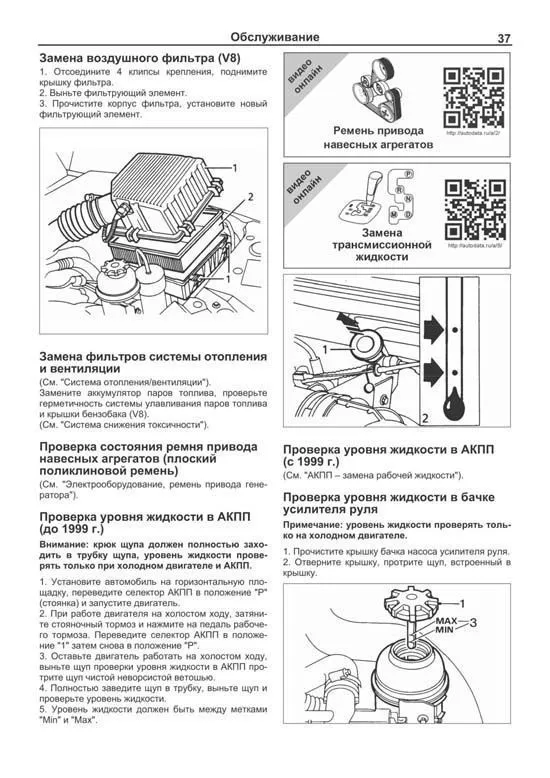
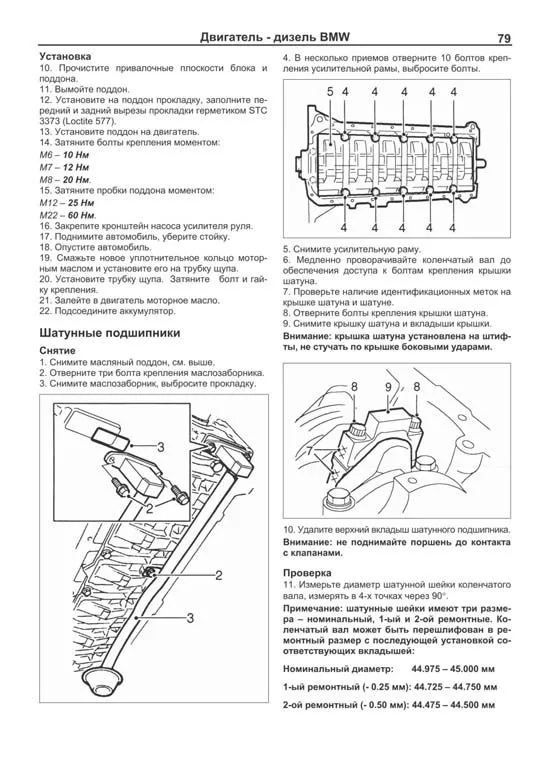
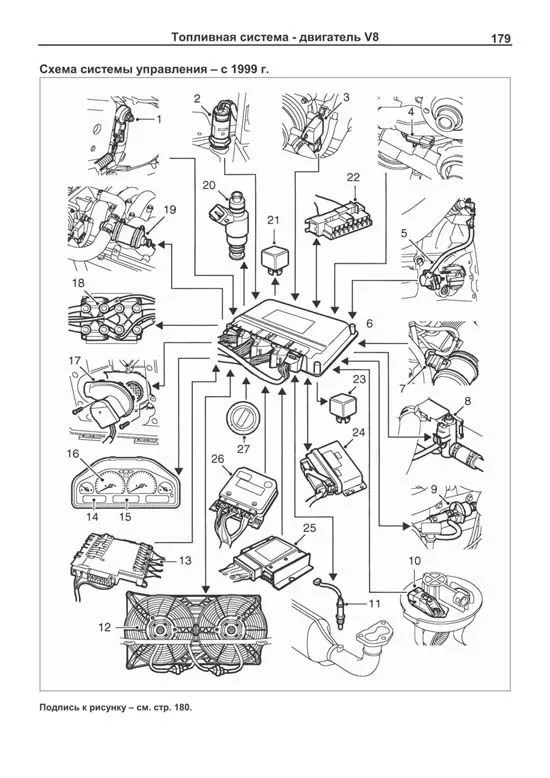
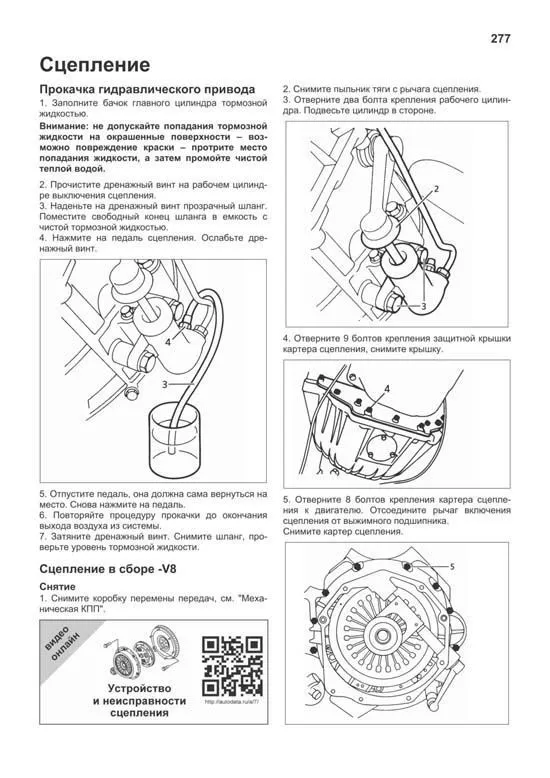
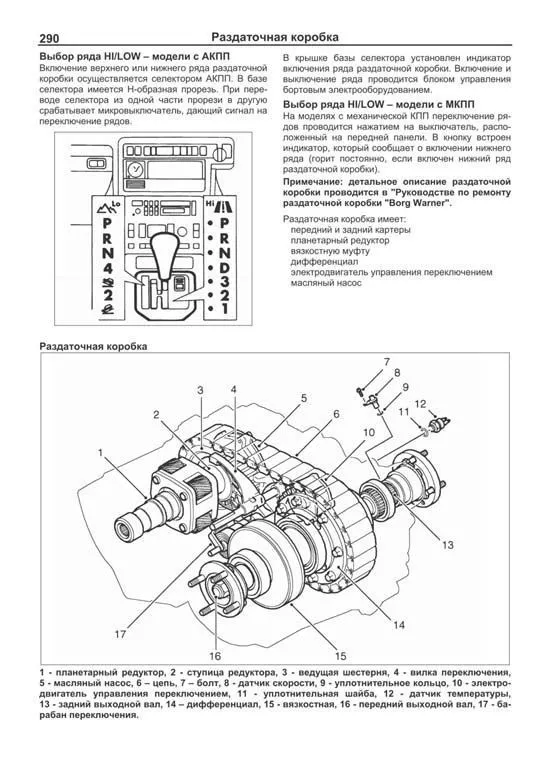
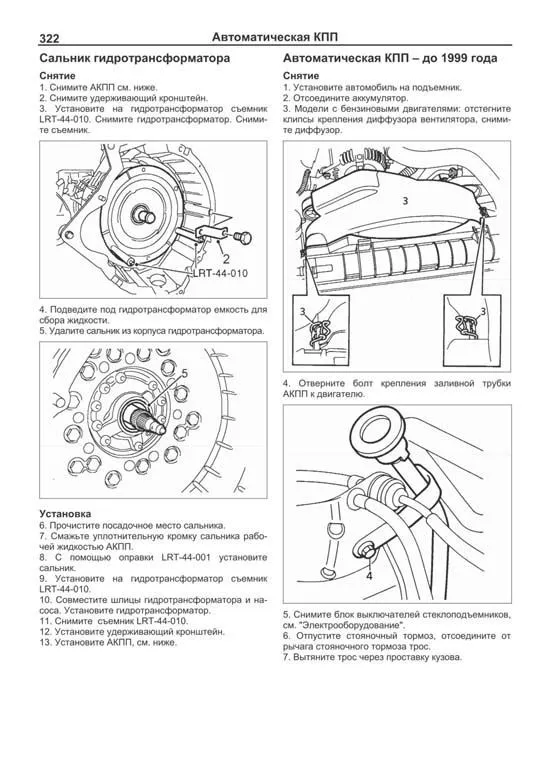
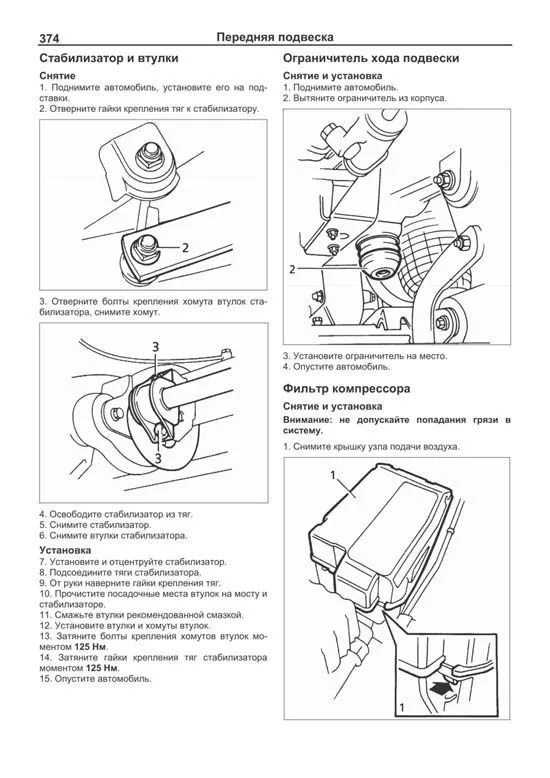
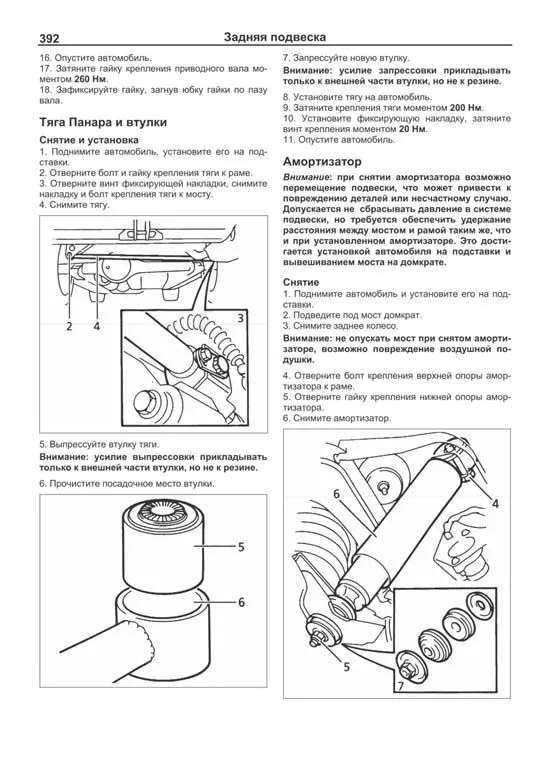
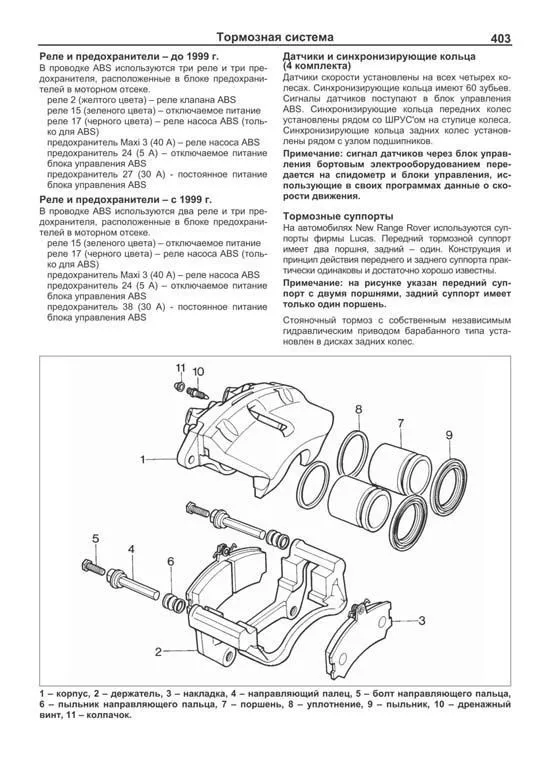
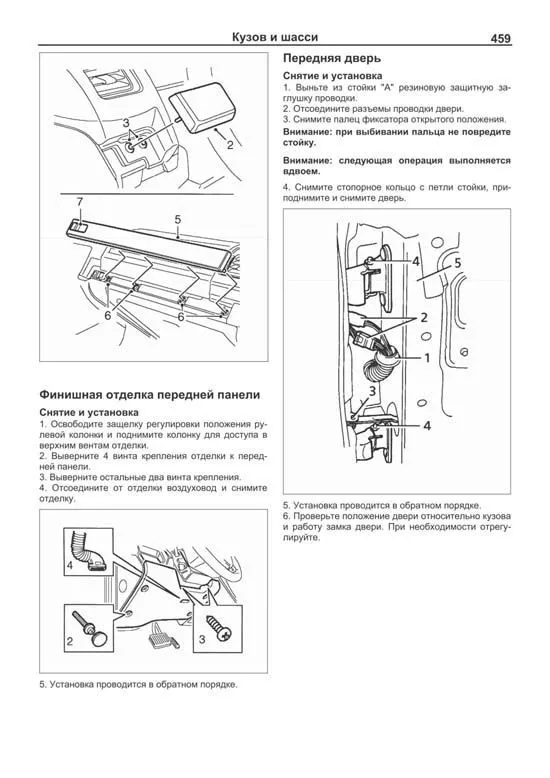
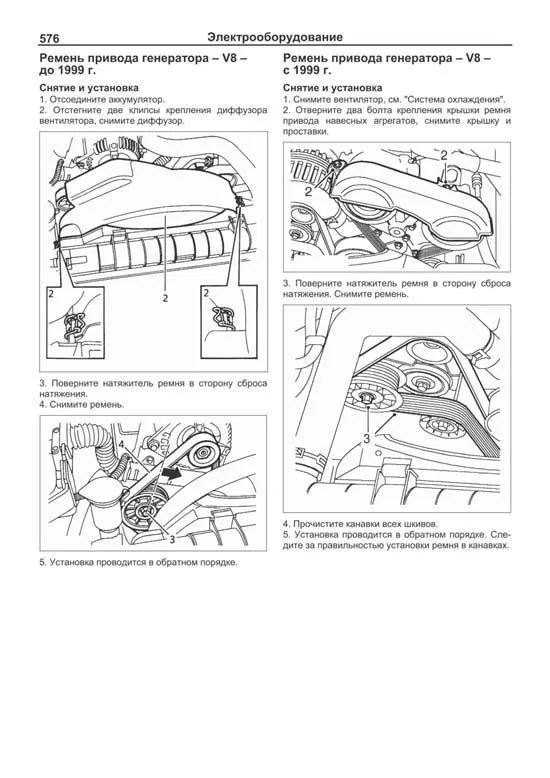
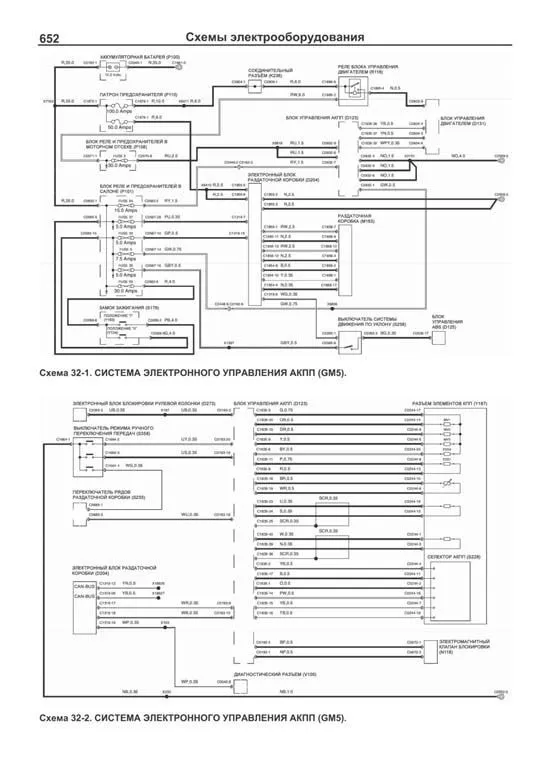
Книга Рендж Ровер 2 1994-2001 с бензиновым V8 4.6 и дизельным TD 2.5 двигателями. Электросхемы, полезные ссылки. Руководство по ремонту, эксплуатации и техническому обслуживанию автомобиля.
Руководство по ремонту Range Rover II 1994-2001 гг. выпуска, оборудованных бензиновым V8 (4,6 л) и дизельным TD (2,5 л) двигателями.
Издание содержит общую информацию об автомобиле, описания устройства систем, подробные сведения по техническому обслуживанию автомобиля, ремонту и регулировке элементов систем двигателей (в т.ч. системы поддержания скорости, топливной системы бензинового и дизельного двигателей), механической и автоматической коробок переключения передач (МКПП и АКПП), раздаточной коробки, переднего и заднего мостов, элементов тормозной системы (включая антиблокировочную систему тормозов (ABS)), рулевого управления, подвески, кузовных элементов, систем кондиционирования (AC), отопления и вентиляции, системы пассивной безопасности (SRS).
Приведены инструкции по диагностике систем управления двигателем и АКПП.
Подробно описаны 237 кодов неисправностей P0, P1, Flash и возможные причины их возникновения.
Приведены разъемы и процедуры проверки сигналов на выводах блоков управления различными системами — PinData.
Представлено 165 подробных электросхем (86 систем) для различных вариантов комплектации автомобилей.
В разделе «Полезные ссылки» подобраны и отсортированы ссылки (в виде QR-кодов и url-ссылок) на интернет-ресурсы, содержащие наиболее интересную и грамотную информацию по Вашему автомобилю.
Приведены возможные неисправности и методы их устранения, сопрягаемые размеры основных деталей и пределы их допустимого износа, рекомендуемые смазочные материалы, рабочие жидкости, размеры рекомендуемых шин и дисков, моменты затяжки резьбовых соединений.
Книга будет полезна как автовладельцам, начинающим и опытным, так и профессионалам авторемонта и диагностики. Автовладелец найдет для себя полезными: инструкцию по эксплуатации, техническое обслуживание (с периодичностью и необходимыми материалами), инструкции по самостоятельному ремонту. Профессионалам будут полезны: операции по сложному ремонту, допустимые размеры деталей, данные по диагностике и подробные схемы электрооборудования. Качественное изложение материала позволяет сократить время обслуживания автомобиля и сделать его более эффективным.
Книга предназначена для автовладельцев, персонала СТО и ремонтных мастерских.
Скачать бесплатно PDF страницы книги по ремонту и обслуживанию Range Rover 2 1994-2001
Купить книгу по ремонту и эксплуатации автомобиля Range Rover 2 P38 1994-2001 с бензиновым V8 4.6 и дизельным TD 2.5 двигателями, электросхемы Вы можете в нашем интернет-магазине с доставкой Почтой России или курьером по Москве.
Интернет-портал Легион-Автодата создан для удобных покупок: автолитературы, программ для диагностики автомобиля, диагностических приборов, адаптеров elm327, автоаксессуаров и инструментов для авторемонта. Купить книги и приборы для диагностики и ремонта автомобиля Вы можете в нашем интернет магазине.
Удобно оплатить руководства по ремонту и эксплуатации выбранных Вами марок авто любой из платежных систем.
Заказать доставку автокниги почтой без предоплаты, курьером по Москве, регионам и в более 200 пунктов самовывоза по всей России.